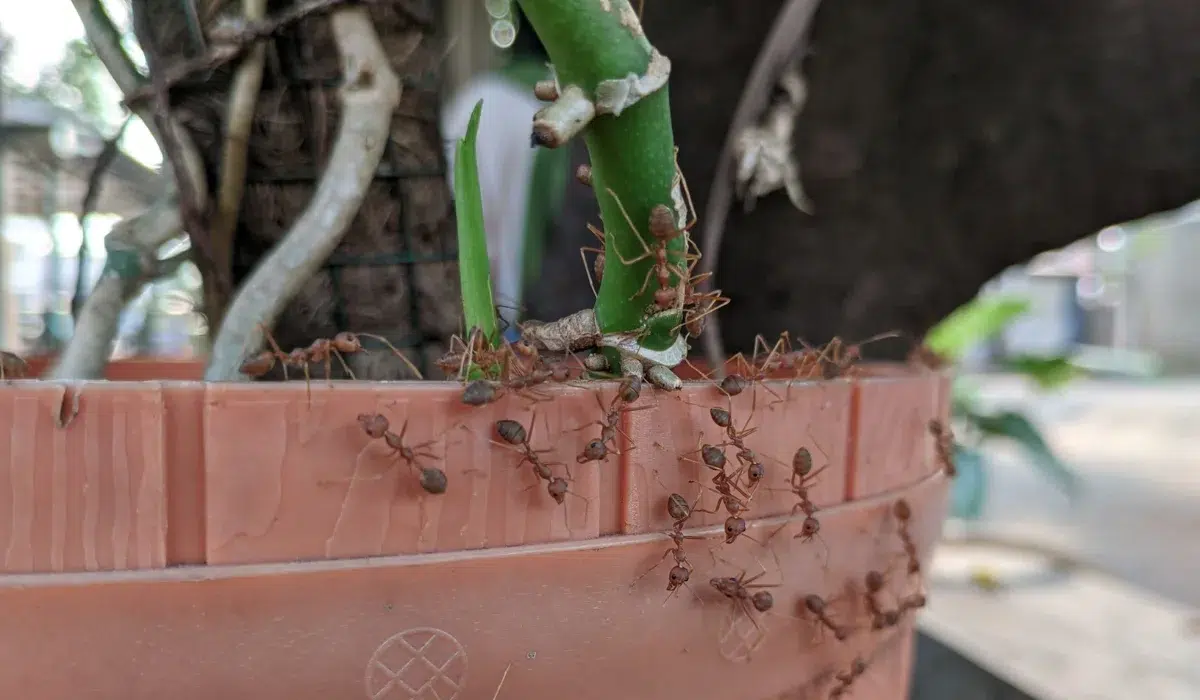
Ants in potted plants are a common problem for homeowners across San Diego. You water your plants, check the soil, and notice ant trails moving in and out of the pot. These ant trails may seem small, but they often point to a larger nearby ant infestation.
If you’re dealing with this problem, the goal is not just to push ants out for a short time. You need to address the ant colony and understand why they chose that spot. This guide explains how to remove ants and how pest control professionals handle long-term ant control in San Diego.
Key Takeaways
- Ants in potted plants often signal a nearby ant colony and access to food sources like aphids.
- DIY methods can reduce activity, but they rarely eliminate the full infestation.
- Long-term ant control requires managing moisture, sealing entry points, and fixing surrounding conditions.
- Professional pest control focuses on inspection, targeted ant baits, and ongoing pest management.

How to Remove Ants from Potted Outdoor Plants
Getting rid of ants in potted outdoor plants takes more than quick surface treatment. Good pest control targets ant nests and the source of the infestation.
Flush the Soil to Disrupt the Ant Colony
Start by thoroughly soaking the potting soil. Soaking it helps push out ants, larvae, and eggs while disrupting nearby nesting sites.
Let the water drain, then flush the soil for several more minutes. Flushing helps reduce visible ant activity, but it will not eliminate the full ant colony.
Use a Mild Dish Soap Solution
A mix of water and dish soap can kill ants on contact. Apply it to the soil surface and along the container’s edges, where trails are most visible.
The dish soap solution works for quick cleanup, but does not reach deeper nesting sites.
Apply Ant Baits Around the Plant
Ant baits are among the most effective methods for reducing an ant colony when used correctly. Baits allow worker ants to carry the product back to the nest, where it reaches the queen and larvae.
Place ant baits near the base of the plant rather than inside the potting soil. In San Diego, pest control professionals often use this approach for Argentine ants and odorous house ants.
Repot the Plant if Needed
If the ant infestation is severe, repotting may be necessary. Remove the plant, discard old potting soil, and rinse the roots to remove ants and debris.
Before replanting, inspect the container and surrounding area for ant nests. Repotting can help remove nesting sites, especially when combined with other ant control steps.
How to Keep Ants Out
After removing ants, prevention becomes the priority. Without prevention, ants often return in Southern California’s year-round conditions.
Control Aphids and Other Honeydew Producers
Ants are drawn to aphids because they produce honeydew, a key food source. Honeydew keeps ants coming back to the same plants.
Check leaves regularly and rinse off aphids when spotted to reduce recurring ant activity.
Eliminate Nearby Food Sources
Items like pet food, spills, and unsealed trash can contribute to an ongoing ant problem.
Clean up consistently and avoid leaving accessible food around your property, because even small amounts can keep ants active.
Seal Entry Points to Your House
Ants enter through cracks, crevices, and gaps around faucets, siding, or foundations.
Use caulk to seal these openings and reduce access, supporting long-term pest control efforts.
Use Barriers Like Diatomaceous Earth
Diatomaceous earth acts as a barrier around potted plants and helps reduce ant movement near the soil.
Reapply after watering or rain. This method works best as part of a broader pest management approach.
When DIY Plant Ant Control Falls Short
DIY methods can help with minor ant activity, but they fall short when the infestation is large or keeps returning.
Multiple Colonies Increase Complexity
In San Diego, Argentine ants form large, connected colonies with multiple nesting sites.
Treating only one area often leads to reinfestation.
Hidden Nesting Sites Are Hard to Reach
Ant nests are not always inside the pot. They can exist under walkways, behind planters, or in nearby soil.
Without locating these nesting sites, treatments remain incomplete.
Overuse of Sprays Disrupts Effective Control
Many homeowners rely on sprays, including store-bought ones, but these can make the problem worse by causing ants to split into new colonies.
Targeted ant baits are often more effective because they work at the colony level.
Seasonal Pressure Requires Ongoing Management
Ants remain active year-round in San Diego , and the environment continues to support new ant colonies.
Properties with irrigation, landscaping, and multiple potted plants often require ongoing pest management.
Schedule an Ant Inspection in North County San Diego
Dealing with ants in potted plants in San Diego requires a complete approach. You need to understand where the ants are coming from, how they’re moving through your property, and what conditions are supporting them.
At Thrasher Pest Control, inspections are detailed and focused. Technicians take the time to identify nests, evaluate entry points, and develop a targeted pest control plan tailored to your property.
If your ant problem keeps returning or spreading beyond your plants, it’s time to take a more complete approach.
Contact us to schedule your inspection, or call us to get started with reliable pest control services in North County San Diego.
FAQs
What causes ants in potted plants?
Ants are attracted to moisture, shelter, and food sources such as aphid honeydew. Potted plants create ideal nesting sites, especially in San Diego, where ants remain active year-round and can quickly form colonies.
Do ant baits work for potted plants?
Yes, ant baits can work well for potted plants. Worker ants carry the bait back to the nest, helping it reach the queen and larvae rather than just reducing surface activity.
Should I call a pest control company for ants in plants?
If ants keep returning or spreading or invade your home, a pest control company can identify hidden nesting sites and apply targeted treatments. Professional pest control services focus on long-term pest management rather than temporary DIY fixes.