Flying Ants vs. Termites in Oceanside: How to Tell the Difference

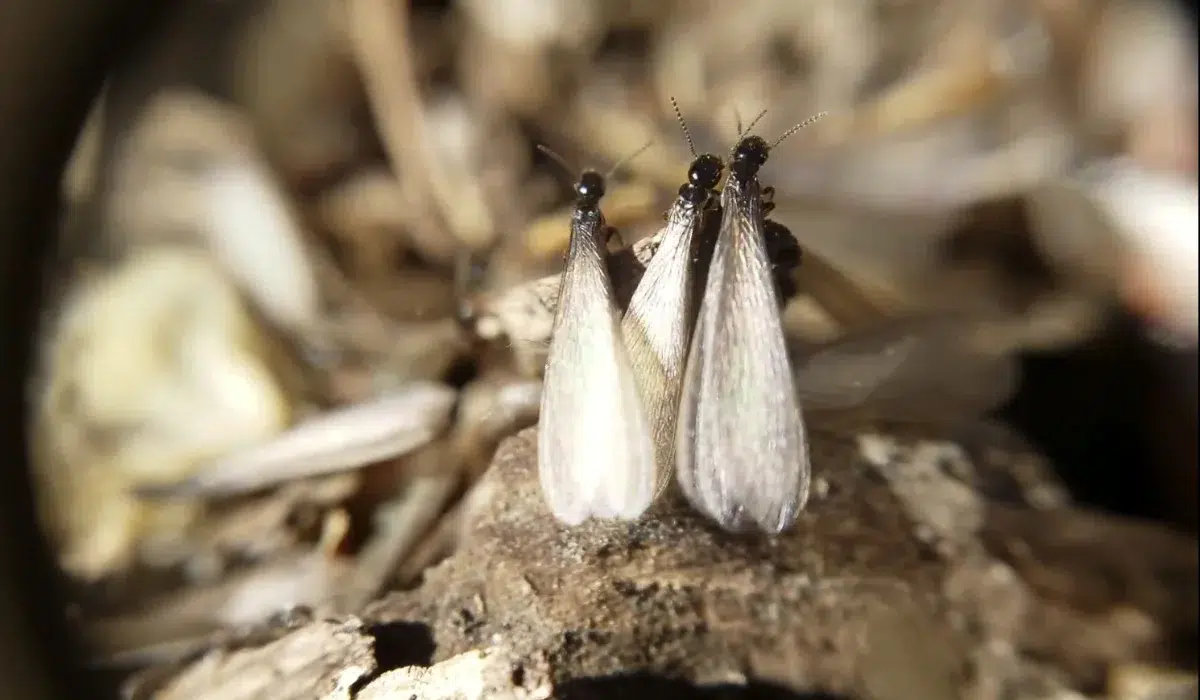
Winged subterranean termites

Seeing winged insects around your Oceanside home raises questions about whether you are dealing with flying ants or termites. While the two may look similar at first glance, their behavior, body shape, and the type of damage they cause are very different. Learn how to spot the difference and when it makes sense to schedule a professional inspection.

Key Takeaways About Flying Ants and Termites

  • Flying ants and termites look similar, but their antennae, waist shape, and wing structure help distinguish them.
  • Winged termite swarmers may signal nearby termite infestations affecting structural wood.
  • Carpenter ants hollow out wood for nesting, while termites consume wood as a food source.
  • Correct identification helps homeowners choose the right treatment and prevention approach.

How to Identify Flying Ants and Termites
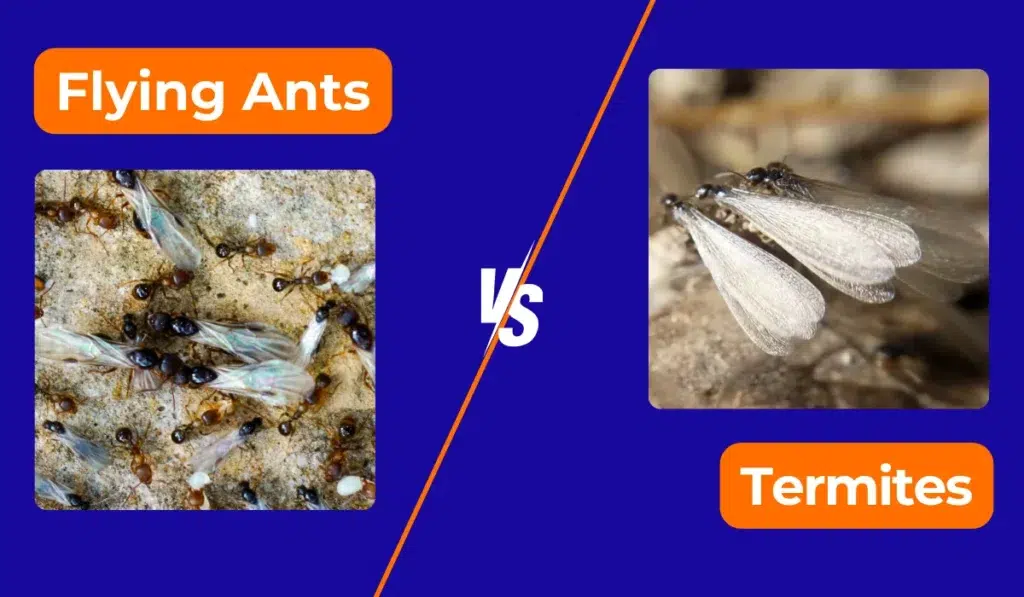
Flying Ants vs. Termites

When winged insects appear indoors or around windows, homeowners often struggle to tell whether they are seeing flying ants or termites. Looking closely at body shape, antennae, wings, and nesting signs usually provides the clearest answer.

How to Tell Flying Ants and Termites Apart

One of the biggest differences between flying ants and termites is body shape. Flying ants have a narrow, pinched waist and bent antennae, while termite swarmers have straighter antennae and a more uniform body shape.

Winged adult ants come in a variety of sizes. Argentine ant kings and queens are between ⅙ to ¼ inch long. California’s most common carpenter ant species range from uniformly black to red and black and are among the largest ants found in North American homes. Their kings and queens range from ½ to ¾ inches long.

Winged termite swarmers are typically longer than winged ants, ranging from ½ to 1 inch long.  Their wings also differ. Flying ants have uneven wing sizes, while winged termite swarmers have two sets of wings that appear nearly equal in length.

How to Spot Flying Ant or Termite Activity Inside Your Home

Large numbers of winged ants indoors often signal an established colony nesting nearby. Isolated winged ants behave differently —after mating flights, newly inseminated queens disperse on their own to find a nest site, so a handful of winged ants doesn’t always mean a colony is present inside the structure. 

Carpenter ants may leave behind coarse wood shavings near walls, doors, or window frames as they hollow out galleries. Termites do not leave sawdust. Instead, termite infestations may be identified by piles of small pellets, mud tubes, or hollow-sounding wood.

Where Flying Ants and Termites Show Up Around Homes

Carpenter ants often settle in moist or decaying wood around windows, doors, attics, and wall voids. They sometimes reuse old termite galleries or damaged wood areas that already contain moisture problems.

Termites behave differently depending on the species. Subterranean termites travel from the ground through mud tubes into the wood they are feeding on, while drywood termites can establish colonies directly inside exposed wood. Formosan subterranean termite colonies may form under the soil, but can also build aerial colonies in wood structures.

How Flying Ants and Termites Enter Structures

Flying ants and termites both use small gaps around windows, trim, siding, roofing, and structural openings to access homes. Formosan subterranean termite swarmers are particularly drawn to lights at night before crawling indoors through nearby openings.

If winged insects continue appearing indoors, a professional inspection can help identify the species involved and determine whether active colonies are present nearby.

Why Flying Ant and Termite Problems Develop

Flying ants and termite swarmers both exist to establish new colonies. Warm temperatures, moisture, and access to wood all contribute to activity around homes, especially in Southern California, where mild weather extends pest activity for much of the year.

Outdoor Nesting Areas for Flying Ants and Termites

Carpenter ants often begin nesting in wood that already has moisture damage or decay, such as tree stumps, dead branches, or abandoned firewood. Large colonies may expand through softened wood over time, especially around leaking areas or damp structural materials.

Termites rely on wood differently because they consume it directly as a food source. Carpenter ants, by contrast, are most active after sunset, which is why outdoor nesting activity often goes unnoticed until a colony is already well established. 

Outdoor nesting areas for termites vary by species, but include tree stumps and root systems of dead trees, dead branches, firewood, fences, and lumber.

What Attracts Flying Ants and Termites

Moisture problems, decaying wood, and structural gaps can all attract ants and termites toward homes. Carpenter ants prefer wood softened by moisture, while termites feed directly on cellulose materials inside wood structures. Drywood termites, as their name implies, prefer dry wood.

Warm weather and seasonal swarm activity may also increase the number of winged insects homeowners notice around windows, doors, and outdoor lighting.

How Flying Ants and Termites Move Around Homes

Winged ants and termite swarmers leave established colonies during mating season to reproduce and start new nests. After landing, they shed their wings and search for suitable nesting areas. After mating, ant queens travel alone to find a nesting spot while mated pairs of termites travel together, often “nose to tail.”

How Flying Ants and Termites Use Entry Points

Cracks around siding, rooflines, doors, windows, trim, and unpainted wood can all provide pathways indoors. 

Piles of fibrous sawdust near doors, window frames, or wood trim are a reliable sign of a carpenter ant nesting nearby. Unlike termite droppings, which appear as small pellets, carpenter ant frass looks like coarse wood shavings pushed out from inside the nest.

Risks From Flying Ants and Termites

Both carpenter ants and termites can create concerns for homeowners, especially when activity develops inside structural wood. Understanding the difference between the two helps determine how serious the issue may be.

Structural Risks From Flying Ants and Termites

Carpenter ants and termites both colonize structural wood after it has been incorporated into buildings.

Carpenter ants weaken wood by hollowing out galleries for nesting. Termites consume wood directly, which can lead to more extensive structural damage over time if termite infestations remain untreated.

How Hidden Termite Damage Develops Indoors

Termite damage often remains hidden inside walls, attics, and framing for long periods before visible damage appears. Pellets from drywood termites or mud tubes from subterranean termites may be some of the first noticeable warning signs. Soft or hollow-sounding wood and blistered paint are other signs of termite damage.

A termite inspection covers all wood-destroying organisms, including subterranean termites, drywood termites, dampwood termites, carpenter ants, carpenter bees, wood-boring beetles, fungus, and dry rot.

Moisture Conditions That Support Ants and Termites

Moisture problems often contribute to both carpenter ant and termite activity. Leaking plumbing, irrigation systems that overspray on houses and fences, and damp structural areas create favorable conditions for nesting and feeding.

Homes near wooded areas or dense landscaping may also experience increased pest pressure because colonies can develop nearby before spreading toward the structure.

When a Flying Ant or Termite Problem Needs Attention

Different ant and termite species swarm at different times of the year. Sometimes swarming seasons overlap. If you regularly see winged insects indoors, discarded wings near windows, or signs of damaged wood, it may be time for a closer inspection.

A licensed inspector can help identify whether you are dealing with ants, termites, or other pest species and explain what treatment options fit the situation.

Professional Pest Control for Flying Ants and Termites

Correct identification is the most important part of treating flying ants and termites. While both pests may swarm indoors, the treatment approach differs significantly depending on the species involved.

How to Reduce Conditions That Attract Ants and Termites

Moisture control plays a major role in preventing carpenter ants and termites around homes. Repairing plumbing leaks, replacing damaged wood, and improving drainage can help reduce conditions that support nesting activity.

Homeowners should also remove dead wood, trim vegetation away from structures, move mulch 5 feet away from the foundation, and regularly monitor areas where moisture collects.

Why Control Starts With a Professional Inspection

Signs of termite or carpenter ant activity, including damage inside walls, frass deposits, and faint rustling sounds in woodwork, are often hidden well enough that a professional inspection is the most reliable way to locate the source before the infestation grows. 

A licensed Thrasher inspector conducts thorough inspections and provides a written report outlining findings, visible damage, treatment recommendations, and prevention guidance.

What to Expect During Professional Treatment

Carpenter ant treatment often focuses on locating nests, correcting moisture problems, and removing damaged wood when necessary. Spray applications, bait placements, and exclusion work may also help reduce activity depending on the infestation.

Thrasher controls subterranean and Formosan subterranean termites through monitored bait stations, perimeter soil treatments, or both. 

For drywood termite infestations, fumigation is the primary recommendation.

What to Expect From a Professional Control Plan

The control plan depends on the pest species, the amount of activity present, and conditions around the structure supporting the infestation.

Thrasher Pest Control is accredited by QualityPro, placing the company among a small percentage of high-achieving pest control providers nationwide. Their inspectors explain findings clearly and recommend practical next steps based on the property conditions observed during inspection.

Bottom Line on Flying Ants vs Termites

Flying ants and termite swarmers may look similar at first glance, but the differences matter when it comes to protecting your home. Body shape, antennae, wing size, and the signs left behind all help distinguish termites from flying ants.

If you notice swarmers indoors, discarded wings, sawdust piles, termite pellets, mud tubes, or signs of wood damage, scheduling a professional inspection can help identify the pest involved and determine whether treatment is needed. Reach out to Thrasher Pest Control to schedule an inspection.

Frequently Asked Questions

Can flying ants damage wood structures?

Some flying ants are reproductive carpenter ants from colonies nesting in structural wood. Carpenter ants hollow out wood for nesting galleries, though they do not eat the wood the way termites do.

Should I worry about seeing winged ants indoors?

Seeing several winged ants indoors may point to a nearby colony inside the structure. A few isolated ants may simply be searching for nesting sites after mating.

What is the main difference between flying ants and termites?

Flying ants have bent antennae, a pinched waist, and uneven wings. Winged termites have straighter antennae, a thicker body shape, and wings that appear equal in length.

What does a termite inspection include?

Thrasher Pest Control inspections cover visible wood damage caused by any wood-destroying organism (termites, carpenter ants, wood-boring beetles, carpenter bees, and fungus). 

Inspection reports list the organisms identified, location of damage, areas with conditions that contribute to infestation, and treatment recommendations. A written report is provided after the inspection that complies with the California Structural Pest Control Act.

Contributor

Garrett Thrasher

Garrett Thrasher

Co-owner & General Manager, Thrasher Pest Control

Garrett Thrasher is the Co-owner and General Manager of Thrasher Pest Control, where he leads day-to-day operations for the company’s growing San Diego team. With decades of hands-on industry experience, he specializes in termite control, bed bug management, and solving complex pest problems with practical, long-term solutions.

Table of Contents

Pest-Free Starts With One Call

Privacy Policy

A helpful member of our team will follow up within 15 minutes during business hours to give you a free quote.

San Diego's Pest Control FAQs

Get a free inspection when you book a pest control service.

What pests are covered in your pest control services?

Thrasher Pest Control provides solutions for a wide range of common pests affecting San Diego’s homes and businesses. Services commonly address ants, cockroaches, spiders, rodents, termites, fleas, and other structural or seasonal pests common to San Diego properties. During an inspection, technicians identify the pest activity affecting the property and recommend the most appropriate treatment approach based on the infestation and conditions present.

Response times depend on scheduling availability and the type of service requested. In many cases, technicians are able to schedule service within a short timeframe after a request is received. During the initial contact, the team reviews the pest concern and schedules the earliest available appointment for inspection and treatment.

Preparation requirements vary depending on the type of pest and treatment being performed. For most general pest services, minimal preparation is needed beyond allowing technicians access to key areas of the home and exterior. For specialty services such as bed bug treatments or termite work, the team may provide specific preparation instructions before the scheduled appointment.

Most pest control services begin with a detailed inspection of the property to identify pest activity, entry points, and conditions that may attract pests. After the inspection, technicians apply targeted treatments to affected areas using methods appropriate for the pest involved. Preventive measures such as sealing entry points, removing attractants, and monitoring pest activity are then recommended to help reduce future infestations.

Thrasher Pest Control offers a limited warranty period after the initial treatment. If the target pest is found again in the previously treated area during the warranty period, technicians may return to re-treat the area according to the service agreement. Warranty eligibility depends on the service provided and the property conditions being maintained as recommended by the technician.