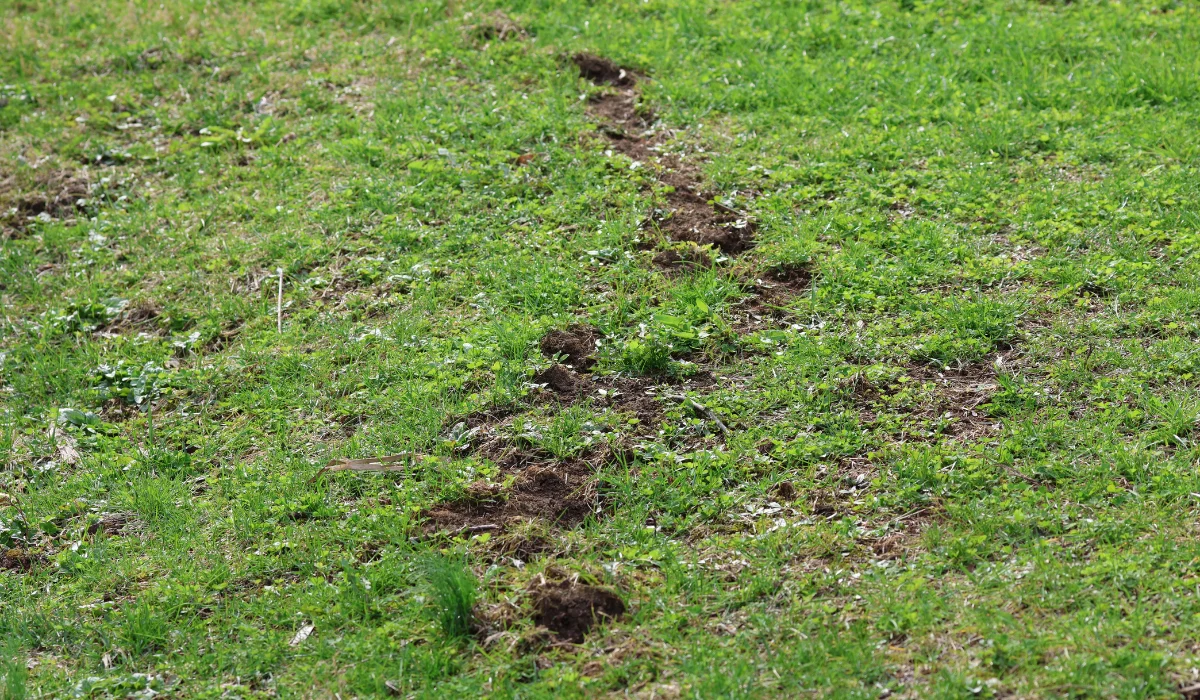
A fresh mound in the yard does not always mean the same animal is responsible. In San Diego, homeowners often use “gopher” and “mole” for any tunneling pest, but the difference matters.
Gophers are plant-eating rodents that can damage lawns, garden beds, shrubs, trees, and irrigation lines. Gophers live in family groups and multiply quickly. Moles are insect-eating mammals that tunnel through soil while looking for worms, ants, grubs, and other small prey. Moles are solitary, territorial, and create a systematic tunnel system.
If plants are wilting, roots are damaged, or crescent-shaped mounds keep appearing, gophers are often the more likely concern around San Diego yards.
Raised ridges of soil running along the edge of sidewalks, driveways, or pathways are often the tunneling system of moles.
Key Takeaways
- Gophers and moles are different animals that create different yard damage.
- Gophers feed on roots, garden plants, shrubs, vines, and trees.
- Moles eat insects and worms. Moles indirectly damage plants with their tunneling.
- Gopher mounds are often crescent-shaped or fan-shaped with an off-center plug.
- Mole mounds are usually more circular or volcano-shaped, often with raised surface ridges nearby.
Why the Difference Matters
The right response depends on which animal is active. A gopher problem is often tied to plant loss, root damage, fresh soil mounds, and active underground feeding. A mole problem is more about soil tunnels and raised ridges caused by hunting for insects and worms.
That distinction matters because the signs can look similar at first. A mound is not enough by itself. The shape of the mound, the location of the plug, nearby plant damage, and surface tunnels all help tell the story.
Thrasher Pest Control customizes treatment options based on the animal, soil type, and season. The treatment methods for gophers differ greatly from the methods used on moles.
What Gopher Damage Looks Like
Pocket gophers spend most of their time underground, so you may not see the animal itself. What you see is the damage they leave behind.
Common gopher signs include:
- Crescent-shaped or fan-shaped soil mounds
- A plugged hole off to one side of the mound
- Fresh loose soil appearing in new spots
- Plants wilting or disappearing from below
- Damage near vegetable beds, shrubs, vines, or trees
- Chewed drip irrigation lines or disturbed soil around irrigation zones
UC IPM’s guide to pocket gophers explains that fresh mounds are a sign of active gopher activity and that a single gopher can create several mounds in a day. It also notes that gophers feed on garden crops, ornamental plants, vines, shrubs, and trees. Gophers reproduce quickly and stay in family groups. They cause more landscape problems than moles.
What Mole Activity Looks Like
Moles are built for digging, but they are not rodents, and they do not feed on plant roots the way gophers do. They eat worms, ants, grubs, and other small insects in the soil.
Mole activity may show up as:
- Raised ridges across a lawn or mulched area
- Raised ridges at the edge of a sidewalk, driveway, or garden path
- Circular or volcano-shaped mounds
- Soft soil where tunnels run close to the surface
- Plants that dry out even when watered
The UC Master Gardener Program’s overview of voles, moles, and gophers notes that mole damage to lawns or plants is usually accidental because moles do not eat plants. Most visible damage comes from tunneling.
Gopher vs. Mole in San Diego Yards: Signs to Check First
To compare gopher and mole damage in your San Diego yard, begin by examining the mounds and the nearby plants.
A gopher mound is usually crescent-shaped, fan-shaped, or horseshoe-shaped. The opening is typically plugged and off to one side. Nearby plants may wilt, lean, or disappear because gophers feed underground.
A mole mound is usually more circular or volcano-shaped. Moles often leave raised surface ridges where they tunnel just below the soil surface. Because moles hunt moisture loving worms and grubs, they tend to damage the roots of plants where worms and grubs accumulate—near irrigated plants.
For many San Diego homeowners, plant damage is the problem. If your vegetable garden, shrubs, lawn roots, young trees, or irrigation lines are being affected, gophers are more likely to be the culprit.
Why Gophers Are Often the Bigger Landscape Problem
Moles can make a lawn look uneven, but gophers can damage the landscape investment itself. They feed below the surface, which means the problem may be active before the plant shows obvious stress.
Gophers can damage:
- Lawns and turf areas
- Vegetable gardens
- Flower beds
- Shrubs and vines
- Young trees
- Drought-tolerant plantings
- Drip irrigation lines
That is why gopher activity is not limited to green lawns. San Diego yards with gravel, mulch, slopes, garden beds, and drought-tolerant landscaping still have gopher problems.
What Not to Do When You See a Mound
A mound can be frustrating, especially when it appears near a lawn, vegetable bed, or new landscape planting. Still, quick guesswork can make the yard messier without solving the issue.
Avoid these mistakes:
- Do not assume every mound is from the same animal.
- Do not flatten mounds without checking whether new ones appear.
- Do not dig up large areas without locating active tunnels.
- Do not rely on flooding holes to solve the problem.
- Do not replant damaged areas before checking for active gopher activity.
The goal is to identify the source. If fresh mounds keep appearing, the tunnel system may still be active.
How Thrasher Handles Gopher Activity in San Diego
Thrasher Pest Control provides gopher control in San Diego for homeowners dealing with fresh mounds, active tunnels, and yard damage.
Our technician walks the lawn and landscape to first determine if the problem is caused by gophers or moles. The technician locates active tunnels and mounds, identifies entry points, and assesses how widespread the activity is across the property.
Once we confirm gopher activity, we create a treatment plan based on the animal, type of soil, and time of year.
If you are not sure whether the issue is gophers or moles, we can inspect the signs, check mound patterns, and help you understand what is happening in your yard.
Schedule Gopher Control in San Diego
If fresh mounds, plant damage, or tunneling are showing up in your yard, do not guess from the surface alone. Thrasher Pest Control can inspect the activity, identify whether the signs point to gophers or moles, and focus treatment where the active tunnels are located.
Contact us to schedule gopher control in San Diego and get help before more of your lawn, garden, or landscape is affected.
Frequently Asked Questions
What Is the Main Difference Between a Gopher and a Mole?
Gophers are plant-eating rodents that can damage roots, garden plants, shrubs, trees, and irrigation lines. Moles are insect-eating mammals that tunnel through soil while looking for worms, ants, and grubs.
How Can I Tell If a Mound Is From a Gopher?
Gopher mounds are often crescent-shaped, fan-shaped, or horseshoe-shaped, with a plugged opening off to one side. Fresh loose mounds are a common sign of active gopher tunneling.
What Does a Mole Mound Look Like?
Mole mounds are usually more circular or volcano-shaped. Moles can also create raised surface ridges as they tunnel just under the surface of soil or mulch.
Are Gophers More Damaging Than Moles?
For plants and irrigation, yes. Gophers feed on roots and plant material, so they damage lawns, garden beds, shrubs, trees, and drip lines. Mole damage is usually related to tunneling that may disturb plant roots.
Should I Call Thrasher If I Am Not Sure Which Animal It Is?
Yes. If you see fresh mounds, tunneling, or plant damage, Thrasher can inspect the signs and determine whether the activity points to gophers before recommending the next step.