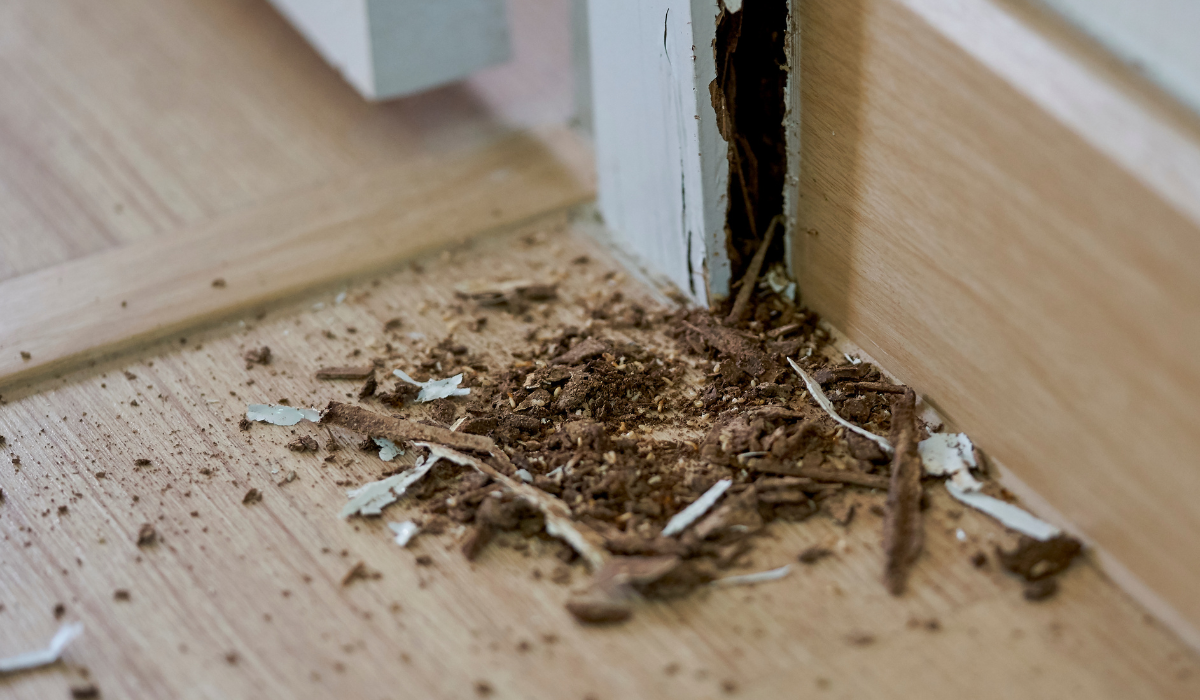
Termite damage can stay hidden for months or longer because termites often feed inside wood, behind walls, or near foundation areas before obvious damage appears. In Carlsbad, homes can face both drywood and subterranean termites, so the warning signs may look different depending on the species.
If you are looking for signs of termite damage in Carlsbad home areas, start with wood, moisture-prone spaces, exterior trim, attic framing, crawl spaces, and foundation edges. Small clues such as pellets, mud tubes, shed wings, or soft wood can help you know when it is time to schedule a termite inspection.
Key Takeaways
- Termite damage often starts where it is hard to see.
- Drywood termites may leave small pellet piles.
- Subterranean termites often build mud tubes near foundations.
- Soft, blistered, or hollow-sounding wood can be a warning sign.
- A termite inspection helps identify the species and treatment path.
Why Termite Damage Can Be Hard To Spot
Termites do not need to chew across open surfaces to cause damage. Drywood termites can live inside wood above ground, while subterranean termites usually move from soil into wood through hidden routes.
That means early termite damage may look minor from the outside. Paint can appear slightly blistered. A baseboard may sound hollow. A window frame may feel soft. A small pile of pellets may show up near a wall, attic access point, or wooden trim.
UC IPM notes that darkening or blistering of structural wood can be a possible sign of subterranean termite activity, and damaged wood may be thin at the surface. That is why visible surface damage should not be dismissed as simple aging, especially when it appears near moisture, soil contact, or repeated termite activity.
Common Signs Of Termite Damage In Carlsbad Homes
The most useful termite clues are often small and repeated. One damaged board may have several causes, but damage paired with pellets, wings, mud tubes, or live insects deserves a closer look.
Watch for:
- Hollow-sounding wood when tapped
- Soft trim, baseboards, fascia, or door frames
- Blistered paint or wood surfaces
- Tiny holes in wood
- Small piles of dry, sand-like pellets
- Mud tubes on walls, foundations, slabs, or crawl space areas
- Shed wings near windows, doors, or light sources
- Doors or windows that suddenly stick
- Sagging or damaged floor areas
- Live termites in damaged wood or broken mud tubes
Do not tear apart wood or break open tubes just to check. Take a photo, note the location, and schedule an inspection before the evidence is disturbed.
Drywood Termite Damage Signs
Drywood termites are common in Southern California and can infest wood without soil contact. They may be found in attic framing, eaves, trim, furniture, fences, decks, and other dry wood areas.
One of the clearest drywood termite clues is frass, or termite pellets. These look like small, dry, sand-like piles near wood. You may also see tiny kick-out holes where termites push pellets out of the gallery.
Drywood termite damage may show up around:
- Attic beams and rafters
- Fascia boards and eaves
- Window and door frames
- Wood trim and baseboards
- Decks, fences, and patio structures
- Wood furniture or built-ins
UC IPM’s drywood termite guidance explains that correct diagnosis matters because different termite species require different control methods. A pellet pile may point toward drywood termites, but an inspection is still needed to confirm the source and scope.
Subterranean Termite Damage Signs
Subterranean termites live in soil and reach wood through mud shelter tubes, foundation cracks, crawl space areas, or wood-to-soil contact. In Carlsbad homes, they may appear near moisture-prone areas, slab edges, garage walls, exterior walls, and crawl spaces when present.
The most recognizable sign is a mud tube. These narrow, dirt-colored tubes help termites travel while staying protected. You may find them on foundation walls, stem walls, piers, slabs, or along exterior surfaces.
Other subterranean termite signs include:
- Wood that looks dark, blistered, or layered
- Dirt or mud inside damaged wood
- Soft wood near plumbing or moisture
- Swarmers emerging indoors
- Damaged wood close to soil or foundation areas
- Live termites inside broken wood or tubes
If you see mud tubes, do not scrape them away before an inspection. Their location helps us understand how termites may be entering the structure.
Where To Check Around A Carlsbad Home
Carlsbad homes have many areas where termite signs can appear before a homeowner notices major damage. Coastal weather, outdoor living spaces, wood trim, decks, and landscaping can all create areas worth checking.
Start with visible, accessible places:
- Garage edges and slab expansion joints
- Exterior foundation walls
- Wood fences attached to the home
- Deck posts, patio covers, and pergolas
- Eaves, fascia, and roofline wood
- Attic access areas
- Window sills and door frames
- Crawl space openings
- Plumbing penetrations
- Areas near sprinklers, leaks, or poor drainage
If an area is unsafe, enclosed, or hard to reach, leave it to a professional. Termite inspections are designed to check likely activity zones without unnecessary damage to the home.
Termite Damage Or Moisture Damage?
Termite damage and moisture damage can look similar. Both can soften wood, stain surfaces, and affect trim or framing. The difference is that termite damage may include pellets, mud tubes, galleries, wings, or live termites.
Moisture also matters because damp areas can make wood more vulnerable and attract certain wood-destroying organisms. UC IPM notes that dampwood termite problems are best handled by correcting moisture issues and replacing damaged wood once properly diagnosed.
If you see soft wood near a leak, sprinkler overspray, roof edge, or plumbing line, do not assume moisture is the only issue. A termite inspection can help separate water damage, dry rot, and termite activity.
When Termite Damage Needs Professional Attention
Schedule a termite inspection when you see repeated signs, visible damage, or anything that points to active termite movement. Waiting can make it harder to determine where the activity began and how far it has spread.
Professional inspection makes sense if:
- You see mud tubes or pellet piles
- Swarmers appear indoors
- Wood sounds hollow or breaks easily
- Damage appears near the foundation
- You are buying or selling a home
- Your home has had termite activity before
- You cannot tell whether damage is old or active
Our termite control in Carlsbad starts with inspection, species identification, and a treatment plan based on what we find. Carlsbad homes may face drywood termites, subterranean termites, or other wood-destroying issues, so the inspection comes first.
How We Help With Termite Damage
When we inspect a home, we look for the source of the termite evidence, the type of termite involved, and the conditions that may be supporting activity. We also check for visible wood damage and explain what the findings mean.
Our San Diego termite control services include termite inspection, treatment, fumigation when appropriate, monitoring, and repair for termite or dry rot damage. The right plan depends on the termite species, where activity is located, and whether damage is active, old, localized, or more widespread.
We do not recommend guessing from one sign alone. A pellet pile, a mud tube, or a damaged board is useful evidence, but the full inspection tells us what to do next.
Schedule A Termite Inspection In Carlsbad
If you have found pellets, mud tubes, shed wings, or damaged wood, we can help you confirm what is happening and choose the right next step. We serve Carlsbad and surrounding San Diego County communities with termite inspections, treatment, and repair support.
Contact us to schedule termite service in Carlsbad.
Frequently Asked Questions
What Are The First Signs Of Termite Damage In A Carlsbad Home?
Early signs can include pellet piles, mud tubes, shed wings, hollow-sounding wood, soft trim, blistered surfaces, or tiny holes in wood. These signs may appear before major visible damage.
What Do Drywood Termite Pellets Look Like?
Drywood termite pellets look like small, dry, sand-like piles near wood. They may collect below tiny kick-out holes in trim, attic framing, furniture, or other infested wood.
What Do Subterranean Termite Mud Tubes Look Like?
Mud tubes look like narrow dirt-colored trails on foundations, slabs, piers, walls, or crawl space areas. Subterranean termites use them to move between soil and wood.
Can Termite Damage Look Like Water Damage?
Yes. Termite damage, dry rot, and moisture damage can look similar. Soft wood, staining, or blistered surfaces should be inspected if you also see pellets, mud tubes, wings, or live insects.
Should I Remove Damaged Wood Before A Termite Inspection?
No. Leave the evidence in place if possible. Photos are helpful, but removing damaged wood or scraping away mud tubes can make it harder to confirm activity and entry points.