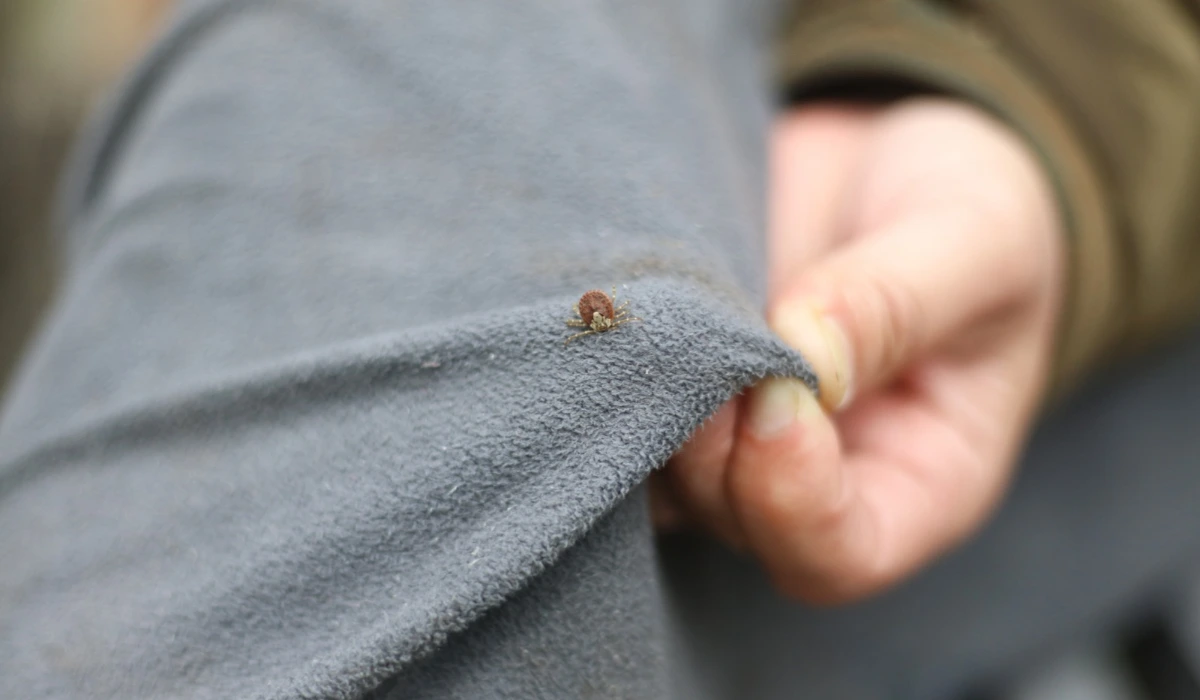
Ticks in San Diego are real, but they are not one of the most common household pest problems Thrasher inspectors encounter. Most people are more likely to pick up a tick around brush, trails, tall grass, or wildlife habitat than inside a typical home. The situation changes when ticks keep appearing on a dog, in the same part of a yard, or indoors. Understanding where the tick came from, which species may be involved, and whether sightings are repeating helps determine the right response.
Are Ticks Common in San Diego?
Thrasher treats ticks as a specialty pest in San Diego County. That local field experience helps put the issue in perspective: ticks occur here, but they are not equally common across every yard or neighborhood.
A property bordering a canyon, open space, or unmanaged vegetation may present more opportunities for contact than a densely developed lot with closely maintained landscaping. The same applies to people and pets. Someone hiking through brush or walking a dog along trail edges has more exposure opportunities than someone spending most of the day on paved or landscaped areas.
The most useful clue is often the pattern. One tick found after outdoor recreation points toward an isolated encounter. Ticks that keep showing up on pets or around the home deserve a closer look at the property.
| What You Are Seeing | What It Suggests |
| One tick after hiking or walking through brush | Likely outdoor exposure |
| A tick on a dog after a trail walk | Likely outdoor exposure |
| Ticks repeatedly appearing on a pet at home | A nearby source may need inspection |
| Multiple ticks indoors | Indoor hiding or resting areas may be involved |
| Recurring ticks in one part of the yard | A localized outdoor hotspot may be present |
What Types of Ticks Are Found in San Diego?
Several tick species are relevant in San Diego County, and they do not behave the same way. Species, habitat, hosts, and season all influence where people and pets may encounter them.
Western Black-Legged Tick
The Western black-legged tick receives the most public-health attention because it is the primary tick associated with Lyme disease transmission in California.
The California Department of Public Health identifies the Western black-legged tick as the state’s Lyme disease vector. It is associated with natural environments where people or animals may contact grass, brush, or other vegetation.
Finding one does not mean Lyme disease transmission occurred. It does mean an attached tick should be removed correctly and the bite taken seriously.
Pacific Coast Tick
Pacific Coast ticks are associated with outdoor habitat and brushy areas and are among the tick species relevant to San Diego.
Where the tick is found gives useful context. A tick discovered after time on a brushy trail points toward outdoor exposure. Repeated ticks around a pet’s resting area call for a different type of inspection.
American Dog Tick
American dog ticks are associated with grassy and brushy environments and can attach to dogs and people.
Dogs that move through vegetation may bring home a tick without there being an established problem in the yard. Checking a dog’s coat after hikes and trail walks helps catch ticks that might otherwise remain hidden in thick fur.
Brown Dog Tick
Brown dog ticks are especially relevant when activity begins showing up around a home because of their close association with dogs and places where dogs spend time.
If a dog continues picking up ticks without recent exposure to brush or trails, inspectors may need to look more closely at pet bedding, sheltered yard areas, baseboards, carpeting, and other locations where the animal rests or travels.
When Is Tick Season in San Diego?
San Diego does not have one universal tick season. Activity changes by species, life stage, habitat, and weather.
Western black-legged ticks are associated with cooler months into spring. Pacific Coast tick activity is also associated with spring, while American dog ticks are more often encountered during spring and warmer periods. Brown dog ticks are more closely tied to dogs and areas where dogs live, so household activity does not always follow the same pattern as trail exposure.
For homeowners, outdoor habits are more useful than a calendar alone. Hiking through brush, walking dogs near open space, and living beside unmanaged vegetation all create opportunities for contact whenever the relevant species is active.
Can You Get Lyme Disease From a Tick in San Diego?
Yes, Lyme disease occurs in California, and the Western black-legged tick is the species associated with transmission in the state. However, finding a tick does not mean Lyme disease has been transmitted.
The Centers for Disease Control and Prevention explains that Lyme disease is transmitted through the bite of an infected black-legged tick. Species identification, whether the individual tick is infected, and the circumstances of the bite all affect the level of concern.
California’s Lyme disease pattern also differs from regions of the United States where the disease is reported more often. For San Diego residents, California public-health information provides better local context than national case patterns alone.
If you find an attached tick, remove it correctly and monitor your health. Contact a healthcare professional if you have concerns about the bite or develop symptoms afterward.
Where Are Ticks Most Likely to Be Found in San Diego?
Tick exposure is tied closely to habitat. Around San Diego County, the highest-use areas for people, pets, vegetation, and wildlife deserve the most attention.
Brush, Tall Grass, and Trail Edges
Brushy areas, taller vegetation, canyon edges, and trail margins create opportunities for ticks to contact passing people or animals.
For hikers and dog walkers, staying toward clearer portions of a trail reduces unnecessary contact with vegetation. Clothing that covers more skin also limits direct exposure.
Homes Near Open Space
Properties beside canyons, undeveloped land, or natural areas may have more wildlife movement near the yard. Because ticks depend on animal hosts during their life cycle, those travel areas become more relevant when recurring tick activity is found.
A home next to open space does not automatically have a tick problem. Inspectors look for actual activity and the places where pets, vegetation, and animal traffic overlap.
Pet Resting and Entry Areas
When ticks keep appearing on a dog, the places where that dog rests and enters the house become useful inspection points.
Dog runs, shaded resting areas, bedding, carpeted rooms, and entry routes can provide better clues than treating the yard as one uniform space. Repeated activity in the same place is more informative than one tick carried home after a walk.
How to Protect Yourself and Your Pets From Ticks
Tick prevention starts after time in likely habitat. Check clothing and exposed skin after walking through brush, tall grass, or natural areas. On dogs, inspect around the ears, neck, legs, toes, under the collar, and through thicker parts of the coat.
Reducing unnecessary contact with dense vegetation can also lower the chance of picking up ticks. On trails, stay toward the clearer walking area instead of brushing against vegetation along the edges.
For ongoing pet protection, talk with your veterinarian about a tick prevention plan suited to your dog’s health, lifestyle, and outdoor routine.
What Should You Do If You Find a Tick?
The next step depends on whether you found an attached tick on a person, one on a pet, or repeated activity around the home.
If the Tick Is Attached to You
The CDC recommends removing an attached tick with fine-tipped tweezers. Grasp it as close to the skin as possible and pull upward with steady pressure.
Clean the area afterward. If you have concerns about the bite or develop symptoms, contact a healthcare professional.
If the Tick Is on Your Pet
Remove the tick carefully if you know how, or contact your veterinarian for guidance. Then think about where the animal has been.
A recent hike may explain a single tick. Repeated ticks without recent trail or brush exposure suggest it may be time to inspect the yard or home.
If Ticks Keep Appearing Indoors
Repeated indoor sightings deserve more attention than a one-time tick brought home after outdoor activity.
An inspector may check pet resting areas, baseboards, carpeting, cracks and crevices, entry areas, and nearby sections of the yard to determine where activity is concentrated.
When Does a Tick Problem Need Professional Control?
Professional tick control becomes more useful when sightings keep repeating in the same environment. Ticks that repeatedly appear on pets at home, show up indoors, or continue to occur in the same part of a yard suggest that removing individual ticks is not addressing the source.
Thrasher handles ticks as a limited specialty service. The inspection first determines whether activity is concentrated outdoors, indoors, or in both areas. Treatment then follows what the inspector finds rather than treating every part of the property the same way.
How Outdoor Tick Treatment Works
For outdoor service, the inspector looks for areas where tick activity is concentrated. Pet resting areas, shaded sections, vegetation edges, and animal travel routes may receive closer attention when they line up with the sightings.
Thrasher uses materials specific for outdoor tick treatment. Treatment is directed toward the identified hotspots instead of applying the same approach across the entire yard.
The inspection makes that targeting possible. A sunny patio with no activity and a shaded vegetation edge used by pets do not present the same conditions.
How Indoor Tick Treatment Works
Thrasher’s indoor tick treatment focuses on areas where ticks have been spotted or where pets spend the most time. Our technicians inspect these spaces to identify potential hiding spots and determine which areas need attention.
Treatment typically targets baseboards, cracks, crevices, carpeted areas, and area rugs where ticks may be present. By addressing both sheltered spaces and frequently used flooring, Thrasher takes a thorough, targeted approach to controlling indoor tick activity and reducing the risk of recurring infestations.
Why Thrasher Returns After the Initial Treatment
Thrasher includes a follow-up 7 to 10 days after the first tick service. The inspector checks for continuing activity and repeats treatment where needed.
The follow-up is part of the service because newly hatched ticks or remaining hotspots may become apparent after the initial treatment. Rechecking the same areas helps determine whether the problem is continuing or has been brought under control.
Understanding Your Tick Risk in San Diego
Ticks in San Diego are worth taking seriously, but one sighting does not automatically mean your home has a larger problem. A tick picked up after a hike points toward outdoor exposure. Repeated ticks on pets, in the yard, or indoors point toward a source that may need professional inspection.
If ticks keep appearing around your property, Thrasher Pest Control can inspect the areas where activity is occurring and recommend a targeted treatment plan. You can review pest control service availability in San Diego or contact Thrasher Pest Control to schedule service in Poway, Carlsbad, Chula Vista, El Cajon, San Marcos, La Mesa, Rancho Santa Fe, and surrounding San Diego County areas.