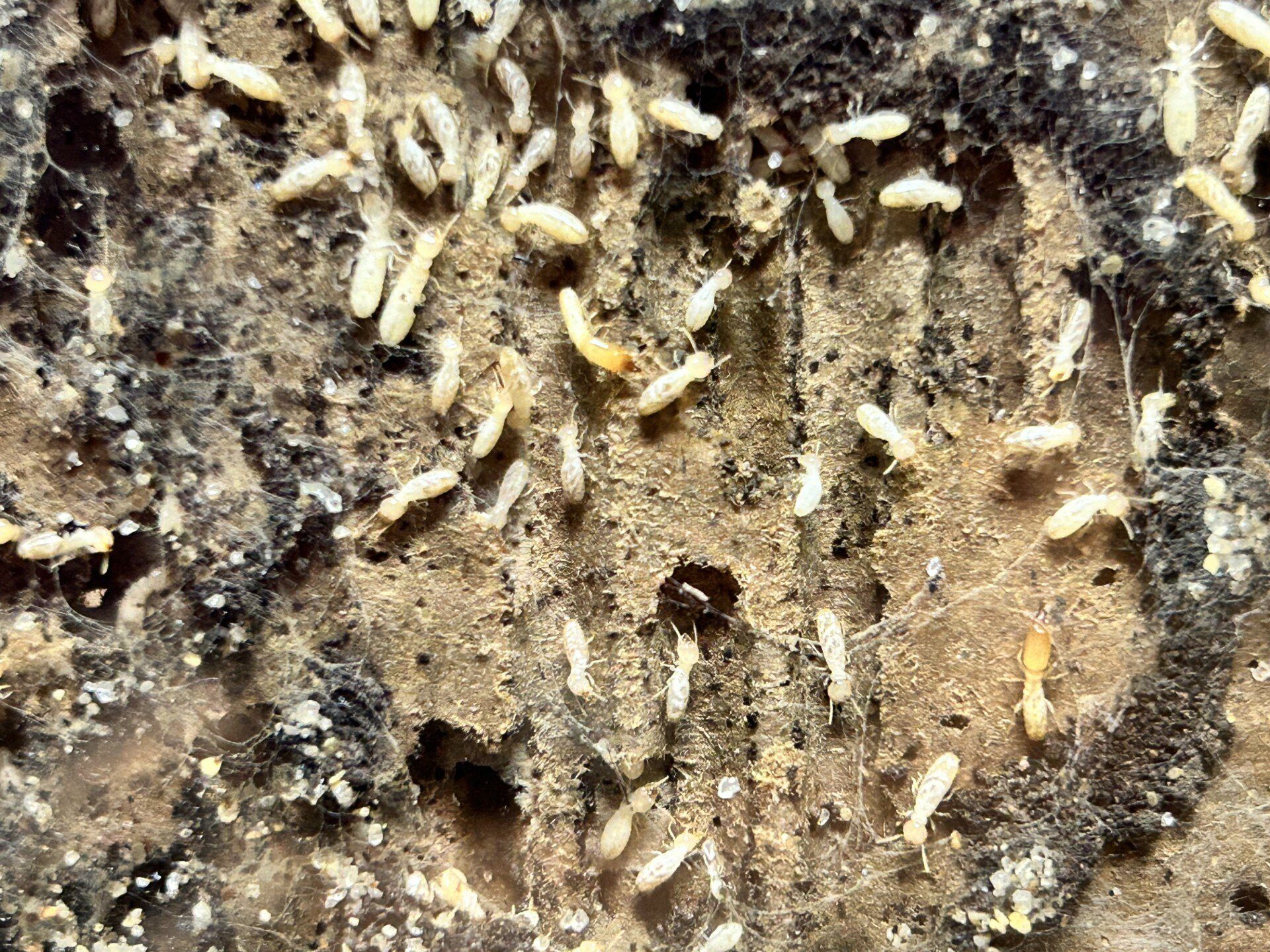
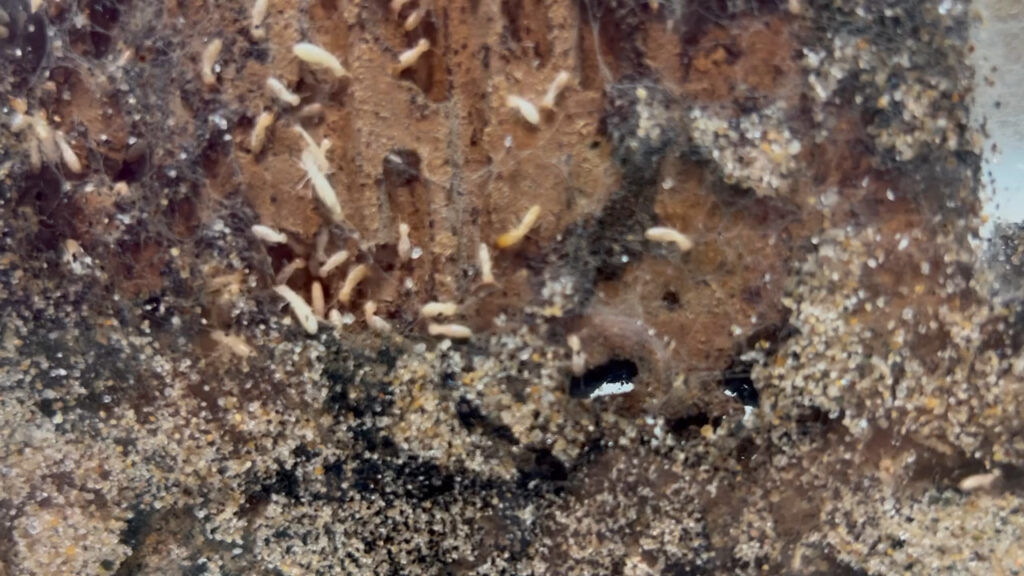
 Uncover the hidden world of termites and their impact on your home. Dive into our video short to see hungry, hungry, hungry termites in action.
Impact of Termite Activity on Home Structures
Scouting Report · San Diego, CA
Termite types in San Diego
San Diego is home to three distinct termite species, and correctly identifying which one is present determines the entire treatment approach. Drywood, Western subterranean, and Formosan subterranean termites behave differently and require different control strategies.
1Damages wood
Formosan Subterranean Termite
IDPale yellow-brown worker; soldier has teardrop-shaped head with curved mandibles and releases a milky fluid when disturbed
WhereSoil beneath slabs, crawl spaces, and wall voids with moisture; forages aggressively through mud tubes
NoteFormosan colonies can number in the millions and consume wood far faster than native subterranean species. Structural damage can become severe before surface signs appear.
2Damages wood
Western Subterranean Termite
IDCream-colored workers; soldiers have a rectangular, pale yellow head with elongated black mandibles; swarmers are dark brown with equal-length wings
WhereSoil contact zones, foundation wood, crawl spaces, and areas near plumbing leaks
NoteThe most widespread termite in California. Colonies are smaller than Formosan but still cause serious structural damage over time, particularly where wood contacts moist soil.
3Damages wood
IDNo worker caste — soldiers have an orange-brown head with dark mandibles; fecal pellets (frass) are hard, six-sided, and sand-like
WhereAttic framing, door frames, window trim, and furniture — any dry, sound wood above grade with no soil contact required
NoteDrywood colonies are smaller and damage progresses more slowly than subterranean species, but they can go undetected for years. Frass piles near wood surfaces are often the first visible sign.
Thrasher Pest Control is Quality-Pro certified, in the top 3 to 4 percent of the industry, serving San Diego County. Identify first, then treat.