Pantry Pests: How to Spot Infestations Fast

  • Webbing that binds flour/corn meal into clumps → discard.
  • Discolored, grainy surface on dried fruit/chocolate → inspect or discard (not the same as chocolate bloom).
  • Sandy, uniform pellets at the bottom of rice/bean bags = possible frassinspect or discard.
  • Pin-size holes or fragments in pasta/cereal → discard.
  • Store staples in airtight containers and rotate stock (FIFO).

What are Pantry Pests?

Pantry pests, also called stored product pests and kitchen pests, are moths and beetles that feed on stored food. Think staples like flour, cereal, nuts, spices—not fresh fruit or fresh bread. Pantry pests damage food by contaminating it with their eggs, larva, and their by-products—hairs (setae), excrement, webbing, and microbes.

Frass: dry, sand-like insect droppings often found in packages or at the bottom of bags.

These are NOT pantry pests: Ants, cockroaches, mice, and rats may eat your food, but don’t live in your food like pantry pests do.

Quick Take Before You Bake

Before you open a cookbook, give ingredients a 30-second check. Flour, oats, pasta, nuts, spices, cake mixes, boxed puddings, dried fruit, spices, and chocolate chips can harbor pantry moths, beetles, weevils, or their larvae—especially when packages sit for months.

PRO TIP: measure dry ingredients into a separate bowl for inspection before you mix them with other ingredients.
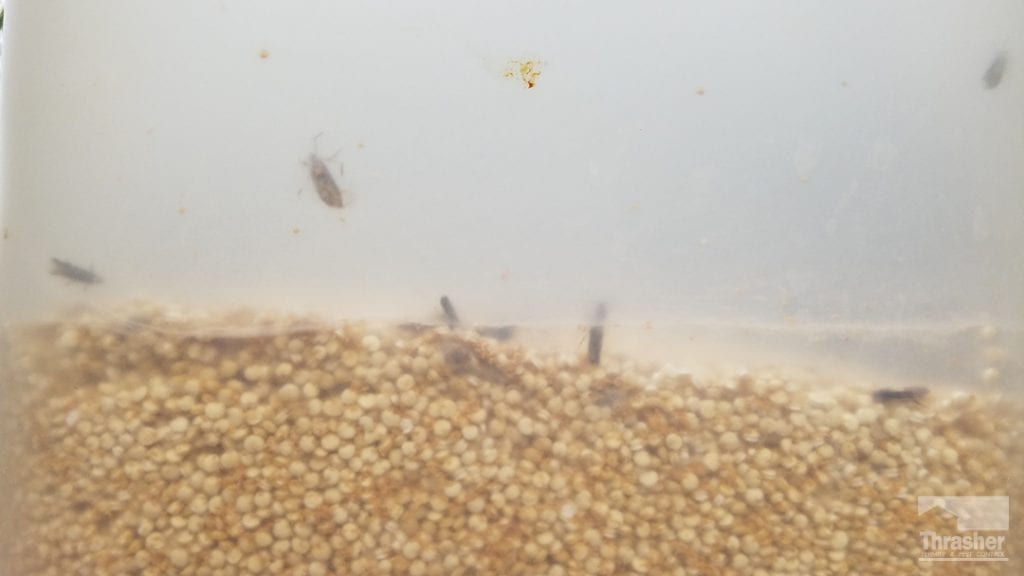
Indianmeal-moth-in-quinoa-1024x576-jpg

Signs in Flours & Ground Goods

Products to check: wheat flour, rice flour, gluten-free flour, nut meal, masa, cornmeal, oatmeal, pudding mix, baking mix, pancake mix, and ground spices.

  • Look for fluffy clumps that don’t break apart normally.
  • Webbing holding clumps together = clear pantry moth activity → throw it out.
  • If a lump won’t separate or looks/feels off, the product may be infested or spoiled → throw it out.
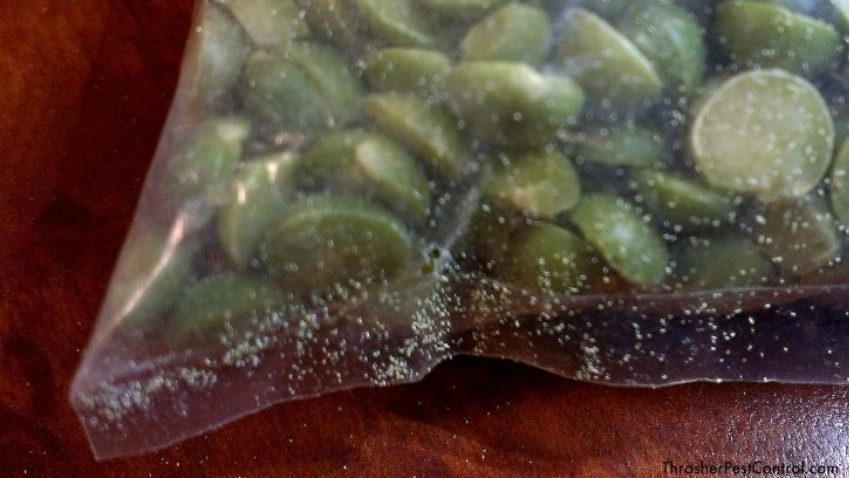
Pantry pest chew hole and frass in bag of split peas

Signs in Beans, Rice & Whole Grains

Products to check: dried beans, split peas, lentils, rice, corn, quinoa, whole and steel cut oats.

  • Check the bottom of bags (thin plastic can be chewed through).
  • Sandy, pencil-dot sized pellets collecting at the bottom may be frass (insect droppings).
  • A few broken kernels are normal; uniform, sand-like material signals pests → inspect closely or toss.
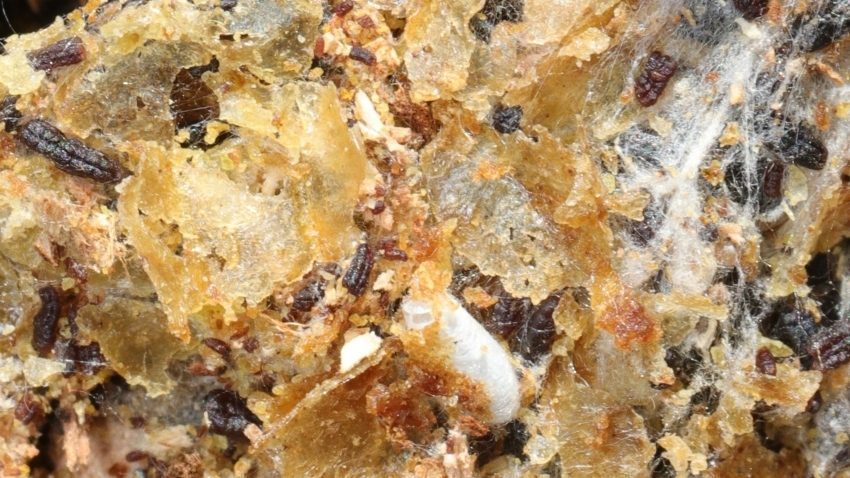
Pantry pests and webbing on stored honeycombSigns in Dried Fruit & Chocolate

Products to check: raisins, dates, figs, other dried fruit, bakers’ chocolate, white chocolate, chocolate chips, raw honeycomb.

  • Look for discoloration, but not all discoloration is a pest problem.
  • Chocolate bloom (whitish film on chocolate) = storage issue, not insects.
  • Discolored, grainy surfaces can indicate feeding → inspect or toss.
  • Webbing, holes, pupae, insect fragmentstoss.

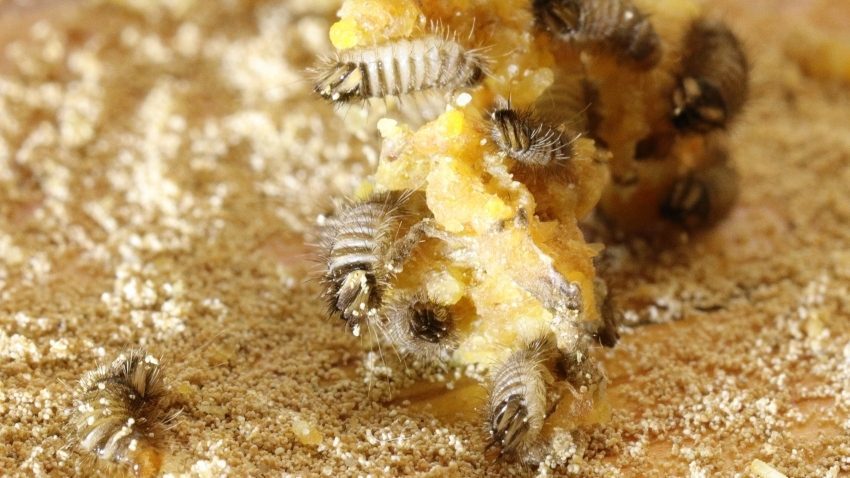
Pantry pests, carpet beetle larvae, on stored food

Signs in Pasta & Cereals

Products to check: pasta, couscous, breakfast cereal, granola, tapioca pearls.

  • Discoloration, small holes, webbing, or insect fragments → toss.
  • Check bottom of cardboard containers for small particles gummed to the bottom with webbing → toss.

What to Do If You Find Pantry Pests (Toss, Clean, Prevent)

  1. Toss: Seal and discard infested items outdoors.
  2. Freeze: Freeze at 0°F (−18°C) for 4–7 days to kill eggs/larvae in borderline items.
  3. Clean: Vacuum shelves, seams, and corners; wipe down the entire interior of cabinets and drawers with white vinegar or mild soap and dry completely.
  4. Seal: Store grains, flours, pasta, dried fruit, nuts, spices, chocolate, and pet food in airtight glass or thick plastic containers. Store infrequently used food items in the refrigerator to maintain freshness and avoid pests.
  5. Prevent: Buy smaller sizes, rotate stock (FIFO), and check packages before storing. If you purchase from bulk bins, don’t add new purchases to existing containers. Start fresh.

Pantry moth webbing that binds flour into clumps is a reliable sign of infestation.

Pantry Pest Glossary (Quick IDs)

  • Webbing: Fine silk threads that bind flour or cereal into clumps—common with pantry moth larvae.

  • Frass: Pencil-dot-sized pellets or gritty material that can resemble sand at the bottom of bags.

  • Setae: Fine hairs/bristles on larvae; may appear on surfaces where larvae crawl.

  • Larva vs. Pupa: Larva = worm-like stage feeding in packages; pupa = resting stage in a cocoon on seams or corners.

  • Chocolate bloom ≠ insects: Whitish or gray film on chocolate from fat/sugar crystals—not a pest sign.

DO DON’T
Freeze borderline items 4–7 days at 0°F Keep questionable items at room temp
Vacuum shelf seams and corners Just wipe—eggs can remain in cracks
Use airtight glass/thick plastic Rely on original packaging
Rotate stock (FIFO) Store bulk goods for months


FAQ

What does pantry moth webbing look like?

Fine, silky threads that bind flour or cereal into clumps; you may also see tiny caterpillar-like larvae or pupae.

Is the sandy material at the bottom of a rice bag normal?

A few broken grains are normal. Uniform, pencil-dot sized material can be frass (insect droppings) and suggest an infestation.

Can I eat food after freezing it to kill eggs?

Freezing can kill eggs and larvae, but if you see webbing, holes, or pest fragments, discard the product. The hairs (setae) of some beetle larvae are particularly harmful if ingested.

How do bugs get into sealed packages?

Many pantry pests chew through thin plastic or are present inside the packaging before you bring it home. Food, like pasta, that comes in cardboard boxes is particularly vulnerable to pests.

How fast do pantry pests spread?

Moths and beetles can spread from one open package to nearby items in weeks if food is accessible.

When should I call a professional?

If you keep finding new signs of pests after cleaning and sealing or can’t locate the source, schedule an inspection. If you suspect ants, cockroaches, mice, or rats, call the pros immediately.

What is frass?

Insect frass is a mix of excrement and chewed-up food debris. It may be loose, grainy, powdery, or shaped like pellets. Frass may also appear as small dark dots stuck to surfaces.

About Thrasher Pest Control

Serving homeowners across San Diego, we inspect for pests, identify sources, and help prevent re-infestations with targeted treatments. Most pantry pest problems can be solved with the DIY advice above. If your problem is severe or involves ants, cockroaches, mice, or rats, give us a call.

Resources


Contributor

Garrett Thrasher

Co-owner & General Manager, Thrasher Pest

Garrett Thrasher is the Co-owner and General Manager of Thrasher Pest, where he leads day-to-day operations for the company’s growing San Diego team. With decades of hands-on industry experience, he specializes in termite control, bed bug management, and solving complex pest problems with practical, long-term solutions.

Table of Contents

Pest-Free Starts With One Call

Privacy Policy

A helpful member of our team will follow up within 15 minutes during business hours to give you a free quote.

San Diego's Pest Control FAQs

Get a free inspection when you book a pest control service.

What pests are covered in your pest control services?

Thrasher Pest Control provides solutions for a wide range of common pests affecting San Diego’s homes and businesses. Services commonly address ants, cockroaches, spiders, rodents, termites, fleas, and other structural or seasonal pests common to Southern California properties. During an inspection, technicians identify the pest activity affecting the property and recommend the most appropriate treatment approach based on the infestation and conditions present.

Response times depend on scheduling availability and the type of service requested. In many cases, technicians are able to schedule service within a short timeframe after a request is received. During the initial contact, the team reviews the pest concern and schedules the earliest available appointment for inspection and treatment.

Preparation requirements vary depending on the type of pest and treatment being performed. For most general pest services, minimal preparation is needed beyond allowing technicians access to key areas of the home and exterior. For specialty services such as bed bug treatments or termite work, the team may provide specific preparation instructions before the scheduled appointment.

Most pest control services begin with a detailed inspection of the property to identify pest activity, entry points, and conditions that may attract pests. After the inspection, technicians apply targeted treatments to affected areas using methods appropriate for the pest involved. Preventive measures such as sealing entry points, removing attractants, and monitoring pest activity are then recommended to help reduce future infestations.

Thrasher Pest Control offers a limited warranty period after the initial treatment. If the target pest is found again in the previously treated area during the warranty period, technicians may return to re-treat the area according to the service agreement. Warranty eligibility depends on the service provided and the property conditions being maintained as recommended by the technician.