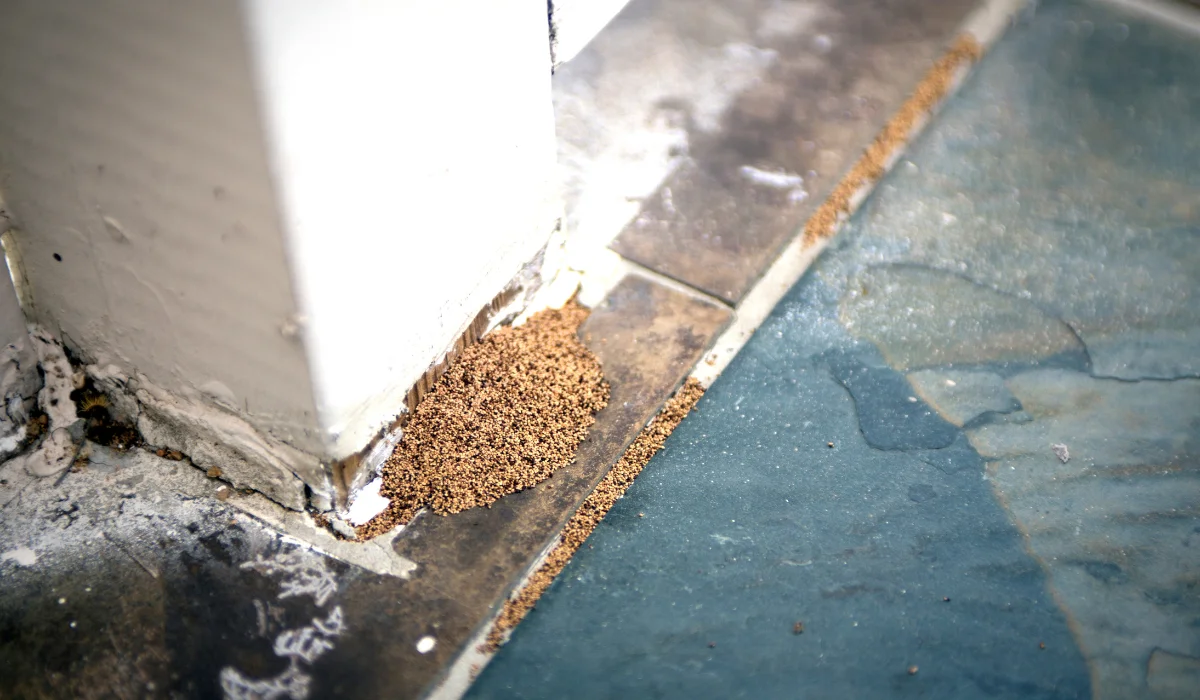
Small piles near a window, baseboard, door frame, or patio cover can be easy to dismiss as dust, dirt, or sawdust. In San Diego homes, though, drywood termites often leave behind termite pellets are distinctive when you know what to look for.
The difference matters because pellets point to termites living inside wood, while dust and sawdust may come from drilling, repairs, carpenter ants, beetles, or damaged wood.
When distinguishing between termite pellets and sawdust in San Diego, pay attention to the shape, texture, where the piles are found, and if they reappear after being cleaned up.
When in doubt, save a sample and schedule a termite inspection before repairing or painting over the area.
Key Takeaways
- Termite pellets are tiny, hard, grain-like droppings from drywood termites.
- Sawdust is usually softer, lighter, and more fibrous or powdery.
- Pellets often collect below tiny kick-out holes in infested wood.
- Pellets alone do not confirm how active or widespread the infestation is.
- A licensed termite inspection is the safest next step when piles keep returning.
What Termite Pellets Look Like
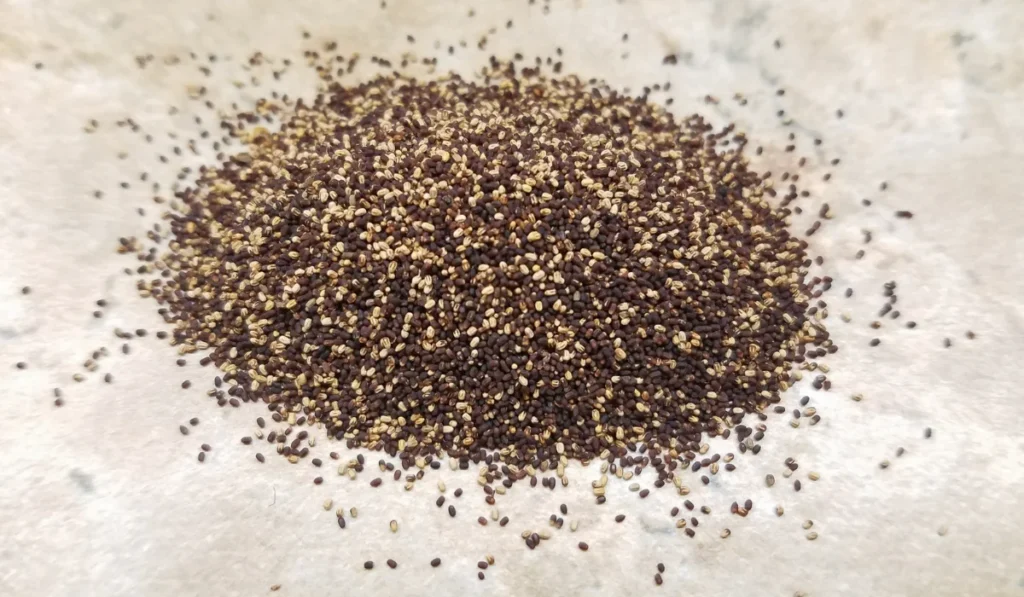
Termite pellets are tiny droppings pushed out of drywood termite galleries. In California, they are often called termite pellets or fecal pellets. Some sources use the technical word “frass,” but homeowners in San Diego are more likely to describe them as pellets, sand, coffee grounds, or sawdust.
Drywood termite pellets may look like:
- Small grains of sand
- Tiny oval or football-shaped pieces
- Light tan, brown, reddish, or dark specks
- A pile below wood trim, windowsills, beams, or furniture
- Material that looks uniform instead of flaky or fibrous
The UC IPM guide to drywood termites explains that drywood termite pellets have six hexagonal sides and are diagnostic for drywood termites. Most homeowners will not be able to see that shape without magnification, but it explains why pellets look more like tiny grains than loose wood shavings. One trick is to rub the material between your fingers. Drywood termite pellets will roll easily between your fingers and feel hard and smooth, not gritty.
What Sawdust Usually Looks Like
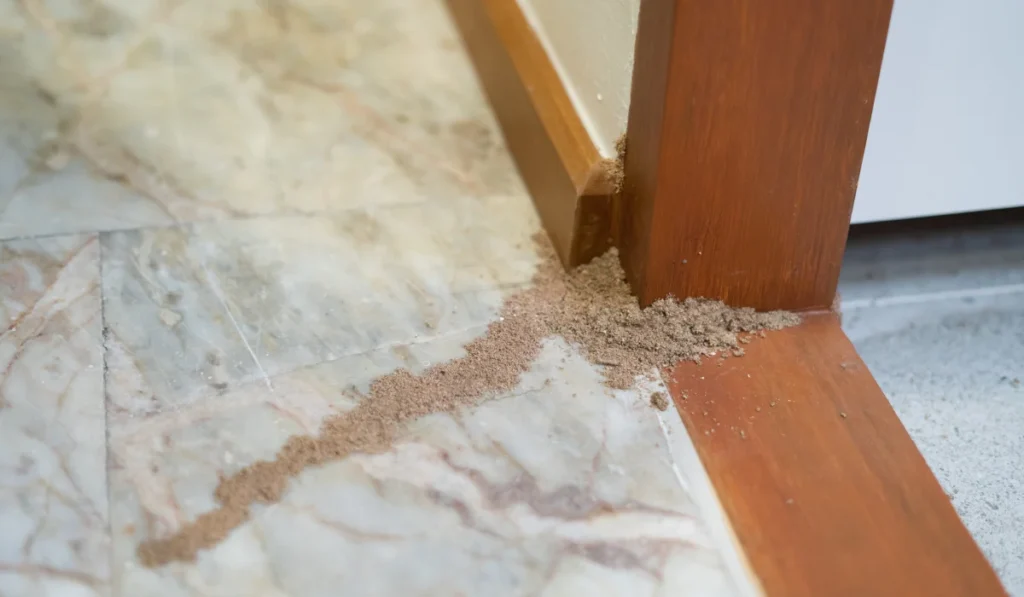
Sawdust is wood material, not termite waste. It can come from repairs, drilling, sanding, old wood, carpenter ants, wood-boring beetles, or damaged trim.
Sawdust is usually:
- Softer and more powdery
- Fibrous or flaky
- Irregular in size and shape
- Lighter in weight
- Spread out instead of piled neatly below a small hole
- Connected to recent work, drilling, furniture movement, or wood damage
The tricky part is that drywood termite pellets can look like sawdust when they are gathered in a small pile. That is why texture matters.
Termite Pellets vs. Sawdust San Diego Homeowners Should Check First
Start with the pile itself, but do not stop there. A single glance is not enough to confirm termites.
A pile is more likely to be termite pellets if:
- It is made of tiny, consistent grains.
- It appears below a small hole in wood.
- It collects on a windowsill, floor, countertop, or under trim.
- It returns after you clean it up.
- It appears near wood that sounds hollow, feels weak, or looks blistered.
- It rolls easily and feels hard and smooth, not gritty.
A pile is more likely to be sawdust if:
- It is flaky, powdery, or made of thin wood fibers.
- It appears after drilling, sanding, furniture repair, or construction.
- It is spread unevenly instead of forming a small pile.
- It does not return after cleaning.
- There are no small kick-out holes or other termite signs nearby.
If the pile returns after cleaning, take that seriously. Drywood termites can push pellets out of small openings as they make room inside the wood.
Where Termite Pellets Show Up in San Diego Homes
Drywood termites live inside wood and do not need soil contact. That means pellets can show up indoors or outdoors, often below the wood where termites are active.
Check areas such as:
- Windowsills and window trim
- Door frames and baseboards
- Patio covers and exposed beams
- Fascia boards and roof edges
- Wood furniture
- Garages and storage areas
- Attics or accessible framing
- Countertops below cabinets or trim
Thrasher’s guide to drywood termites in California notes that termite pellets often pile up below activity, such as on a windowsill, floor, or countertop. It also explains that pellets may return after cleaning when drywood termite activity is ongoing, but not always. Sometimes the termites just move on to new areas of the wood.
Why Pellets Do Not Tell the Whole Story
Termite pellets are a strong clue, but they do not show the full size of the problem. A pile of pellets may come from a colony in nearby trim, a beam, a door frame, furniture, or another hidden wood area.
Pellets alone do not tell you:
- How long termites have been active
- How far the colony extends
- Whether there are multiple colonies
- Whether the damage is limited to one area
- Which treatment is appropriate
This is especially important with drywood termites because workers live hidden inside wood for their entire lifecycle. You may see pellets before you ever see the insects themselves.
What to Do If You Find Termite Pellets
If you find a pile that may be termite pellets, avoid spraying the area or sealing the hole right away. Surface sprays miss drywood termites because the colony is inside the wood.
Instead:
- Take clear photos of the pile and nearby wood.
- Save a small sample in a sealed bag or container.
- Clean the pile once and note whether it returns.
- Look nearby for small holes, wings, blistered paint, or weak wood.
- Avoid repairing, painting, or sealing the area before inspection.
These steps help the inspector understand where the pellets appeared, how often they return, and which wood areas may need closer attention.
When to Schedule a Termite Inspection
Schedule a termite inspection if pellets return after they are cleaned up, if you find them near structural wood, or if you see other signs such as wings, hollow-sounding wood, warped trim, or small holes in wood.
Thrasher Pest Control provides termite control in San Diego for drywood termites, subterranean termites, and other wood-destroying organisms. Our termite inspections are performed by licensed, experienced inspectors and followed by a written report with findings, treatment recommendations, repair recommendations, and prevention guidance.
Depending on the inspection findings, treatment may include local treatment for limited activity, fumigation for widespread drywood termite colonies, or other termite control options based on the type and extent of the infestation.
Schedule Termite Control in San Diego
If you are not sure whether you found termite pellets or sawdust, do not guess from the surface. Thrasher Pest Control can inspect the area, identify the signs, and explain the next step based on what is actually happening in the wood.
Contact us to schedule a termite inspection in San Diego before cleaning, repairing, or sealing over a recurring pile.
Frequently Asked Questions
Are Termite Pellets the Same as Sawdust?
No. Termite pellets are droppings pushed out by drywood termites. Sawdust is wood debris. Pellets tend to look like tiny hard grains, while sawdust is usually softer, powdery, or fibrous.
Why Do Termite Pellets Keep Coming Back?
Recurring pellets may mean drywood termites are still pushing waste out of infested wood. Take clear photos and a sample of the material, clean the pile once, and schedule an inspection if the material returns.
Is “Frass” the Same as Termite Pellets?
Yes, in this context. “Frass” is a technical term for insect waste. In California “termite pellets” or “fecal pellets” is often clearer than relying only on the word “frass.”
Do Termite Pellets Mean the Infestation Is Active?
They can be a sign of activity, especially if new pellets appear after cleaning. However, pellets alone do not confirm how active or widespread the infestation is. A termite inspection is needed.
Should I Vacuum Termite Pellets Before an Inspection?
Take photos first and save a small sample if you can. You can clean the area afterward, but note whether the pellets return and where they appeared. If you can leave them in place, please do so. Their location and volume are great clues for a termite inspector.