
EXCELLENT 3227 reviews
Homeowners in San Diego see Formosan termites eat wood fast, so we check your place and block these bugs before they spread—book your termite check today for peace of mind.
Fumigation may be recommended if the structure is also harboring aerial colonies of Formosan subterranean termites. (Fumigation alone will not kill a Formosan colony.)
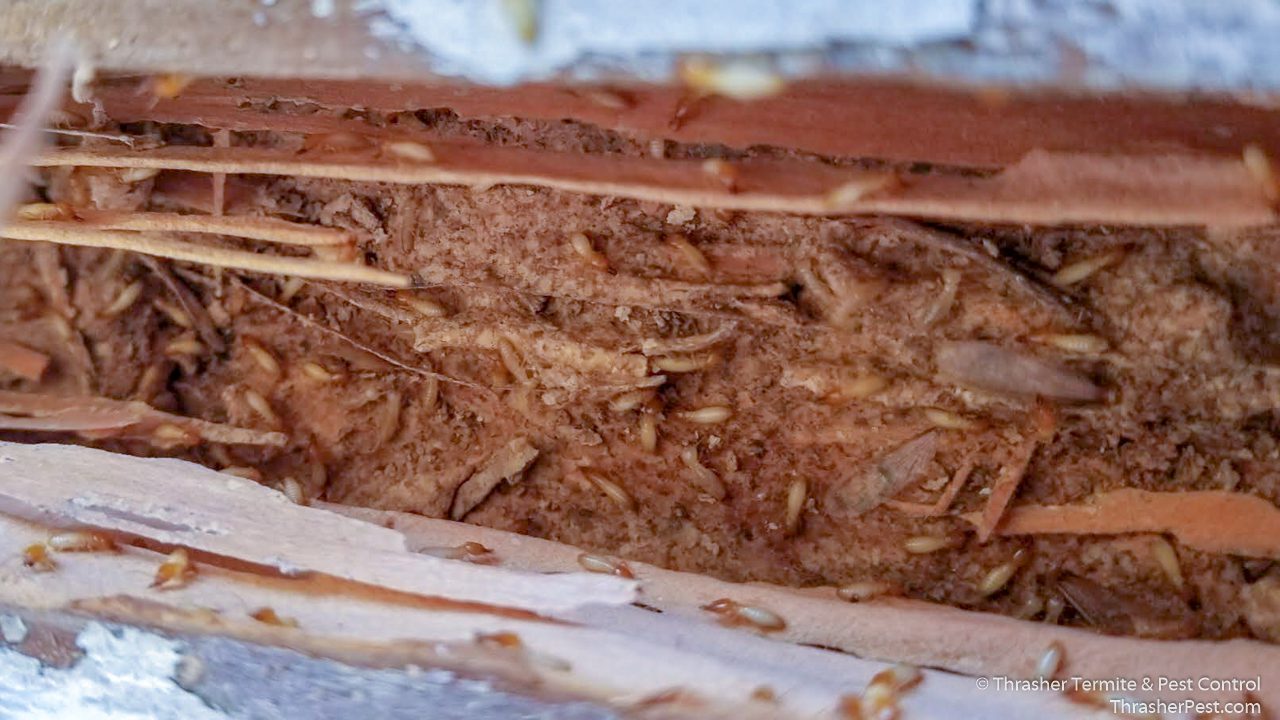
In 2018, Thrasher Termite & Pest Control identified a new colony of Formosan subterranean termites in La Mesa, half a mile from the original 1992 outbreak of this destructive, invasive species. Formosan subterranean termites rapidly develop huge colonies and can cause significant structural damage within 6 months. Even more recent identification of Formosan termite colonies in residential homes as well as undeveloped areas of La Mesa means Formosan termites are now well established in San Diego County. Thrasher Pest is continuing to use the best available treatments for eradicating Formosan termites. At the same time, Thrasher Pest continues to participate in studies to test new treatment methods for Formosan termites. One of the best ways to protect your home is early detection of Formosan termites. For this reason, Thrasher Pest HIGHLY recommends termite monitoring for all structures in La Mesa and the surrounding areas.
Conclusive identification of Formosan subterranean termites was made by Thrasher Termite & Pest Control in cooperation with the San Diego County Department of Agriculture and the California Department of Agriculture Plant Pest Diagnostics Division in Sacramento, California.
We inspect your home and the surrounding area for signs of Formosan termites and other wood-destroying organisms
When Formosan termites are found, target the best available treatment to protect the home.
Install monitoring stations surrounding the property. Check for activity.
Continue to monitor for Formosan termites to catch any new colonies before they become destructive.
Formosan subterranean termites introduced in La Mesa (estimated date)
Formosan subterranean termites identified in La Mesa and confirmed by University of California, Agriculture and Natural Resources. Seven homes infested. Treatment and monitoring begins in surrounding area.
Monitoring expanded to include 69 properties.
Monitoring devices installed ½ mile from infected homes.
Formosan subterranean termites believed eradicated in original area.
Monitoring devices installed 1 mile from the original area.
Formosan subterranean termites infestation found in a secondary area in La Mesa affecting five homes. Treatment begins.
The University of California’s Agriculture and Natural Resources research program in La Mesa was discontinued due to a lack of funding.
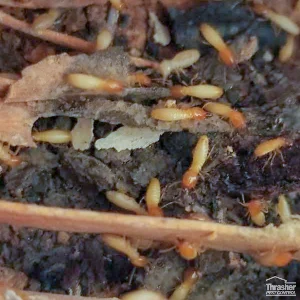
Formosan subterranean termites rediscovered in La Mesa by Thrasher Termite & Pest Control, ½ mile from original 1992 infestation.
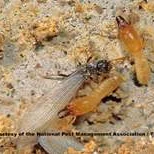
New Formosan subterranean termites colonies continue to be found in La Mesa and the surrounding areas.





After 20 years of hiding in plain sight, the rediscovery of Formosan subterranean termites in La Mesa, California, is big news. The importance of being alert to Formosan termite infestations cannot be overstated. Formosan termites can cause a huge amount of damage to La Mesa homes in a short period of time. Additionally, it is important to San Diego County and the state of California to limit the territory of this very destructive invasive species of termites.
Formosan Subterranean Termite News Links:
KGTV-San Diego 10News.com
PCT (Pest Control Technology magazine)
Pest Management Professional magazine
Wood Working Network
Facebook Posts

Formosan subterranean termites are on the USDA’s National Invasive Species list due to their ability to cause structural damage to buildings and their competition with native termite species. In a throw-down between native subterranean termites and Formosan subterranean termites, the Formosan termites outpace and outcompete native subterranean termites. While native subs cause structural damage over time, we have very effective means of controlling them. Formosan subterranean termites cause HUGE amounts of damage in very little time, and control requires a multi-pronged approach over a long period of time.
Signs of Formosan subterranean termites include mud shelter tubes on slabs, foundations, or piers; tiny holes appearing in walls, ceilings, or hardwood floors; painted wood that appears bubbled; bulging walls; sagging floor; a chewing sound coming from the walls (yes, some people can detect this sound); and winged reproductive termites.
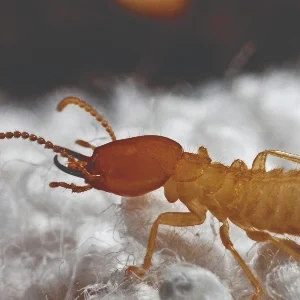
Formosan subterranean termite reproductives, or alates, look like a plump grain of brown rice with four long, narrow wings. The wings are at least two times the length of the body of the insect. The body does not have a narrow or pinched waist. The reproductives of all termite species in San Diego appear similar. It takes a trained professional to provide a definite identification.
The behavior of Formosan subterranean termites is distinctive. Unlike native subterranean termites, Formosan subterranean termites are extremely active, don’t flee when disturbed, and the soldiers are particularly aggressive. Formosan subterranean termite soldiers will bite your finger if you get close enough, but they cannot break the skin and are harmless to humans and pets.
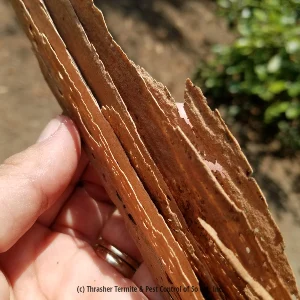
Formosan termite damage follows the grain in structural lumber. Unlike native termites, Formosan termites feed on both the summer and spring wood, leaving large hollow spaces. These hollow spaces are called galleries. Unlike native termites, Formosan termites clean out debris from their galleries, leaving them practically soil free and covered in whitish spots.
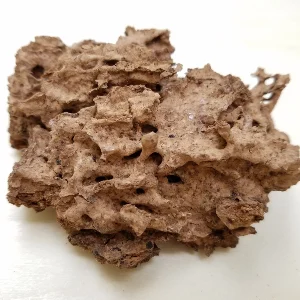
In severe infestations, Formosan termites form nest-like structures in hollow spaces and wall voids with a combination of termite excrement, macerated wood, saliva, and soil. These “carton” nests are constructed near a feeding site. A single Formosan termite colony may have several of these auxiliary nests containing secondary reproductives. One sign of these hidden nests is a bulging wall.
In addition to eating structural lumber, Formosan termites have been known to attack over 50 species of living plants, including citrus, pepper trees, wild cherry, cherry laurel, ash, sweet gum, cedar, willow, wax myrtle, Chinese elm, live oak, and white oak. Because Formosan termites survive in the yard as well as the house, it is important to inspect and treat the area surrounding an infested house.
Formosan termites are aggressive eaters and have been known to chew through non-wood materials in their search for wood. They have attacked plastic, asphalt, plaster, rubber, and thin sheets of lead and copper metal. The creosote on utility poles does not deter Formosan termites and is at great risk of damage.
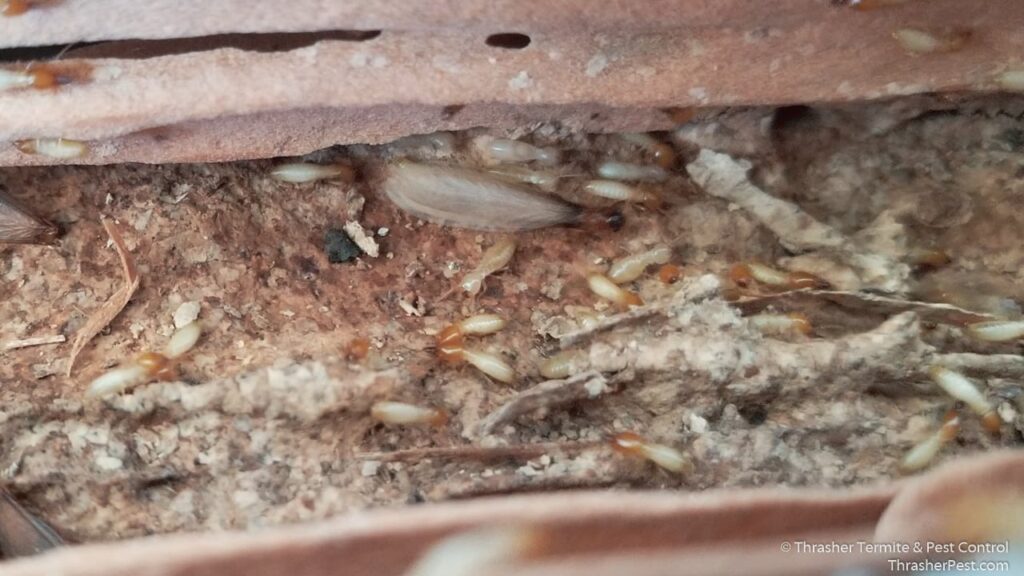
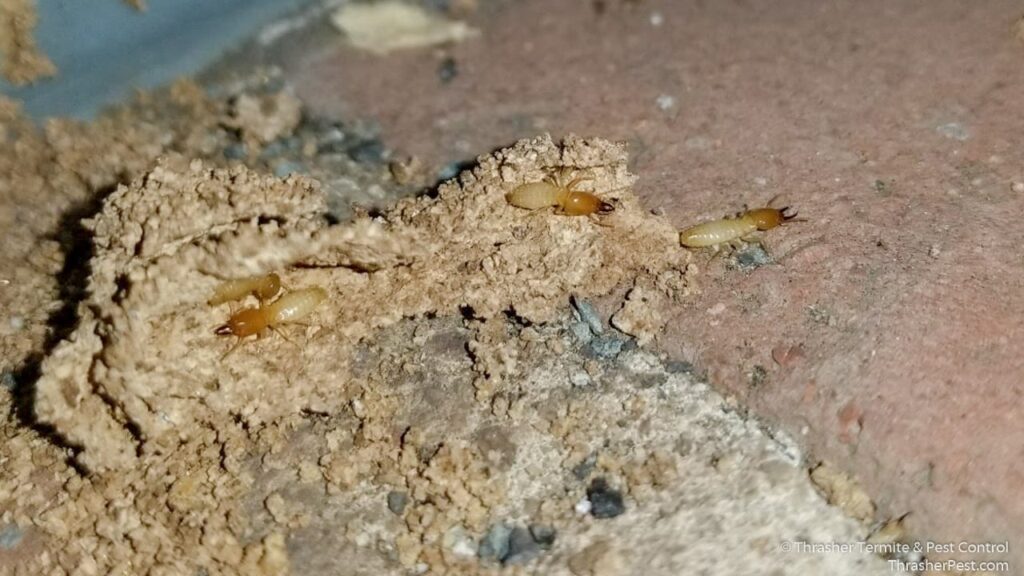
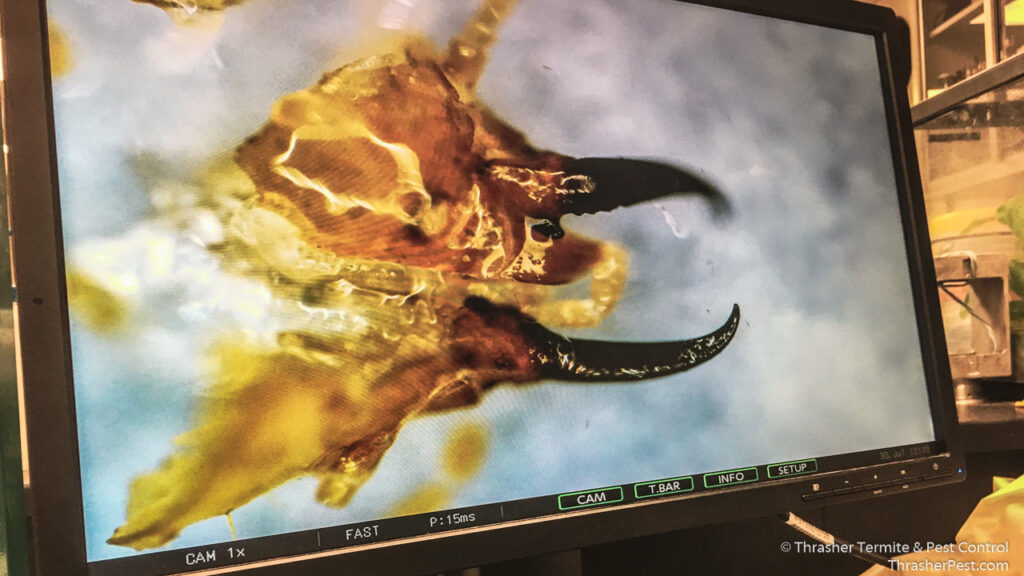
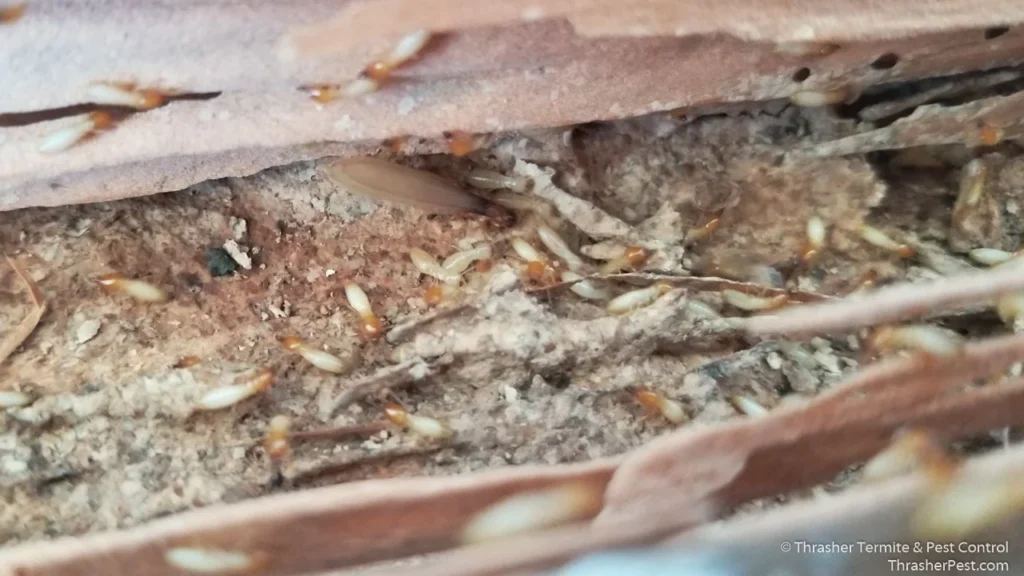
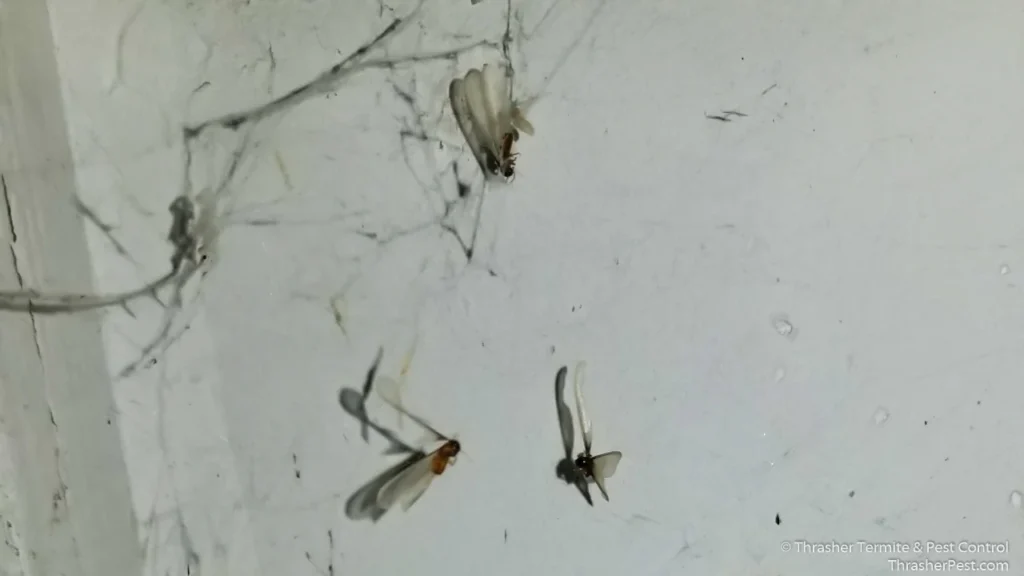
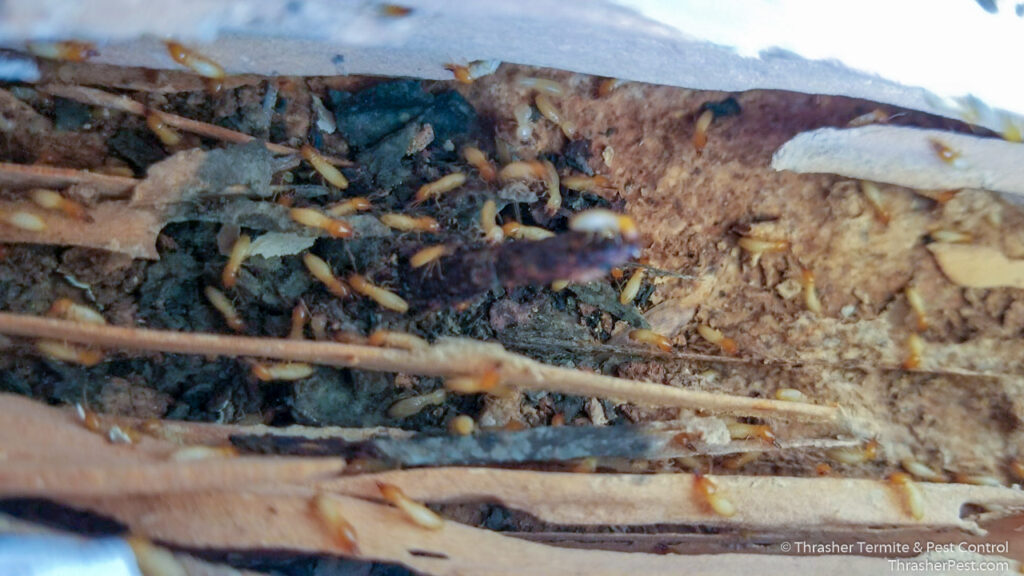
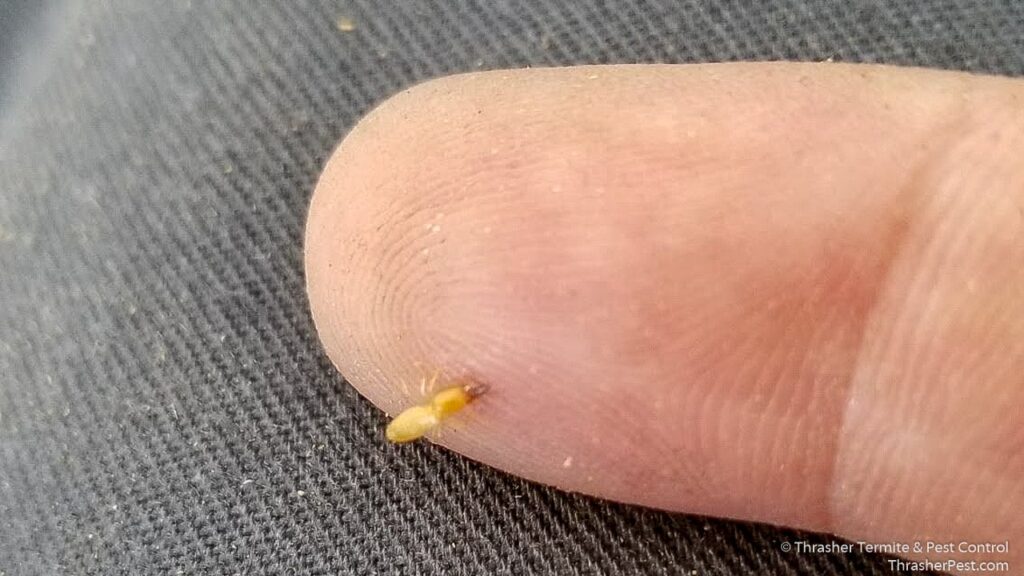
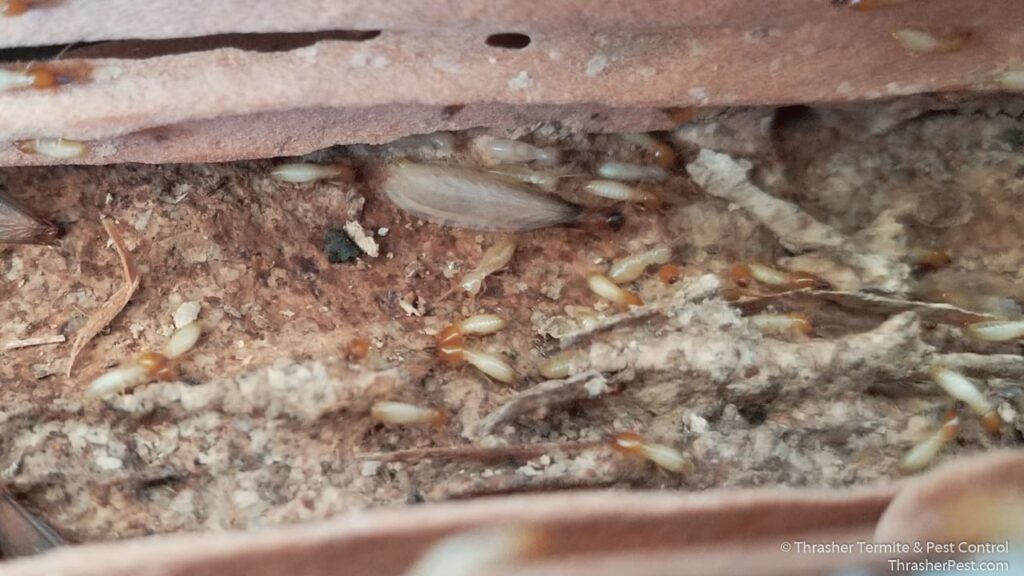
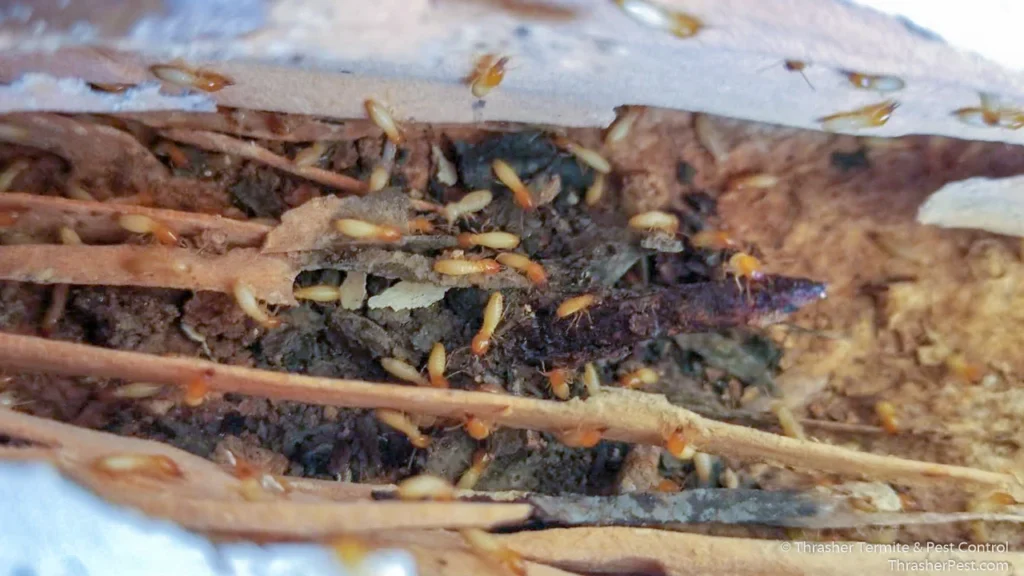
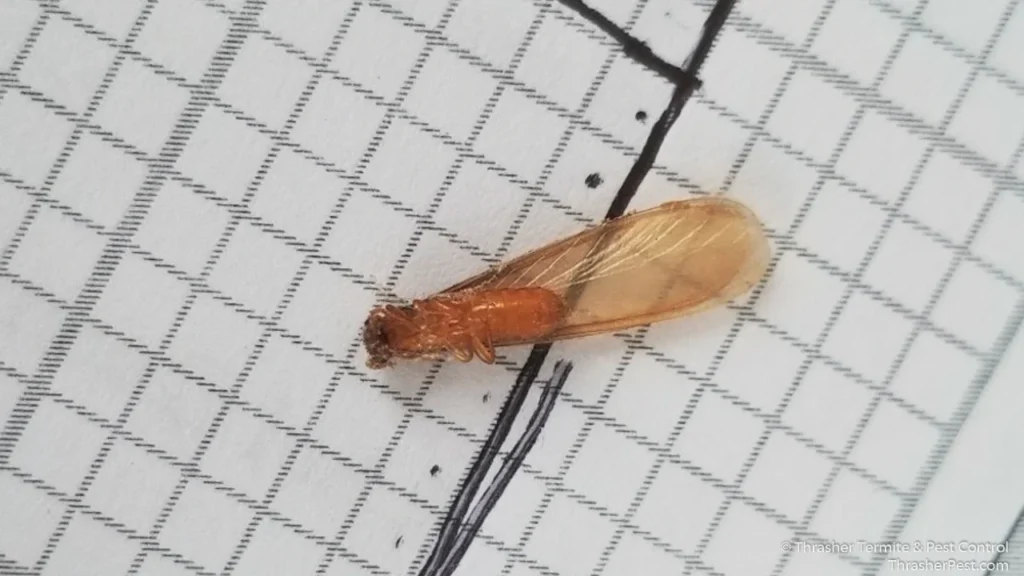
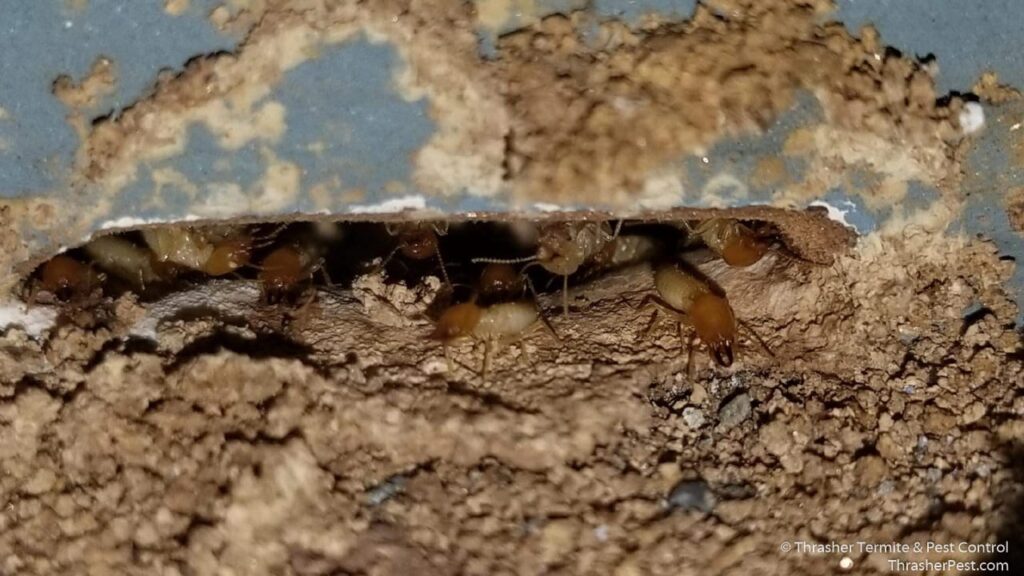
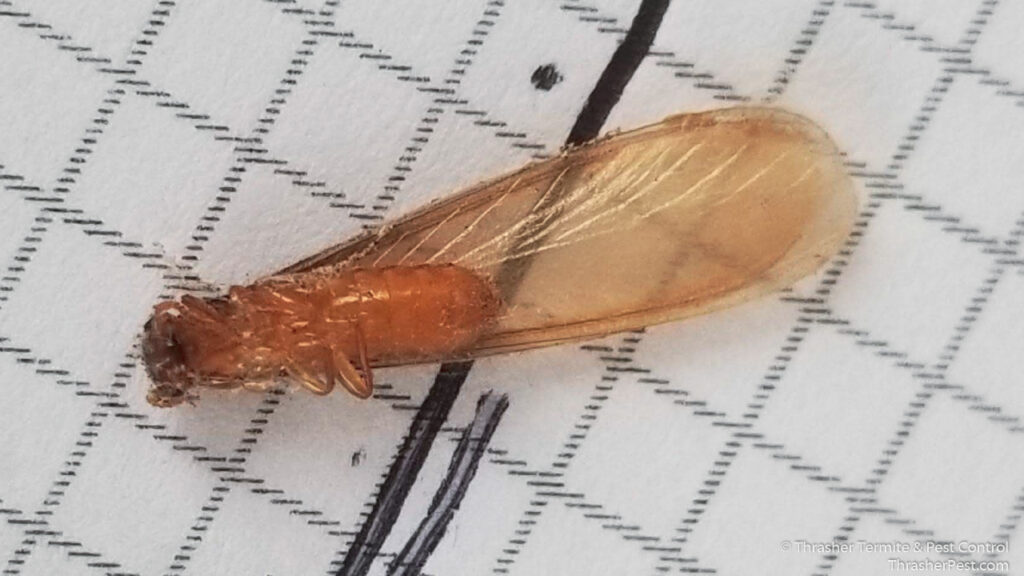
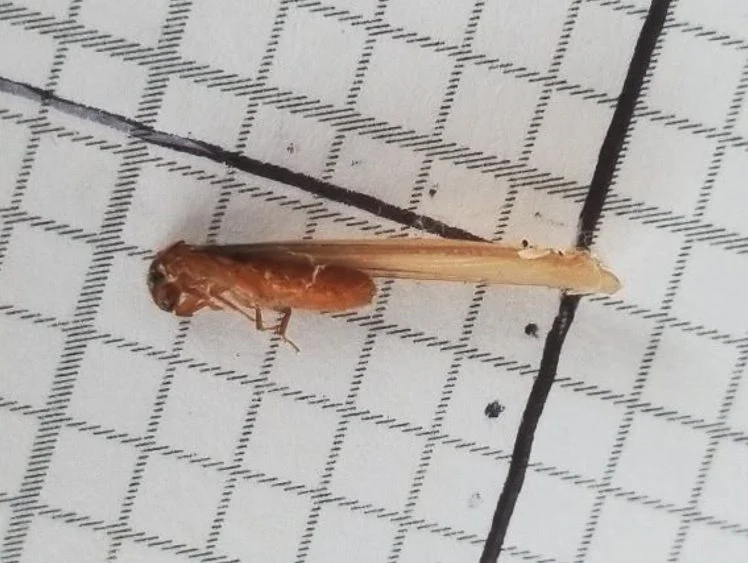
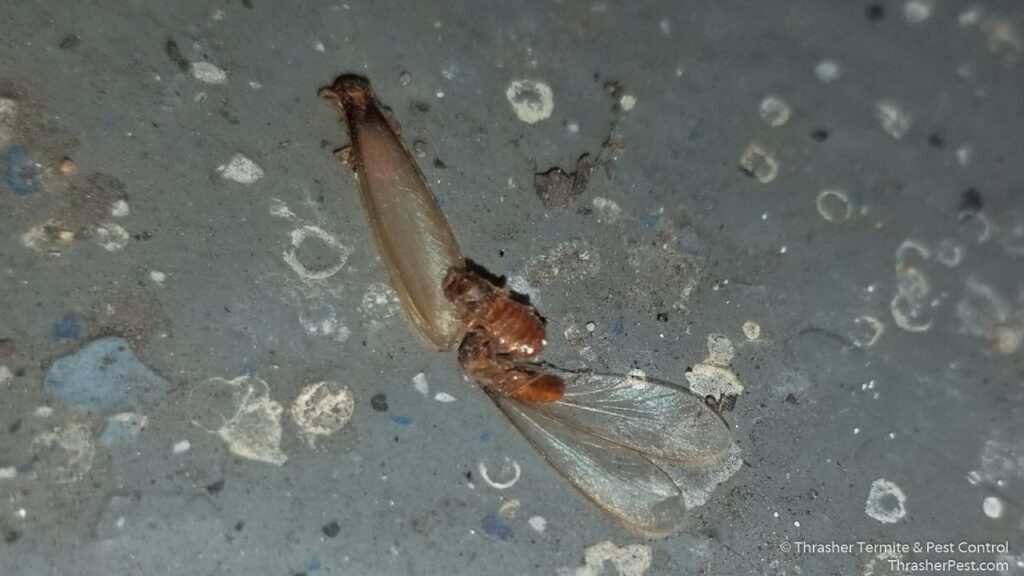
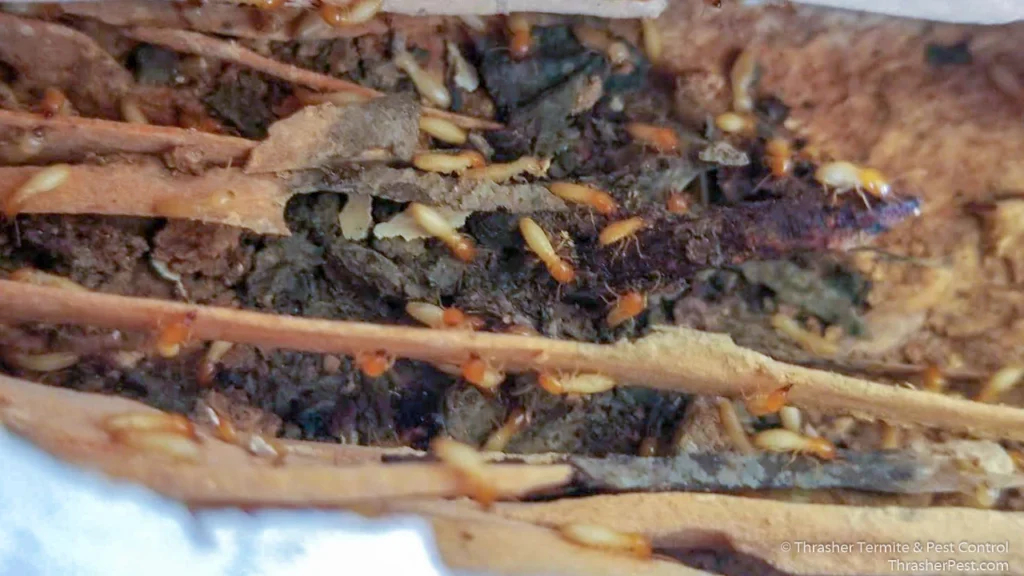
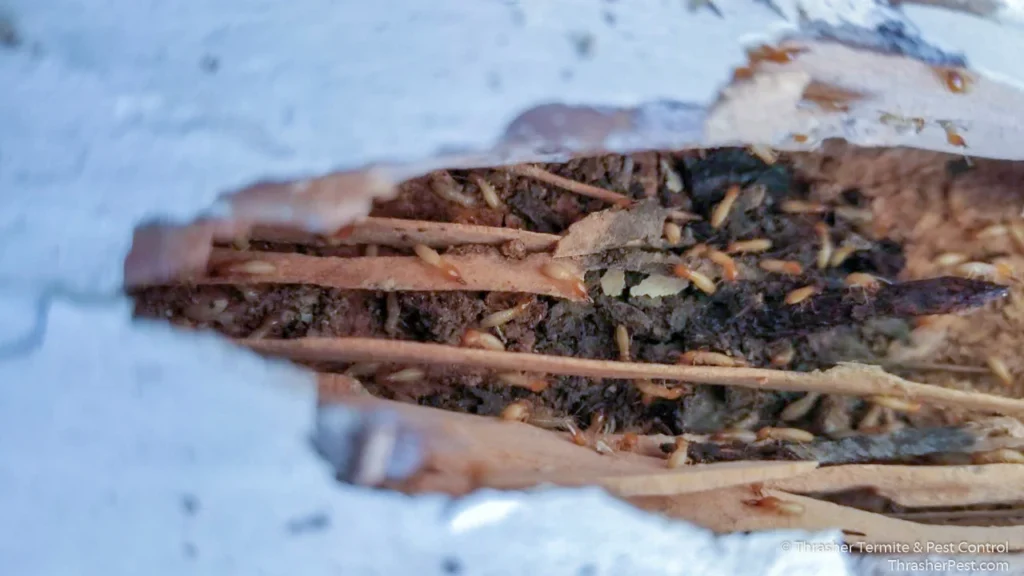
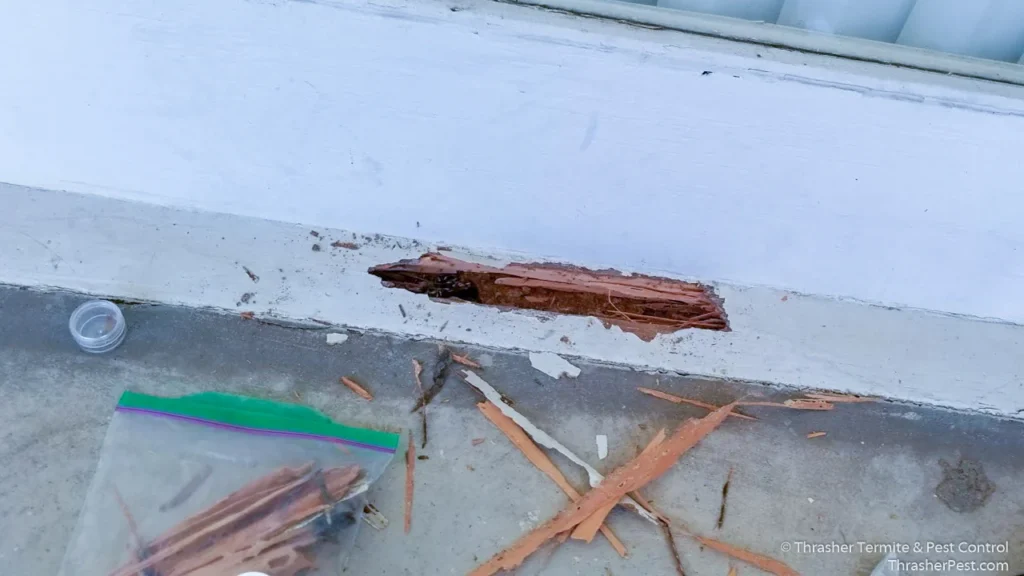
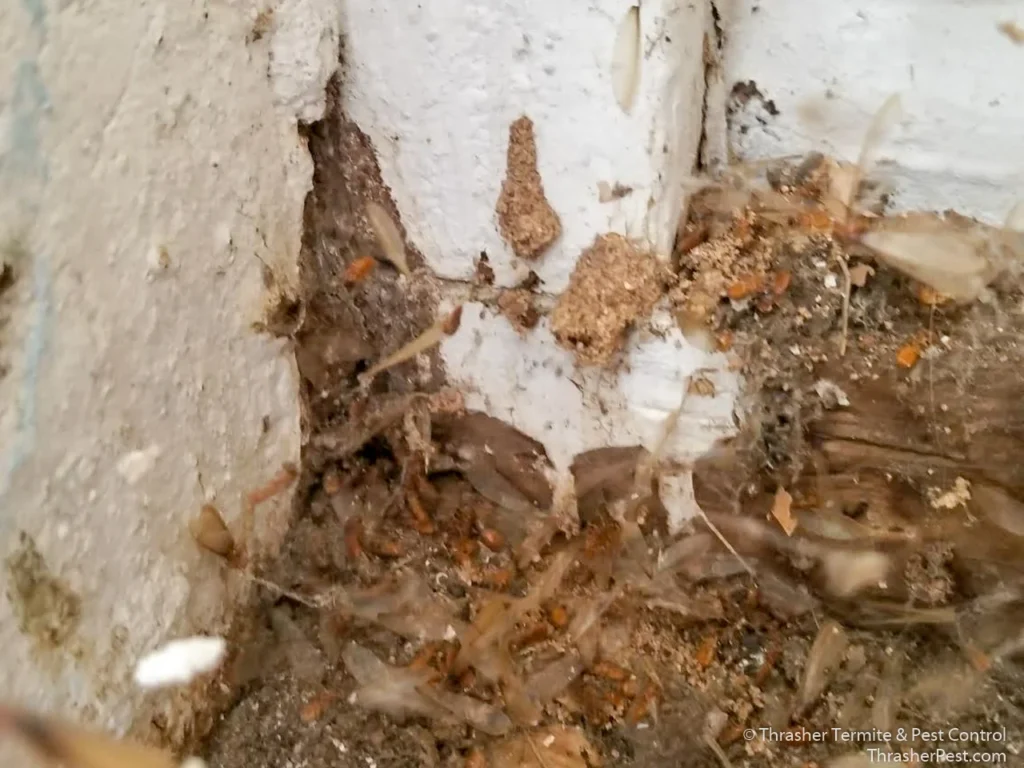
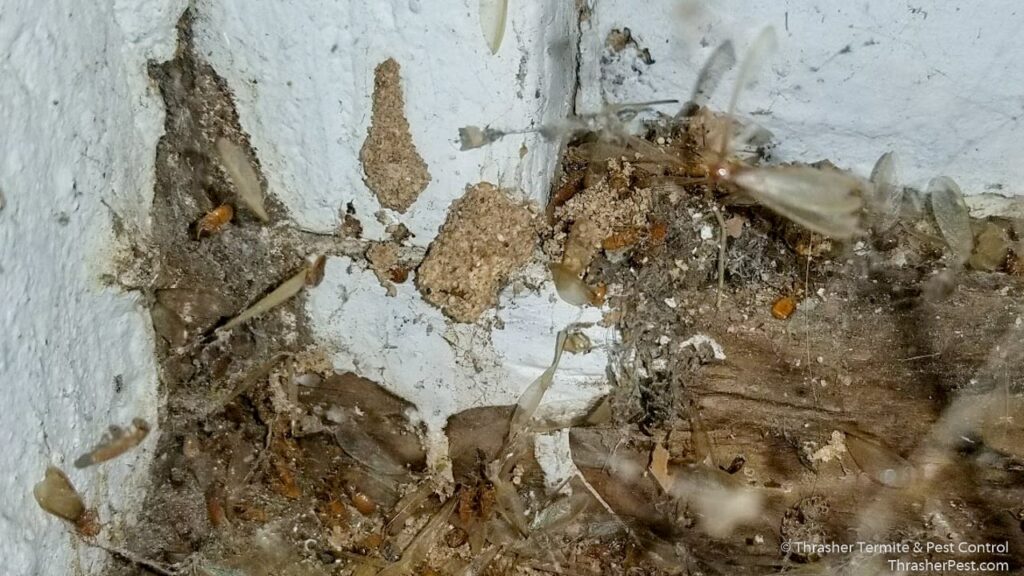
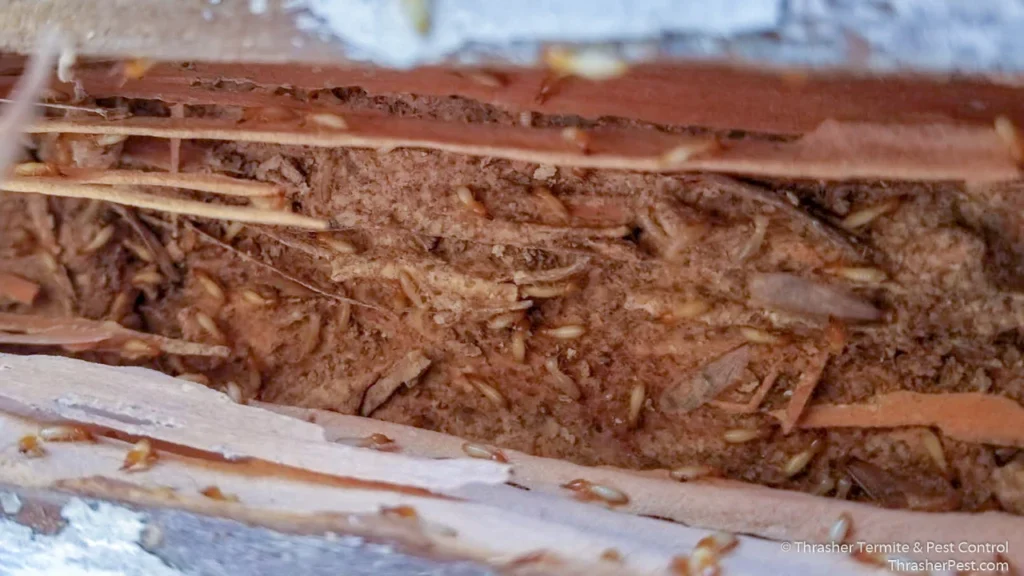
Formosan subterranean termites found La Mesa 2018 (c) Thrasher Termite & Pest Control of So Cal, Inc.
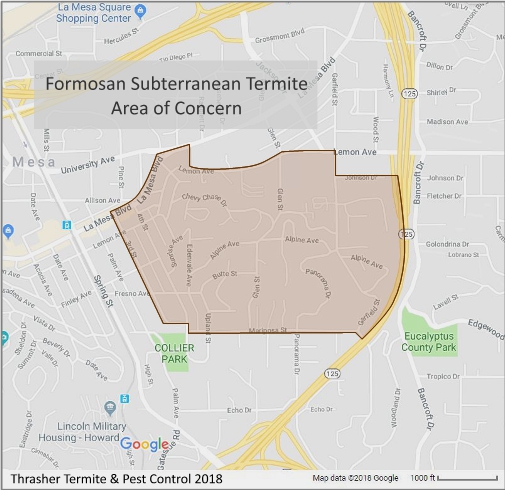
Formosan Subterranean Termite 2018 Area of Concern, i.e. Hot Spot. Hot spot boundaries are within 1/2 mile of active infestations.
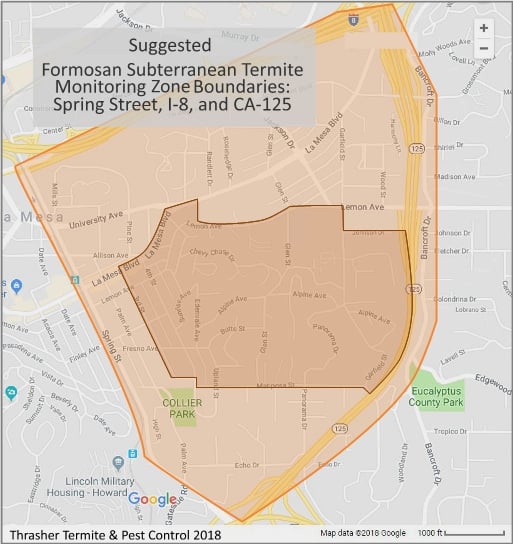
Suggested Formosan Subterranean Termite La Mesa Monitoring Zone Map Boundaries Spring Street, I-8, and CA-125
Follow-up within 15 minutes during business hours.
Get a free inspection when you book a pest control service.
Formosan subterranean termites are a type of termite that can cause a lot of damage to wood in your home. We know how to spot the signs and deal with them quickly so you can relax, knowing your home is in good hands this fall.
Formosan termites grow bigger groups and can do more harm to a home than other kinds. We’ve seen how fast they work and know just how to spot what makes them different. We’re ready to help you keep your home solid and walk you through every step.
Formosan termite colonies can live deep underground or sometimes close to your foundation, moving into wood nearby. We know just where to look, even in hard-to-reach places you might not think about. If you think you’ve spotted signs of termites around your home, we’re ready to help you check and figure out next steps this fall.
You might see mud tubes on walls, wood that sounds hollow, or wings left behind near windows. We can check your home and show you what to look for, so you’ll feel more sure about what’s going on. We’ve helped a lot of folks find and stop termite problems like these.
Early detection helps keep damage small, and that can mean lower repair and treatment cost. When we find things early, it’s easier to stop the problem before it gets bigger. We’ll walk you through every step so you know what to expect.