San Diego homeowners may need to keep checking for mosquitoes later than usual this winter. The developing 2026–27 El Niño has a greater than 90% chance of becoming very strong, and a 69% chance of reaching historic strength during October through December.
Historic El Niño strength does not guarantee record rainfall in San Diego. What matters for mosquitoes is the weather sequence that can accompany a wetter winter: rain creates standing water, then mild or warm days give mosquitoes time to develop before that water disappears.
A flowerpot saucer, clogged drain, bucket, or low spot can be dry before a storm and usable mosquito habitat afterward. If storms repeatedly refill those places, mosquito activity can continue at a time when homeowners normally expect it to fade.
That is why Thrasher Pest Control targets more than active mosquito populations; our team evaluates environmental factors like shade, drainage, moisture, and watering systems to disrupt their breeding cycles. Our experts also pay attention to the water, drainage, irrigation, shade, and other property conditions that allow them to keep reproducing.
Why Rain and Warm Days Matter More Than the Month
Mosquitoes do not stop developing simply because winter has arrived. They respond to water and temperature.
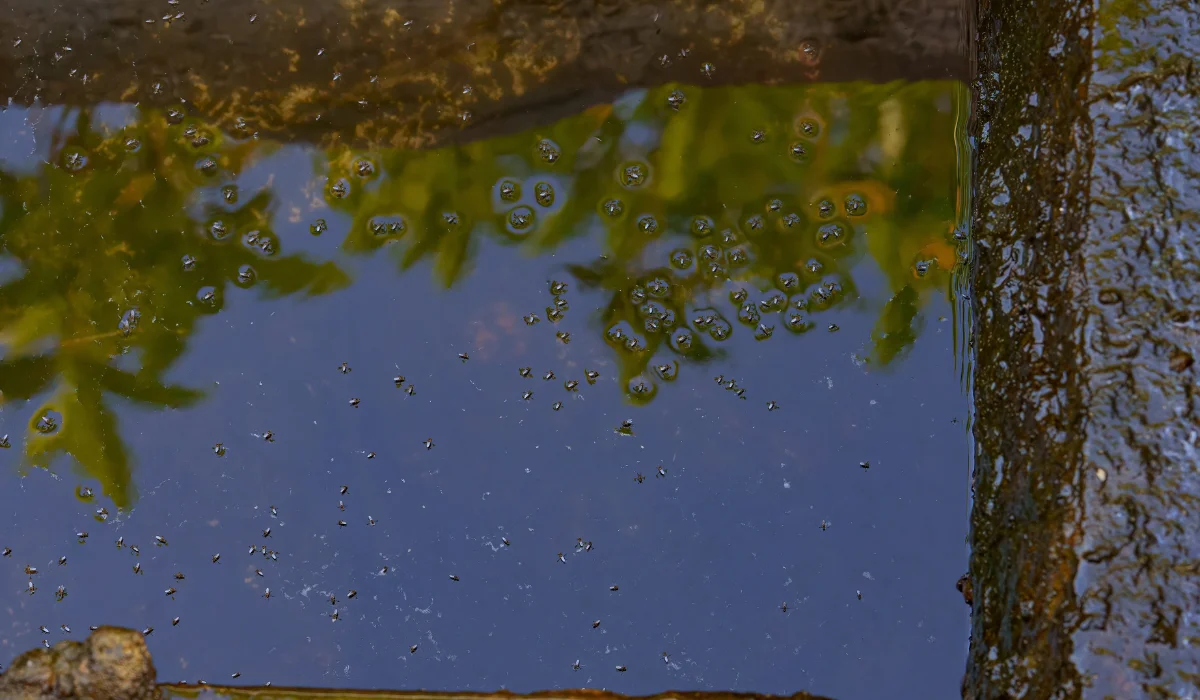
Every mosquito spends its larval and pupal stages in water. Winter rain can suddenly create dozens of potential breeding sites around a house. The next question is how long those sites remain wet and what temperatures follow the storm.
During periods of warm weather, mosquitoes in San Diego can develop from egg to adult in less than a week. That gives homeowners a relatively short window to find new standing water before another generation can emerge.
| Winter Pattern | What Changes | Why It Matters for Mosquitoes |
|---|---|---|
| Heavy or repeated rain | Dry containers and depressions fill | New breeding sites become available |
| Mild or warm days after rain | Water remains while development continues | Larvae may reach adulthood before the site dries |
| Several storms close together | The same locations refill repeatedly | Breeding conditions can return after cleanup |
| Irrigation between storms | Some sites stay wet without additional rainfall | Mosquito habitat can persist during dry stretches |
| Shaded landscaping | Water evaporates more slowly | Small breeding sites remain usable longer |
This is why a longer mosquito season would not necessarily look like summer lasting through January. Activity may come in bursts, with quiet periods followed by more biting after rain and warmer weather.
Invasive Aedes Mosquitoes Are Built for This Pattern
San Diego’s invasive Aedes mosquitoes are particularly well suited to taking advantage of intermittent winter rain.
These mosquitoes can reproduce in as little as a quarter inch of standing water. Their eggs can remain dry for months, waiting for water to return.
That changes how homeowners should think about an apparently dry yard.
A plant saucer may have been empty since summer but still have eggs attached inside it. Once rain fills the container, those eggs have another opportunity to hatch. During warm conditions, development from egg to adult can take about a week.
The container does not have to look like a mosquito problem. Aedes commonly use small residential water sources, including flowerpot saucers, buckets, toys, birdbaths, watering cans, tarps, outdoor furniture, tree holes, and other objects that hold rainwater.
They also tend to stay fairly close to where they developed. Persistent daytime biting around one patio, doorway, or section of the yard is therefore worth investigating rather than dismissing as mosquitoes arriving from somewhere else.
Winter Rain Creates Breeding Sites Homeowners Rarely Notice
Large puddles are easy to spot. The smaller water sources are more likely to survive a cleanup.
San Diego County identifies a long list of backyard mosquito breeding sites, including plant saucers, open fence posts, tree holes, decorative rocks, outdoor furniture, toys, tarps, rain barrels, and watering cans.
Drainage systems deserve attention too. A yard can look dry from the surface while water remains inside a landscape drain or beneath a grate.
| Area | What Can Hold Water | What to Do After Rain |
|---|---|---|
| Patio | Plant saucers, furniture, toys | Empty water and wipe containers where possible |
| Side yard | Buckets, tarps, stored items | Store containers covered or upside down |
| Landscaping | Tree holes, decorative features, low spots | Correct areas where water repeatedly collects |
| Gutters and drains | Debris, clogged outlets, standing water below grates | Clear obstructions and confirm that water drains |
| Irrigation areas | Runoff and oversaturated soil | Adjust watering if the same areas stay wet |
| Less-used corners | Forgotten containers and outdoor equipment | Include them in every post-storm check |
The location that keeps filling deserves more attention than the water itself. Dumping a saucer solves today’s breeding site. Correcting why an area collects water can keep the same problem from returning after the next storm.
Irrigation Can Extend the Problem Between Storms
Rain is only one source of mosquito water in San Diego.
Irrigation can keep a breeding site active after a storm pattern has ended. Runoff may settle along planter edges or in low spots. Sprinklers can refill saucers. Shaded landscaping can stay damp long after sunny areas have dried.
This becomes more important during an El Niño winter because the property may already be saturated when irrigation resumes.
If the same place holds water every time you inspect it, dumping it repeatedly is not enough. Adjust the sprinkler, redirect the runoff, clear the drain, or move the object that keeps collecting water.
That kind of correction is more useful than treating each refill as a separate problem.
A Longer Mosquito Season Will Not Affect Every San Diego Yard Equally
A regional weather forecast cannot predict mosquito pressure at an individual home.
Two yards can receive the same rain and produce very different results. One has good drainage and few outdoor containers. The other has potted plants, a shaded side yard, irrigation runoff, dense landscaping, and drains that remain wet for several days.
The mosquitoes have more opportunities at the second property.
| What You Notice | What May Be Happening Nearby | Where to Look First |
|---|---|---|
| Daytime biting around a patio | Aedes breeding close to the activity | Pots, saucers, furniture, toys |
| Activity increases several days after rain | Newly flooded sites supported development | Containers, drains, low areas |
| Mosquitoes persist between storms | Water is being replenished another way | Irrigation runoff, birdbaths, fountains |
| One part of the yard is consistently worse | A local breeding or resting area may be nearby | Shaded vegetation and nearby water sources |
| Mosquitoes return after cleanup | A recurring site was missed or refilled | Drains, stored items, hidden containers |
This is also why mosquito season in San Diego is better understood through local conditions than through a fixed start and end date.
Check the Property After Each Significant Winter Rain
Do not wait for biting activity to tell you that the yard has changed.
Once rain stops, walk the property while it is still easy to see where water collected. Empty containers, inspect plant saucers, look beneath outdoor furniture, clear gutters, and check landscape drains.
Then return a few days later.
Some areas that initially appear to drain may still contain water below the surface. Irrigation may also refill locations that were emptied after the storm.
Pay particular attention to anything that repeatedly collects water. Removing that source or correcting the drainage gives mosquitoes one less place to reproduce after the next round of rain.
Invasive Aedes eggs can remain dry for months, so simply waiting for a container to dry is not always enough. Washing or wiping small containers when practical can help remove eggs attached inside them before they are flooded again.
Could El Niño Really Extend Mosquito Season in San Diego?
Yes, if the right conditions overlap. The 2026–27 El Niño is projected to become exceptionally strong. That does not tell us exactly how much rain any San Diego neighborhood will receive. It does give homeowners a good reason to watch what repeated winter storms leave behind.
Rain creates water. Warm periods can shorten mosquito development time. Invasive Aedes eggs can wait through dry periods for the next refill.
Together, those factors can produce mosquito activity later in the year and at less predictable times than homeowners are used to seeing.
Thrasher’s mosquito service is GreenPro and Public Health certified by QualityPro, and its inspectors evaluate the property conditions contributing to mosquito activity rather than treating every yard as if it has the same problem. Thrasher serves Poway, Carlsbad, Chula Vista, El Cajon, San Marcos, La Mesa, Rancho Santa Fe, and surrounding San Diego County communities.
If winter storms are followed by unexpected biting around your property, professional mosquito control in San Diego can help identify where mosquitoes are developing, which conditions need to be corrected, and which treatment options are best for the situation.