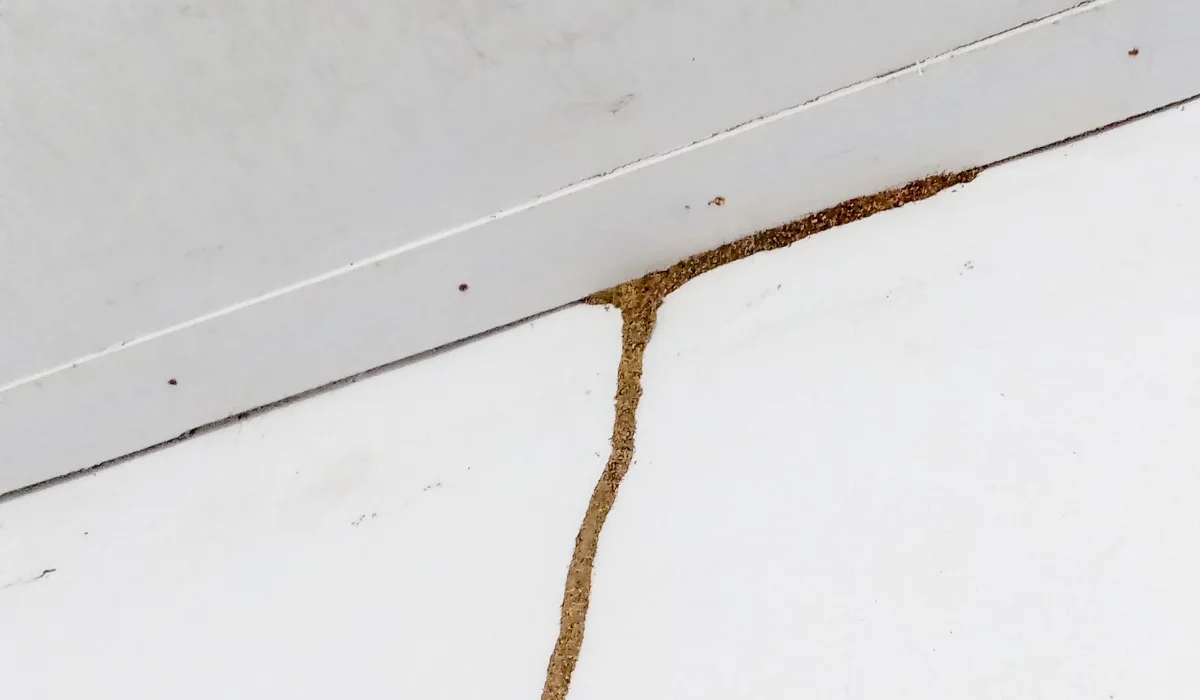
The early signs of termites in a ceiling can be easy to overlook. Thrasher inspectors do not diagnose ceiling termite activity from one surface mark. They compare pellets, kick-out holes, swarm activity, mud tubes, and the structural wood connected to the area to determine whether the evidence points to drywood termites, subterranean termites, or another wood-destroying organism.
These clues can also be confused with moisture damage and other wood-destroying organisms, so the key is knowing which signs deserve a closer look and how drywood and subterranean termites differ.
Early Signs of Termites in a Ceiling to Check First
When termites are hidden inside structural wood, the first evidence may show up below the activity rather than on the affected wood itself. With drywood termites, pellets or frass, kick-out holes, and swarmers are more useful clues than a stain, crack, or other surface change by itself.
The UC Statewide Integrated Pest Management Program provides California-specific information on drywood and subterranean termite biology, identification, and management.
Those differences matter in San Diego because each type of termite leaves different evidence and reaches the structure in a different way. Homeowners comparing several clues at once can also use these common signs of termites in San Diego homes as additional context for what may be happening elsewhere in the structure.
Termite Pellets and Frass Below the Ceiling
Drywood termite pellets, often called frass, are one of the first signs worth investigating. Drywood termites live inside wood and remove fecal pellets from their galleries. Those pellets can collect below the wood where activity is taking place.
You may notice the piles of pellets beneath an exposed beam, trim, attic access, or another area connected to wood above the room. A small pile does not confirm termites on its own, but debris that keeps returning to the same spot after cleanup deserves attention.
The source may be a rafter, joist, beam, or another structural member above the visible ceiling. An inspector can examine the material and nearby wood to determine whether the evidence matches drywood termite activity or comes from another source.
Thrasher inspectors have also found drywood termite pellets scattered across furniture or flooring, collected beneath exposed beams, and inside the glass covers of ceiling light fixtures. These are practical clues that can help an inspector trace the evidence back to wood above or near the area.
Small Kick-Out Holes Near Ceiling Wood
Kick-out holes are another sign associated with drywood termites. These small openings allow termites to remove pellets from the galleries inside infested wood. If a kick-out hole appears above a recurring pile of frass, the two clues together can help narrow the inspection area.
Location matters. A small opening in exposed wood near the ceiling can point toward activity inside that piece of wood, while an isolated hole in drywall does not identify termites by itself.
This is one reason ceiling-related termite problems can be confusing. The evidence may appear inside the room even though the activity is concealed in framing above it.
Termite Swarmers and Discarded Wings
Termite swarmers are reproductive termites that leave established colonies to create new colonies. Homeowners may notice swarmers or discarded wings near windows, skylights, light fixtures, or other upper-level areas where they become easier to spot.
Finding confirmed termite swarmers shows reproductive termite activity nearby, but it does not identify exactly where the colony is located. An inspector still needs to examine nearby structural wood and look for supporting evidence such as pellets, kick-out holes, mud tubes, or damaged wood.
For drywood termites, these signs become more useful when they appear together. Pellets beneath ceiling wood, a nearby kick-out hole, and swarmer activity give an inspector a clearer starting point than any one clue by itself.
When a Ceiling Joist No Longer Holds a Screw
Another warning sign can appear during installation work. When mounting a ceiling security camera, TV mount, projection screen, or track lighting, a screw that will not hold in a ceiling stud or joist may indicate that the wood has been compromised.
Drywood termites or subterranean termites can damage structural wood, so weakened framing should be inspected rather than treated as a simple mounting problem.
Drywood vs. Subterranean Termites Around a Ceiling
Signs of termites in a ceiling can point to different types of termite activity. Drywood termites live within wood without maintaining the soil connection associated with subterranean termites. Subterranean termites travel between the soil and wood in the structure.
That distinction affects both the signs an inspector looks for and the treatment that may follow. The differences between drywood and subterranean termites in San Diego are especially relevant when evidence appears near a ceiling because pellets, kick-out holes, and mud tubes point inspectors in different directions.
| Sign or Condition | Drywood Termites | Subterranean Termites |
|---|---|---|
| Pellets or frass | Common evidence | Not a sign |
| Kick-out holes | Associated with activity inside wood | Not a sign |
| Mud tubes | Not a sign | Important evidence |
| San Diego swarm season | Late summer and fall | Spring |
| Thrasher treatment options | Local treatment or fumigation, depending on extent | Perimeter soil treatment, monitored bait stations, or both |
Drywood Termites Can Leave Evidence Below Hidden Wood
Drywood termites can occupy structural wood above a room while leaving little visible damage on the finished ceiling. The first sign may be pellets dropping from a kick-out hole or swarmers appearing near an upper-story window.
Drywood termite activity may also occur in more than one part of the same home. San Diego structures can contain separate, unconnected colonies, so finding one pile of pellets does not necessarily identify every active area.
Subterranean Termites Leave Different Clues
Subterranean termites maintain a connection with the soil and may build mud tubes that allow them to travel between the ground and wood in a structure. Because of that behavior, an inspection for suspected subterranean termites needs to extend beyond the ceiling area.
An inspector may evaluate the foundation, exterior conditions, accessible structural wood, and other areas that could connect termite activity to the soil. The ceiling may be where a homeowner first notices a problem, but it may not be where the activity started. Evidence such as termite mud tubes in a San Diego garage can point to subterranean activity in a different part of the same structure.
Thrasher inspectors have seen subterranean termites build mud shelter tubes inside walls and extend them as high as a second-story ceiling. Because these termites nest in the soil, evidence near an upper-level ceiling does not rule out a subterranean source lower in the structure.
Formosan subterranean termites are established in La Mesa and Rancho Santa Fe and are among the most serious termite concerns in San Diego County. In those communities, dozens or hundreds of swarmers gathering around lights at night can point to nearby Formosan termite activity. Correct identification matters because Formosan subterranean termites nest both below and above ground.
When Ceiling Damage Is Not From Termites
Not every unusual ceiling condition is termite damage. Some of the most noticeable changes in a ceiling can have completely different causes, which is why appearance alone is not enough to make a diagnosis.
Moisture Damage Can Look Similar
Water intrusion can cause staining, softened materials, bubbling finishes, or sagging. Those conditions may point to a roof leak, plumbing issue, or another moisture problem rather than termites.
A ceiling stain without termite pellets, kick-out holes, mud tubes, swarmers, or confirmed wood damage should not be treated as proof of termite activity. The source needs to be identified before treatment or repair decisions are made.
Other Wood-Destroying Organisms Can Damage Nearby Wood
Termites are not the only organisms that affect structural wood. Wood-boring beetles, carpenter ants, fungus, and dry rot can also damage rafters, beams, attic framing, and other wood near a ceiling.
The California Structural Pest Control Board provides information about structural pest-control licensing and wood-destroying organism inspections in California. When the evidence could point to termites, fungus, dry rot, beetles, or carpenter ants, the inspection needs to identify the actual wood-destroying organism before treatment or repair is recommended.
Thrasher’s licensed, experienced inspectors evaluate drywood termites, subterranean termites, dampwood termites, fungus and dry rot, wood-boring beetles, carpenter ants, and carpenter bees. Looking at the full range of possibilities helps identify the actual source before treatment or repair recommendations are made.
What Happens During a Termite Inspection
A Thrasher inspector starts with the evidence the homeowner found, then traces it back to the structural wood and conditions that could have produced it. The inspection considers where the evidence appeared, which structural wood connects to that area, what type of evidence is present, and whether another wood-destroying organism may be responsible.
That distinction changes the direction of the inspection. Pellets below an exposed ceiling beam call for a different investigation than a water stain in drywall. The goal is to identify the source and determine whether the activity appears confined to a small area or extends to other parts of the structure.
Thrasher follows the inspection with a written report. The report identifies damage found, treatment and repair recommendations, and conditions that may make the structure more vulnerable to termites and other wood-destroying organisms.
How Termite Treatment Is Chosen
Termite treatment is based on species, location, and extent of activity. An inspector first determines whether the evidence points to drywood termites, subterranean termites, or another problem, then recommends an approach that matches those findings.
Drywood Termites May Require Local Treatment or Fumigation
For drywood termites, fumigation is Thrasher’s primary recommendation. Whole-structure fumigation is intended to reach drywood termites concealed within structural wood across the treated structure.
Fumigation is not the only option. If the inspection shows localized drywood termite activity, the structure may be a candidate for a professionally administered spot treatment.
Subterranean Termites Require a Different Approach
Thrasher controls subterranean termites and Formosan subterranean termites through perimeter soil treatments, monitored bait stations, or a combination of both. The recommendation takes into account the termite species, size of the infestation, landscaping around the home, and the homeowner’s goals.
These methods address a different termite behavior than drywood treatment. Because subterranean termites maintain a connection with the soil, treatment focuses on activity between the ground and the structure rather than isolated galleries inside dry wood.
The U.S. Environmental Protection Agency also describes multiple approaches to termite management. Identifying the termite first helps an inspector match the treatment method to how that termite lives and reaches the structure.
When Ceiling Termite Signs Need Professional Attention
Signs of termites in a ceiling deserve a closer look when they point back to structural wood. Reappearing pellets, nearby kick-out holes, swarmers or discarded wings, mud tubes, and unexplained wood damage can help an inspector determine what may be happening out of sight.
The key is not to treat every ceiling defect as a termite problem. Water intrusion, dry rot, wood-boring beetles, and carpenter ants can create different issues that call for different recommendations. An inspection separates those conditions before treatment is selected.
Thrasher Pest Control provides termite inspections for homeowners in Poway, Carlsbad, Chula Vista, El Cajon, San Marcos, La Mesa, Rancho Santa Fe, and surrounding San Diego County areas.
If you have found pellets, kick-out holes, wings, or other suspected signs of termites in a ceiling, you can schedule a Thrasher termite inspection to identify the termite, trace the evidence back to its source, and determine whether the activity is localized or extends elsewhere in the structure.