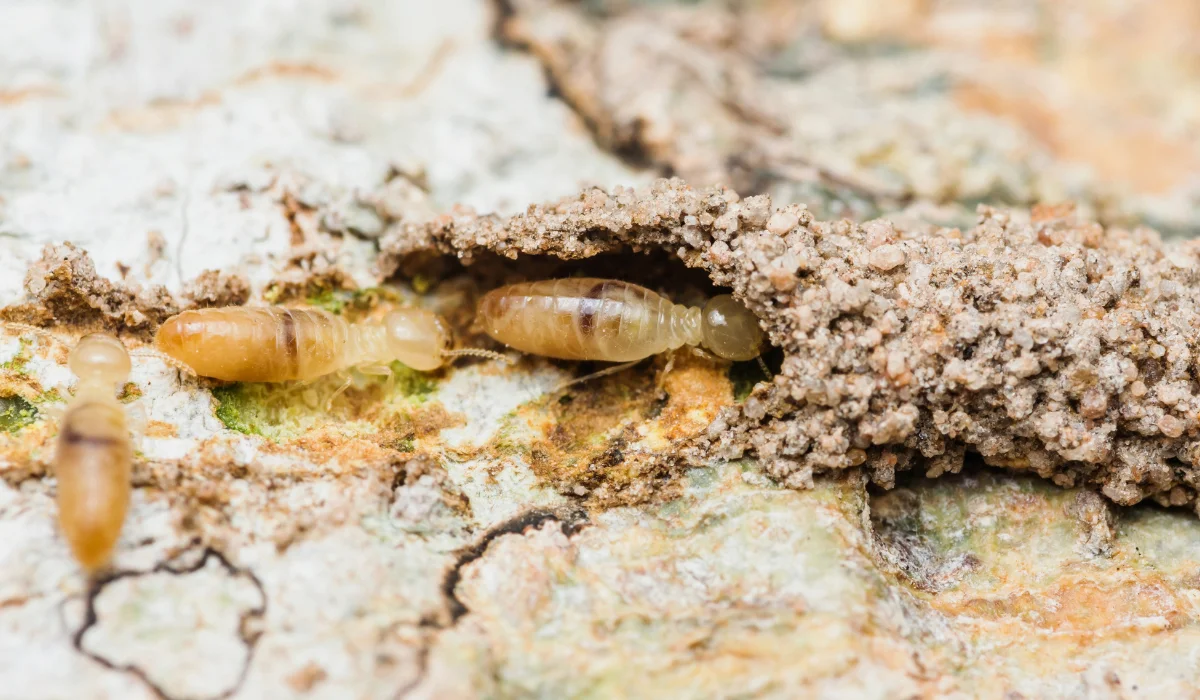
Termite mud tubes in a San Diego garage are a warning sign that should not be brushed off as dirt, dust, or old soil. Subterranean termites build mud shelter tubes as a protected travel route between their nest in the soil and the wood they are feeding on.
Garages make those tubes easier to spot because the walls, slab edges, expansion joints, shelving areas, and unfinished surfaces are often more exposed than the rest of the home.
If you see a pencil-width dirt trail on a garage wall, foundation edge, or near stored wood, do not knock it down and move on. The tube may be only one visible part of an active termite problem.
Key Takeaways
- Mud tubes are a common sign of subterranean termite activity.
- Garages can show tubes along slab edges, wall joints, or foundation areas.
- Knocking mud tubes down does not remove the colony.
- New or rebuilt tubes can point to ongoing activity.
- A termite inspection can confirm the species, activity, and next step.
What Termite Mud Tubes Look Like
Termite mud tubes are small, dirt-like surface tunnels built by subterranean termites. They may look like dried mud, a narrow soil trail, or a raised line running up a wall or along a foundation edge.
In a garage, mud tubes may appear near:
- The joint where the slab meets the wall
- Foundation edges
- Expansion joints or cracks
- Door frames and trim
- Stored cardboard, lumber, or wood furniture
- Water heater platforms or utility areas
- Shelving attached to walls
- Interior garage walls that connect to living spaces
Mud or soil-like tunnels or tracks on a building may indicate termite activity. These mud tubes are typically about as wide as a pencil, but sometimes they can be even thicker.
Why Garages Are Common Places to Notice Mud Tubes
Garages often sit at the edge of the home, where soil, slab, foundation, and wood framing meet. That makes them a logical place for subterranean termites to appear.
Garage spaces may also have conditions that make termite signs easier to miss:
- Stored boxes or furniture against walls
- Wood shelving or trim near concrete
- Gaps around utility lines
- Moisture near water heaters, laundry areas, or exterior doors
- Cracks or joints in the slab
- Less frequent cleaning than interior rooms
A garage mud tube does not always tell you where the full infestation is located. It only shows that termites built a protected route from the soil into the garage.
Why Knocking Them Down Is Not Enough
Knocking down a termite mud tube may remove the visible sign, but it does not remove the termites in the soil, wall, or wood. Subterranean termites can rebuild tubes if the colony is still active and the route remains useful.
This is why breaking the tube creates a false sense of progress. The garage may look cleaner, but the conditions that allowed termites to reach the structure may still be there.
If you find mud tubes, it is better to:
- Note where the tubes are located.
- Schedule a termite inspection to confirm activity.
- Avoid removing or disturbing the mud shelter tube before inspection.
If the tube has already been knocked down, watch the area. A rebuilt tube or new tube nearby can be an important sign that termites are still active. However, termites are sensitive to disturbance. A mud tube that is not rebuilt may mean that the termite colony found a more hidden path to the structural wood.
Are Garage Mud Tubes Always Active?
Not always. A mud tube can be old, abandoned, or inactive. The problem is that homeowners cannot reliably tell from appearance alone.
A tube may be more concerning if:
- It looks fresh or newly built.
- It reappears after being removed.
- It connects soil or slab areas to wood.
- It appears near damaged or hollow-sounding wood.
- You also see swarmers, shed wings, blistered wood, or soft trim.
If the tube looks dry, that’s the point. The outside of the tube hardens to protect the travel routes of soft-bodied termites across areas they are not eating. Subterranean termite infestations can stay hidden behind walls, floor coverings, insulation, or wood surfaces that still look intact.
What Kind of Termites Build Mud Tubes?
Mud shelter tubes are built by subterranean termites. These termites nest in soil and use shelter tubes to reach above-ground wood while staying protected.
In San Diego County, subterranean termite concerns include western subterranean termites and, in certain areas, Formosan subterranean termites.
Thrasher Pest Control provides Formosan subterranean termite control in San Diego and notes that signs include mud shelter tubes on slabs, foundations, or piers.
Drywood termites are different. They live inside dry wood and are more often associated with termite pellets, small kick-out holes, discarded wings, or damaged wood.
If you see mud tubes in a garage, an inspection for subterranean termites is necessary.
What to Do If You Find Mud Tubes in the Garage
Do not panic, but do not ignore the tubes either. Your next steps should preserve the evidence and reduce the chance of covering up signs before inspection.
Start here:
- Avoid disturbing the mud tubes. (Active termites are sensitive to disturbance. You don’t want them hiding from the inspector!)
- Move stored items away only if you can do so without destroying the tubes.
- Look for nearby moisture, leaks, or wood touching concrete.
- Avoid spraying household products on the tube.
- Do not seal cracks or gaps before an inspection.
- Keep the area accessible for the inspector.
If the mud tube is near stored wood, cardboard, or shelving, leave enough space for an inspector to see the wall, slab edge, and surrounding areas.
How Thrasher Checks Garage Termite Activity
Thrasher Pest Control provides termite inspections in San Diego for homeowners who find mud tubes, wood damage, termite pellets, swarmers, or other signs of termite activity.
During an inspection, we check visible wood, foundation areas, crawl spaces, attics, garages, and other areas where termite evidence may appear.
If termites are present, we recommend the right treatment based on the species, location, and extent of the activity. That may include bait systems, soil treatments, fumigation, or other termite control options depending on what the inspection finds.
For garage mud tubes, the goal is not just to remove the tubes. We want to understand how termites are reaching the structure and what needs to be done to address the source of the activity.
How to Reduce Termite Risk Around the Garage
Prevention does not replace treatment for an active infestation, but it can help reduce conditions that make garage areas more attractive or accessible to termites.
Helpful steps include:
- Keep stored cardboard and wood off the floor when possible.
- Avoid stacking lumber against garage walls (either inside or outside).
- Repair plumbing, water heater, or laundry leaks quickly.
- Make sure the dryer vent is functioning properly and venting moist air to the outside.
- Keep soil and mulch away from the foundation.
- Schedule inspections when you find mud tubes or unexplained wood damage.
A tidy garage may still have termite activity, but reducing clutter and moisture can make signs easier to spot.
Schedule Termite Inspection in San Diego
If you found mud tubes in your garage, do not rely on knocking them down as the fix. Thrasher Pest Control will inspect the area, identify whether subterranean termites are active, and recommend a treatment plan based on the species and extent of the issue.
Contact us to schedule a termite inspection in San Diego before removing mud tubes, repairing, sealing, or painting over the area.
Frequently Asked Questions
Are Termite Mud Tubes in a Garage Serious?
Yes, they can be. Mud tubes often point to subterranean termite activity. Even if the tube looks old, a termite inspection can confirm whether or not termites are active.
Should I Knock Down Termite Mud Tubes?
No. Knocking tubes down does not remove the colony and are essential evidence for an inspector to see. Active termites are sensitive to disturbance. You don’t want them to relocate to a hidden area.
Will Termites Rebuild Mud Tubes?
They can. If the colony is still active and the route is useful, termites may rebuild a broken tube or relocate their travel route to a new area nearby.
Do Drywood Termites Make Mud Tubes?
Drywood termites do not make mud tubes. Mud tubes are associated with subterranean termites. Signs of drywood termites include pellets, damaged wood, and shed wings.
Can Thrasher Inspect a Garage for Termites?
Yes. Thrasher Pest Control provides termite inspections in San Diego and checks garages along with other accessible areas of the structure.