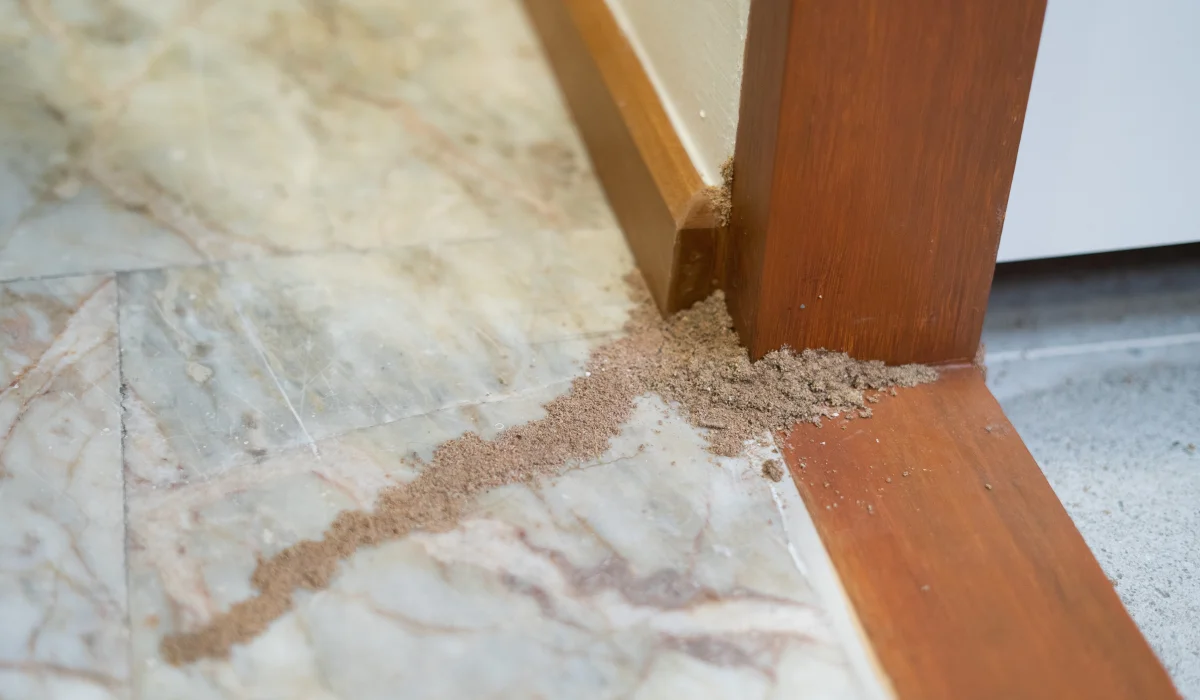
A termite inspection checks your home for visible evidence of termites, wood damage, moisture issues, and other wood-destroying pests or organisms. In San Diego, that often means looking for drywood termites, subterranean termites, dampwood termites, damaged wood, fungus or dry rot, and conditions that may make future activity more likely.
During the appointment, we inspect accessible interior and exterior areas, explain what we find, and recommend treatment only when the evidence supports it. The goal is to identify the termite species, understand where activity may be coming from, and give you a clear next step.
Key Takeaways
- A termite inspection checks visible and accessible areas.
- Inspectors look for termites, wood damage, mud tubes, pellets, wings, and moisture concerns.
- Drywood and subterranean termites leave different signs.
- Real estate inspections may involve a formal WDO report.
- Treatment depends on the species, location, and extent of activity.
Why Termite Inspections Matter In San Diego
San Diego homes can face drywood termites, subterranean termites, dampwood termites, and other wood-destroying issues. The signs are not always obvious. A few pellets under a window, mud tubes near a foundation, or soft wood near a moisture source can point to different problems.
UC IPM explains that a professional inspection is usually required to confirm a termite infestation. That matters because treatment should match the termite species and the location of the activity.
A proper inspection helps answer three questions:
- Is there evidence of active termite activity?
- What type of termite or wood-destroying issue is present?
- What treatment or repair plan makes sense for the home?
Without an inspection, homeowners can end up treating the wrong area or missing hidden damage.
What We Check During A Termite Inspection
A termite inspection is a visual inspection of accessible areas. We look for evidence of termite activity, wood damage, moisture-related concerns, and conditions that may allow termites to reach or damage the structure.
Depending on the home, accessible inspection areas may include:
- Exterior foundation areas
- Garage edges and slab cracks
- Eaves, fascia boards, and roofline wood
- Window and door frames
- Baseboards and trim
- Attic access areas
- Crawl space openings
- Decks, fences, and patio covers
- Plumbing penetrations
- Areas near sprinklers, leaks, or drainage problems
We do not need to tear apart walls to perform a standard inspection. If damage is hidden behind finished surfaces, the visible signs help guide the next step.
Signs We Look For
Termite evidence can be small. The inspection focuses on clues that help separate drywood termites, subterranean termites, dampwood termites, and other wood-destroying issues.
Common signs include:
- Drywood termite pellets
- Tiny kick-out holes in wood
- Mud tubes on foundations or walls
- Shed wings near windows or lights
- Live termites or swarmers
- Hollow-sounding or soft wood
- Blistered paint or wood surfaces
- Dirt-like material inside damaged wood
- Fungus, dry rot, or moisture damage
- Wood-to-soil contact around the structure
UC IPM’s termite guidance explains that subterranean termites often leave shelter tubes and tunneling in wood. Drywood termites, by contrast, often leave small pellet piles because they live inside dry wood above ground.
What To Do Before The Inspection
You do not need to overprepare, but a few simple steps can make the appointment smoother. The goal is to give the inspector safe access to the areas where termite evidence is most likely to appear.
Before your appointment:
- Move stored items away from garage walls when possible.
- Clear access to attic or crawl space openings if applicable.
- Leave pellet piles, wings, or mud tubes in place.
- Take photos of signs you noticed before cleanup.
- Note where you saw swarmers, damaged wood, or soft spots.
- Keep pets secured during the inspection.
Do not scrape away mud tubes, vacuum up pellets before taking photos, or remove damaged wood before the inspection. Those details help us understand where the activity may be coming from.
What Happens During The Appointment
During the appointment, we inspect the visible and accessible areas of the home, review the signs you have noticed, and look for evidence of termite activity or wood-destroying conditions.
A typical inspection may include:
- Asking where you saw signs or damage
- Checking exterior wood and foundation areas
- Looking for mud tubes, pellets, wings, and damaged wood
- Inspecting accessible attic, garage, crawl space, or interior areas
- Identifying whether signs point to drywood or subterranean termites
- Explaining what we find in plain language
- Recommending treatment only when the findings support it
If we find termite activity, the next step depends on the species, location, and extent of the evidence.
Drywood Vs. Subterranean Findings
Drywood termites and subterranean termites require different treatment approaches. That is why identification is one of the most important parts of the inspection.
Drywood termite findings may include:
- Pellets below wood
- Small kick-out holes
- Damage in attic wood, trim, eaves, or furniture
- Swarmers near windows or lights
- Activity away from soil contact
Subterranean termite findings may include:
- Mud tubes on foundation areas
- Damage near soil, moisture, or crawl spaces
- Dirt inside damaged wood
- Swarmers emerging near baseboards or wall gaps
- Evidence along slab edges or structural entry points
Our termite control services in San Diego include inspection, local treatment, fumigation, barrier treatment, baiting, monitoring, repair, reconstruction, and preservation. The right recommendation depends on what the inspection shows.
What A Termite Report May Include
For real estate or formal wood-destroying organism inspections, the report may document visible evidence of termites, wood-destroying organisms, fungus or dry rot, and related conditions. California’s Structural Pest Control Board provides a Wood Destroying Organism System that allows consumers to search whether a WDO inspection report has been filed for a California property within the last two years.
A report may identify areas that need treatment, repair, further inspection, or correction. For homeowners who are not buying or selling, the inspection still gives a useful record of what was found and what should happen next.
What Happens If We Find Termites
If we find termite activity, we explain what type of activity is present and where we found it. Then we recommend a treatment plan based on the evidence.
Possible next steps may include:
- Local treatment for limited activity
- Fumigation for certain drywood termite infestations
- Barrier treatment for subterranean termite pressure
- Baiting or monitoring
- Wood repair or reconstruction
- Moisture or access corrections when needed
We do not recommend treatment just because termites are common in San Diego. We recommend treatment when the inspection shows evidence that supports it.
What If We Do Not Find Active Termites?
If we do not find active termites, that is still useful information. We may point out risk conditions, old evidence, moisture concerns, or areas to monitor.
A no-activity inspection can help you:
- Understand what signs to watch for
- Document the current condition of visible areas
- Plan future monitoring
- Correct wood-to-soil contact or moisture issues
- Decide when another inspection makes sense
UC IPM suggests regular inspections every three to five years to help detect infestations before they become damaging. Homes with past termite activity, older wood features, or real estate plans may need inspections sooner.
Schedule A Termite Inspection In San Diego
If you have seen pellets, wings, mud tubes, damaged wood, or signs that could point to termite activity, we can inspect your home and explain the next step clearly.
Contact us to schedule a termite inspection in San Diego.
Frequently Asked Questions
How Long Does A Termite Inspection Take?
The time depends on the size of the home, access, and what the inspector finds. A straightforward inspection may be shorter, while homes with crawl spaces, attic access, damage, or real estate report needs may take longer.
Do I Need To Leave The House During A Termite Inspection?
Usually, no. A standard termite inspection is a visual inspection of accessible areas. You may need to secure pets and provide access to garages, attics, crawl spaces, or other areas.
What Should I Show The Inspector?
Show any pellets, wings, damaged wood, soft spots, mud tubes, or photos of swarmers. Also mention where you first noticed activity and whether the signs have returned after cleanup.
Does A Termite Inspection Mean I Need Treatment?
No. Treatment depends on the findings. If we do not find active termite activity or a treatment need, we will explain what we found and what to monitor.
Can A Termite Inspection Find Hidden Damage?
A termite inspection can identify visible evidence and accessible damage. If damage is hidden inside finished walls or inaccessible areas, the visible clues help determine whether further evaluation is needed.