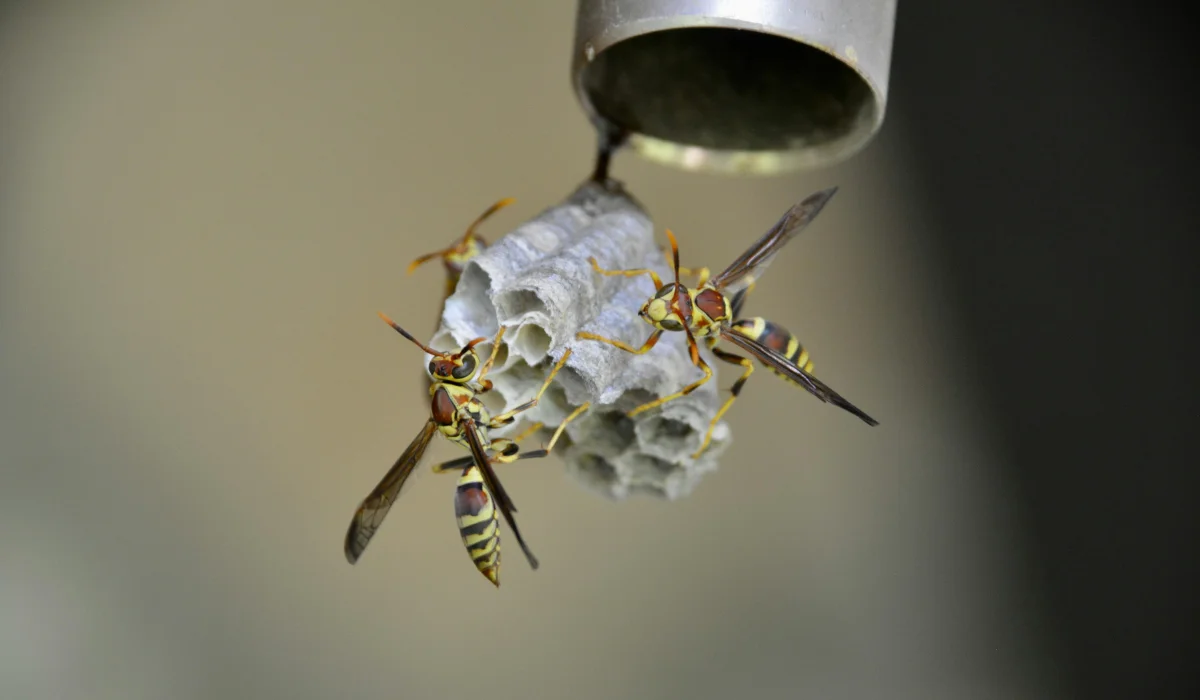
Yellowjackets are wasps, but not every wasp is a yellowjacket. In San Diego yards, the insects homeowners often compare are yellowjackets and paper wasps because both can build nests near homes, patios, rooflines, and outdoor living spaces.
If you are trying to understand yellow jacket vs wasp San Diego activity, focus on three clues: body shape, nest location, and behavior. Yellowjackets are usually more compact, more defensive around nests, and more likely to show up around food or trash. Paper wasps tend to have longer bodies and often build open-cell nests under eaves or patio covers.
Key Takeaways
- Yellowjackets are a type of wasp.
- Paper wasps are also common around San Diego homes.
- Yellowjackets often nest in ground holes or wall voids.
- Paper wasps often build open nests under eaves.
- Do not disturb an active nest to identify it.
Yellowjackets Are Wasps
The term “wasp” covers many insects. Yellowjackets, paper wasps, hornets, and mud daubers are all wasps, but they do not behave the same way.
Around San Diego homes, yellowjackets are usually the wasps that cause the most concern near outdoor food, trash, and ground nests. UC IPM explains that yellowjackets and paper wasps are social wasps, which means they live in colonies and can defend their nests.
That is why identification matters. A few foraging wasps near flowers may not require the same response as yellowjackets entering a hole near a walkway.
What Yellowjackets Look Like
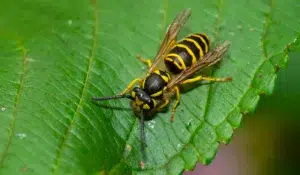
Yellowjackets are usually black and yellow with a compact, smooth-looking body. They have a defined waist, but they often look stockier than paper wasps. They fly quickly and may move in direct paths between a food source and a nest entrance.
You may notice yellowjackets around:
- Trash cans
- Outdoor meals
- Soda cans or sweet drinks
- Pet food bowls
- Fallen fruit
- Barbecue areas
- Ground holes
- Wall gaps or roofline openings
UC IPM notes that yellowjackets scavenge on human food and garbage and may be more likely to sting when disturbed while foraging. That is why they often become a problem around patios, parks, and backyard meals.
What Paper Wasps Look Like
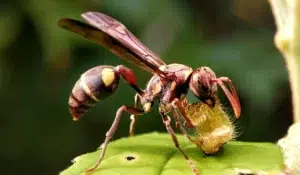
Paper wasps are usually slimmer than yellowjackets. They often have longer legs that hang below the body while flying. Their bodies may be brown, reddish-brown, yellow, black, or a mix depending on the species.
Paper wasp nests are easier to recognize than yellowjacket nests. They often look like an upside-down umbrella with open hexagon-shaped cells. These nests are commonly attached to eaves, patio covers, fences, deck rails, sheds, and other sheltered surfaces.
Paper wasps can sting if disturbed, but they are often less aggressive than yellowjackets unless someone gets too close to the nest.
Nest Location Is The Biggest Clue
The fastest way to narrow down yellowjacket vs. paper wasp activity is to watch where the insects are going. Do this from a safe distance. Do not poke, spray, seal, or knock down the nest.
Yellowjackets often nest in:
- Ground holes
- Wall voids
- Attic or ceiling voids
- Enclosed paper nests
- Landscape gaps
- Structural openings
Paper wasps often nest under:
- Eaves
- Patio covers
- Pergolas
- Fence rails
- Deck framing
- Outdoor furniture
- Shed overhangs
If insects are disappearing into a hole in the ground or a gap in the wall, yellowjackets are more likely. If they are landing on an exposed, open-cell nest under an eave, paper wasps are more likely.
Behavior Differences To Watch For
Yellowjackets and paper wasps can both sting, but their behavior around homes is often different.
Yellowjackets are more likely to:
- Gather around food, trash, and sugary drinks
- Enter one hidden nest opening repeatedly
- Defend ground or wall nests
- Become more noticeable around outdoor meals
- React quickly when a nest is disturbed
Paper wasps are more likely to:
- Hang around an exposed nest under an overhang
- Patrol a smaller area near the nest
- Forage around flowers and plants
- Sting when the nest is touched or approached too closely
Behavior alone is not enough for a final identification, but it helps decide whether the nest needs immediate attention.
Bees Can Be Confused With Yellowjackets
Some homeowners confuse yellowjackets with honey bees. Bees are usually hairier and may look more golden or brown. Yellowjackets are smoother, shinier, and more sharply marked with black and yellow.
If you see steady activity around a wall, roofline, tree cavity, or meter box, do not assume it is a wasp nest. The County of San Diego says it does not remove feral honey bee colonies from private property and recommends contacting a licensed pest control company or live bee removal company rather than trying to remove bees yourself.
We provide bee control services in San Diego when bee activity around a home needs inspection and the right next step.
What To Do If You Find An Active Nest
If you find an active nest, keep your distance and watch the flight path. The most common mistake is disturbing the nest before identifying where the insects are entering and leaving.
A safer approach is to:
- Keep children and pets away from the area.
- Avoid mowing, trimming, or using loud tools nearby.
- Do not seal entry holes while insects are active.
- Keep trash, food, drinks, and pet food covered outdoors.
- Take photos only from a safe distance.
- Schedule service if activity is near people or entry points.
Sealing a wall gap or ground hole can push insects into another part of the property. Knocking down a visible paper wasp nest can also trigger stinging if the nest is active.
When To Call For Wasp Control In San Diego
Call for wasp control when yellowjackets or paper wasps are nesting near patios, walkways, doors, garages, play areas, balconies, rooflines, or yard spaces people often use. You should also call if the nest is hidden, hard to reach, or located inside a wall or ground opening.
Our wasp control services in San Diego start with an inspection of common nesting areas, including eaves, soffits, overhangs, wall gaps, and yard structures. Once we locate the active nest, we treat the source directly and check nearby areas for additional activity.
Professional help makes sense when:
- Wasps are entering one active hole or gap.
- The nest is close to people or pets.
- Activity is coming from a wall or roofline.
- Someone in the home has a sting allergy.
- You are unsure whether you have wasps, yellowjackets, or bees.
Schedule Wasp Control In San Diego
If you are seeing yellowjackets, paper wasps, or other stinging insects around your San Diego home, we can inspect the activity, identify the nest, and recommend the right treatment.
Contact us to schedule wasp control in San Diego.
Frequently Asked Questions
Is A Yellowjacket A Wasp?
Yes. A yellowjacket is a type of wasp. Paper wasps, hornets, and mud daubers are also wasps, but they have different nesting habits and behavior.
How Can I Tell A Yellowjacket From A Paper Wasp?
Yellowjackets are usually more compact and often nest in ground holes or wall voids. Paper wasps are slimmer, have longer legs, and often build open-cell nests under eaves or patio covers.
Are Yellowjackets More Aggressive Than Paper Wasps?
Yellowjackets are often more defensive around nests and more likely to become a problem around food, trash, and outdoor meals. Paper wasps can still sting if their nest is disturbed.
Should I Seal A Yellowjacket Nest Entrance?
No. Do not seal an active nest entrance. Blocking the opening can make the insects defensive or push them into another area, including wall voids or indoor spaces.
When Should I Call For Wasp Control?
Call when the nest is active, close to people or pets, hidden inside a structure, hard to reach, or causing repeated activity around patios, doors, walkways, or yard areas.