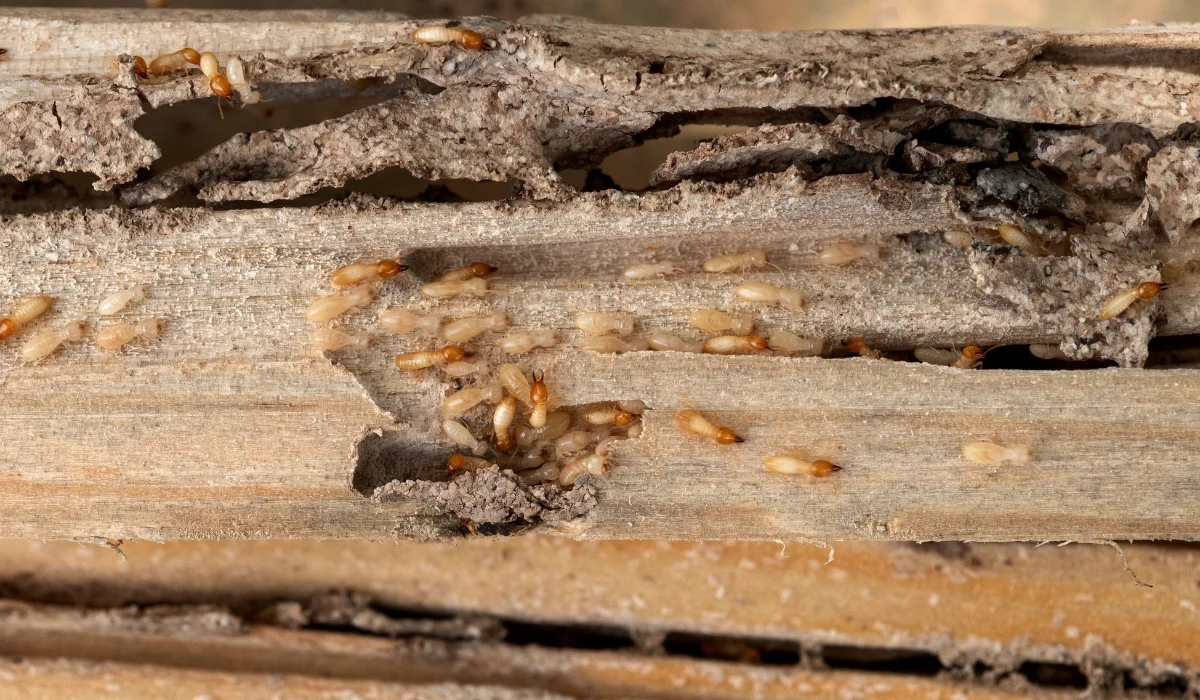
Termites can be active in San Diego homes before the damage is easy to see. The strongest warning signs include winged termites, shed wings, mud tubes, drywood termite pellets, soft wood, blistered surfaces, and damage near foundations, eaves, attics, or crawl spaces.
If you are searching for how to tell if you have termites in your San Diego home, start with the evidence. A few flying insects outside may not prove an infestation, but swarmers indoors, piles of termite pellets, or mud tubes along a foundation should be inspected before the activity spreads.
Key Takeaways
- Swarmers or shed wings indoors can point to termite activity.
- Drywood termites often leave small pellet piles.
- Subterranean termites often build mud tubes near soil or foundations.
- San Diego homes can be infested with more than one termite type or colony at the same time.
- A termite inspection confirms the species and treatment path.
Why Termites Are Easy To Miss
Termites do most of their damage where homeowners cannot easily see it. Drywood termites live inside wood above ground. Subterranean termites live in soil and move into structures through hidden shelter tubes, cracks, or wood-to-soil contact.
That means the first visible sign may be small: a pile of pellets, a few wings, a soft trimboard, or a narrow dirt-colored tube on a foundation wall. These clues matter because surface damage may not show the full extent of activity inside the wood.
UC IPM’s California termite guidance explains that proper identification comes first because drywood, subterranean, and dampwood termites behave differently and require different inspection priorities.
Termite Swarmers and Shed Wings
Swarmers are winged reproductive termites that leave a colony to start new colonies. In San Diego, homeowners may notice them near windows, sliding doors, porch lights, or interior light sources.
Swarmers can be confused with flying ants. Termite swarmers usually have:
- Straight antennae
- A thicker waist
- Wings of equal length
- A body that looks less pinched than an ant’s body
Finding winged termites outside does not always mean the home is infested because termites can fly in from nearby sources. Finding swarmers indoors, dead swarmers on window sills, or small piles of shed wings inside the home is more concerning.
Drywood Termite Signs
Drywood termites are common in Southern California and do not need soil contact. They live inside the wood they are eating, which makes them hard to find until they push pellets out of small openings.
Look for drywood termite signs around:
- Attic framing
- Eaves and fascia boards
- Window and door frames
- Baseboards and trim
- Decks, fences, and patio covers
- Wood furniture or built-ins
The clearest clue is frass, or drywood termite pellets. These often look like smal piles of salt and pepper that suddenly appear in and around your home. If you look closely, you’ll notice that the pellets are uniform in size and not rough. They may be specked from dark brown to light tan or uniform in color. . If you sweep up these piles, they may reappear–or not. If they do not reappear, that does not mean the termites are gone. It means that the termites have finished clearing out their galleries to make room for more termites.
Signs of drywood termites also include damaged trim, hollow-sounding boards, or swarmers near windows and lights.
Subterranean Termite Signs
Subterranean termites usually live in soil and need moisture. They often move into a home through mud shelter tubes, foundation cracks, crawl space areas, or wood that touches soil.
Watch for:
- Mud tubes on foundations, slabs, or crawl space areas
- Dirt-like material inside cracks or damaged wood
- Soft or blistered wood near moisture
- Swarmers emerging near baseboards or walls
- Damage close to soil, plumbing, or foundation edges
- Hollow-sounding wood near lower walls or garage areas
Mud tubes are one of the strongest signs of subterranean termite activity. Do not scrape them away before an inspection. Their location helps us understand how termites may be entering the structure.
Seasonal Clues San Diego Homeowners Should Know
Termite swarming depends on species and weather. UC IPM notes that California’s common termite species may swarm at different times, with subterranean termites often swarming after rain, drywood termites on warm days, and Formosan subterranean termites in parts of San Diego County flying during warm, humid evenings.
That seasonal pattern matters because a swarm may be brief. You might see winged termites for only a short time, then find wings or dead swarmers later.
This season, pay closer attention after:
- Warm weather following rain
- Humid evenings
- Sudden indoor flying insect activity
- New wings near windows or doors
- Fresh pellets under wood
- New mud tubes along foundation areas
If the activity appears indoors, schedule a termite inspection instead of waiting for the next swarm.
Termite Damage or Something Else?
Some termite signs can look like moisture damage, dry rot, ant activity, or normal wood wear. That is why one sign alone is not always enough to choose a treatment.
For example, soft wood near a leak may involve moisture damage, but termites may also be present. Flying ants can look similar to termite swarmers. Small holes in wood can have several causes. A termite inspection helps separate termite activity from other wood-destroying problems.
Our inspections check for termites and other wood-destroying organisms, including drywood termites, Western subterranean termites, Formosan subterranean termites, dampwood termites, fungus or dry rot, wood-boring beetles, carpenter ants, and carpenter bees.
Where to Check Around a San Diego Home
You do not need to tear into walls to do a basic visual check. Start with visible, accessible areas where termite evidence is more likely to appear.
Check:
- Wood trim around windows and doors
- Window sills and sliding door tracks
- Baseboards and lower walls
- Garage edges and slab cracks
- Foundation walls
- Crawl space openings
- Attic access areas
- Eaves, fascia, and roofline wood
- Deck posts and patio covers
- Fence connections near the house
- Areas near plumbing, sprinklers, or drainage problems
If an area is unsafe, high, enclosed, or hard to reach, leave it to a professional. Disturbing active termite evidence can make inspection harder.
What To Do If You Think You Have Termites
If you see possible termite activity, take photos, save a sample if you can do so safely, and leave the area undisturbed. Do not spray random products into walls, scrape off mud tubes, or remove damaged wood before an inspection.
A safer next step is to:
- Note where the sign appeared.
- Check nearby windows, baseboards, and exterior walls.
- Avoid moving or repairing damaged wood right away.
- Keep any dead swarmers or wings in a small bag.
- Schedule a termite inspection.
The inspection helps confirm whether the activity is drywood, subterranean, dampwood, old evidence, or another wood-destroying issue.
How We Help With Termite Activity
Our termite control services in San Diego start with inspection and identification. We look for signs of active termites, damaged wood, entry points, and conditions that may make the home more vulnerable.
Based on what we find, we may recommend local treatment, drywood termite fumigation, barrier treatment, baiting, monitoring, repair, reconstruction, or preservation. The right plan depends on the termite species, where activity is found, how widespread it is, and whether damaged wood needs repair.
We do not recommend guessing from one visible sign. Termite control works best when the inspection confirms the species and the source of the activity.
Schedule Termite Control In San Diego
If you have found swarmers, shed wings, pellets, mud tubes, or damaged wood, we can inspect your home and explain the right treatment options for the termite activity we find.
Contact us to schedule termite service in San Diego.
Frequently Asked Questions
What Is The First Sign Of Termites In A San Diego Home?
The first sign may be shed wings, swarmers, drywood termite pellets, mud tubes, hollow-sounding wood, or soft trim. The sign depends on the termite species and where the activity is located.
Do Flying Termites Mean My House Is Infested?
Not always. Flying termites outside may come from a nearby colony. Flying termites indoors, shed wings near windows, or swarmers emerging from walls are stronger reasons to schedule an inspection.
What Do Drywood Termite Pellets Look Like?
Drywood termite pellets look like small, dry, sand-like piles. They often collect below tiny kick-out holes in wood, trim, attic framing, furniture, or other wooden areas.
What Do Subterranean Termite Mud Tubes Look Like?
Mud tubes look like narrow dirt-colored trails on foundations, slabs, crawl space areas, or walls. Subterranean termites use them to travel between soil and wood.
Should I Spray Termites Myself?
We do not recommend spraying random products into walls, damaged wood, or mud tubes. DIY treatment can disturb evidence and miss the colony. An inspection should come first.