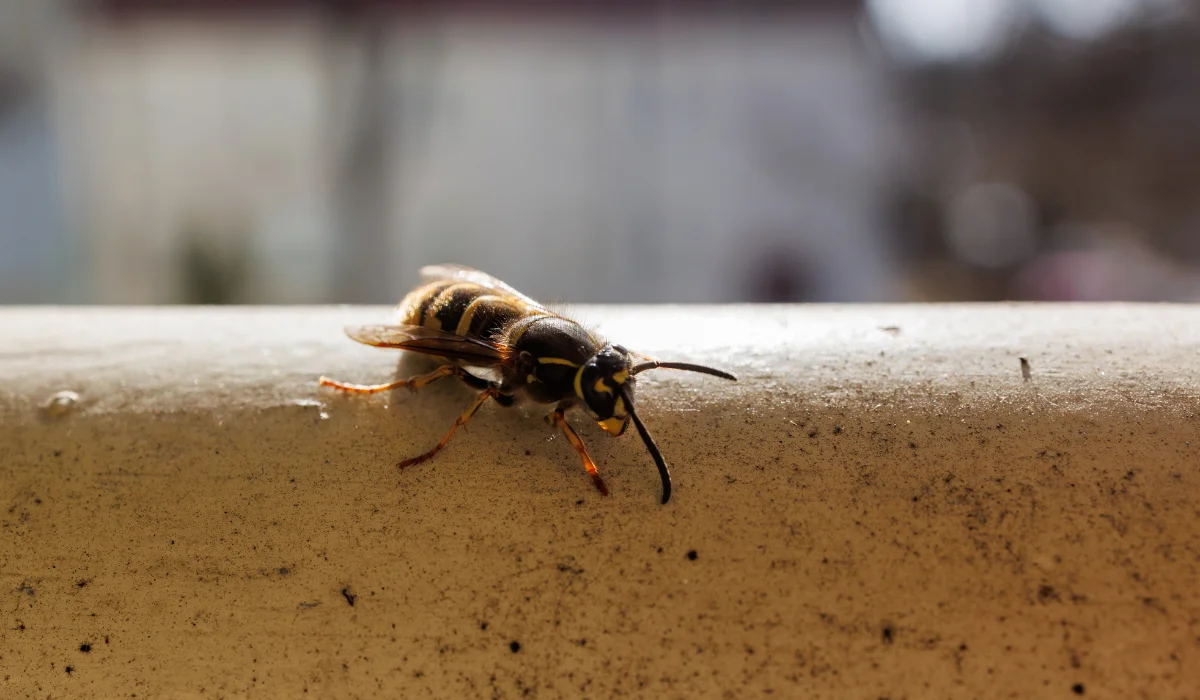
In North County San Diego, many stinging insect calls start as “bee” concerns. That is common, and it makes sense. From a distance, fast-moving black-and-yellow insects around a yard, roofline, trash area, or patio can look similar.
In many cases, though, the issue turns out to be yellow jackets or another type of wasp. That distinction matters in summer because yellow jackets forage for protein and sweets. They don’t care if the source of food belongs to a picnicking human or is in a dumpster. They aggressively take what they want and will sting when swatted at.
Key Takeaways
- It is common to think the issue is bees when it is actually yellow jackets.
- Yellow jackets can become defensive when foraging and around an active nest.
- Black-and-yellow color alone is not enough for identification.
- Long dangling legs often point to a wasp.
- Do not knock down, spray, seal, or disturb a suspected nest.
- Do not swat at wasps. They will sting repeatedly.
Why Yellow Jackets Get Mistaken for Bees
Most homeowners are not trying to identify insects by species. They see black-and-yellow movement near the house and think “bees.” That is understandable, especially when insects are flying quickly or gathering around outdoor food.
The safer move is to avoid assuming. Bees, yellow jackets, and paper wasps can all show up around North County yards, but they do not behave the same way.
Honey bees are usually fuzzy and are often seen visiting flowers. They show little to no interest in human food.
Yellow jackets are smooth and more sharply patterned. They bypass flowers while hunting for other insects, especially caterpillars. Yellow jackets will eat protein and sweets from human food, making them a problem for outdoor dining.
Paper wasps are another common source of confusion with bees. They are longer and slimmer than bees, and their long legs may dangle beneath the body during flight. If you can see those legs from a safe distance, you may be looking at a wasp rather than a bee. Paper wasps are generally docile and usually only attack to defend their nest.
Why Yellow Jackets Seem More Active in Summer
Yellow jacket colonies grow quickly through the warmer months. As colonies build, activity becomes easier to notice around lawns, patios, trash cans, outdoor dining areas, and landscape edges.
Summer also brings more people outside. Wasp activity that went unnoticed in spring can become a problem once families start grilling, gardening, or entertaining.
While yellow jackets may forage up to 1/4 mile from their nest, a lot of activity in one yard usually means a nest is nearby.
Are Yellow Jackets Aggressive in Summer?
Yellow jackets are very defensive in summer, especially near an active nest. That does not mean every yellow jacket flying through the yard is a threat. The concern increases when insects repeatedly enter and exit one spot.
The UC IPM guide to yellow jackets and other social wasps explains that yellowjackets defend their nests strongly when disturbed. It also notes that wasps can sting repeatedly because their stingers do not have barbs like honey bee stingers.
That is why it is better to observe from a distance. Swatting, spraying, mowing, trimming, or using a hose near a suspected nest can make an attack more likely.
Where Yellow Jackets Nest Around North County Homes
Yellow jackets do not always build visible nests. Many nests are hidden, which is one reason homeowners may not realize the issue is yellow jackets at first. Gardeners are often the first to report a yellow jacket nest. If they do so, listen.
Watch for repeated traffic near:
- Ground holes in lawns, planters, or under shrubs
- Retaining walls and landscape edges
- Gaps near stucco, siding, or trim
- Roofline openings and patio covers
- Dense shrubs, hedges, or vines
- Trash storage areas and outdoor eating spaces
If insects keep returning to the same spot, avoid that area. The nest may be inside a void, underground, or tucked into a protected space.
How to Tell Bees From Yellow Jackets Without Getting Too Close
Do not get close enough to inspect markings. A safer approach is to watch movement, body shape, and location from a distance.
A few clues can help:
- Fuzzy body near flowers: bee
- Smooth black-and-yellow body: possible yellow jacket
- Fast traffic into a ground hole or wall gap: possible yellow jacket nest
- Long dangling legs in flight: often a wasp, especially a paper wasp
- Activity around uncovered food, drinks, or trash: yellow jackets
UC Riverside’s wasp identification guide notes that paper wasps are often mistaken for yellow jackets and tend to have longer bodies and thinner waists. That is useful because not every wasp around a home is a yellow jacket, and not every black-and-yellow insect is a bee.
What to Do If You Think the “Bees” Are Yellow Jackets
Start by keeping distance. Do not stand over a ground hole, tap the nest area, or spray the insects to see how they react.
A few safer steps can reduce contact:
- Keep children and pets away from the activity.
- Move food, drinks, and trash away if you can do so safely.
- Avoid mowing or trimming near the suspected nest.
- Use another doorway or walkway if activity is near an entrance.
- Watch the flight path from a safe distance and note where insects enter.
Do not seal the opening. If yellow jackets are inside a wall, roofline, or ground cavity, closing the entrance can push them toward another exit.
When to Call Thrasher Pest Control
Call for help when the insects are active near people, pets, entrances, patios, play areas, or outdoor seating. You should also call if the nest appears hidden, underground, elevated, or inside the structure. Call if a gardener suspects a nest or is stung. Gardeners are often the first to discover a wasp nest.
Thrasher Pest Control provides wasp control in San Diego for nests around eaves, soffits, overhangs, and in the yard. Our process starts with locating the nest, checking where wasps are active, treating the nest directly at the source, and then removing the nest.
Professional inspection is especially helpful when the issue starts as a “bee” concern but the activity looks more like yellow jackets or wasps. Our team can identify what is happening and recommend the right next step.
How to Reduce Yellow Jacket Activity Around Your Yard
Prevention will not remove an active nest, but it can make your yard less attractive to yellow jackets.
Focus on simple habits:
- Keep trash lids closed tightly.
- Clean up food after outdoor meals.
- Rinse drink cans and bottles before recycling.
- Pick up fallen fruit when possible.
- Avoid leaving pet food outside.
- Repair small exterior gaps in structures when no insects are active.
If insects are repeatedly returning to one spot, prevention alone is not enough. That pattern usually means the nest needs to be located and dealt with.
Schedule Yellow Jacket Control in North County San Diego
If you think you have bees but the insects are smooth, black-and-yellow, and repeatedly entering the same hidden spot, you may be dealing with yellow jackets or another wasp. Do not guess from close range.
Contact us to schedule wasp control in San Diego and get help identifying the activity, locating the nest, and treating the source safely.
Frequently Asked Questions
Is It Common to Mistake Yellow Jackets for Bees?
Yes. Many people see black-and-yellow insects and assume they are bees. Yellow jackets and paper wasps also look similar from a distance, so behavior and nesting location matter.
Are Yellow Jackets More Aggressive Than Bees?
Yellow jackets are more defensive around nests (and food) than honey bees. They can also sting more than once, while a honey bee can only sting once.
Do Long Dangling Legs Mean It Is a Yellow Jacket?
Usually, long dangling legs point more toward a paper wasp than a yellow jacket. Yellow jackets tend to look smoother and stockier, but they have dangling legs too. All suspected wasps should be observed from a safe distance.
Where Do Yellow Jackets Nest in North County San Diego?
They may nest in ground holes, landscape areas, wall gaps, roofline openings, or other protected cavities. Repeated traffic in one spot is the main sign of a nest.
Should I Spray a Yellow Jacket Nest Myself?
It is not safe to disturb a suspected nest yourself without proper protective gear, training, and equipment. Call a pest control professional for inspection and treatment.