Termites are one of the most destructive pests a homeowner can face. These tiny creatures can cause massive damage to wooden structures, leading to expensive repairs and even safety hazards. And when it comes to termites, one of the most alarming sights is a swarm of flying termites, also known as reproductives or alates. Flying termites are not a separate species of termite; rather, they are reproductive termites that leave their nest in search of a mate and a new place to start a colony. Flying termites may or may not be a sign of an active infestation on your property. So, should you worry if you see flying termites in San Diego, California? The answer is…potentially! There are a few factors that will help you (and your pest control company in San Diego) determine if they are an imminent threat. 1. Identifying the type of species of termites 2. The location of the termite swarm 3. Any previous termite treatments and length of time since the last treatment or fumigation.
Identifying Flying Termites
The three most common types of flying termites in San Diego are drywood termites, Western subterranean termites, and Formosan subterranean termites. Size and color can help identify the species of termite. When presented with winged termites, one of each species, the smallest winged termites are Western subterranean termites, drywood termites are slightly larger and broader, while Formosan subterranean termites are significantly larger than the others. However, unless you have one of each termite species to compare side-by-side, size may not be the best way to identify winged termites. Instead, consider color. The bodies of Western subterranean termites with wings are uniformly dark brown to black. Drywood termites with wings have orange-brown heads and dark brown to black abdomens. The bodies of Formosan subterranean termites are almost entirely orange. 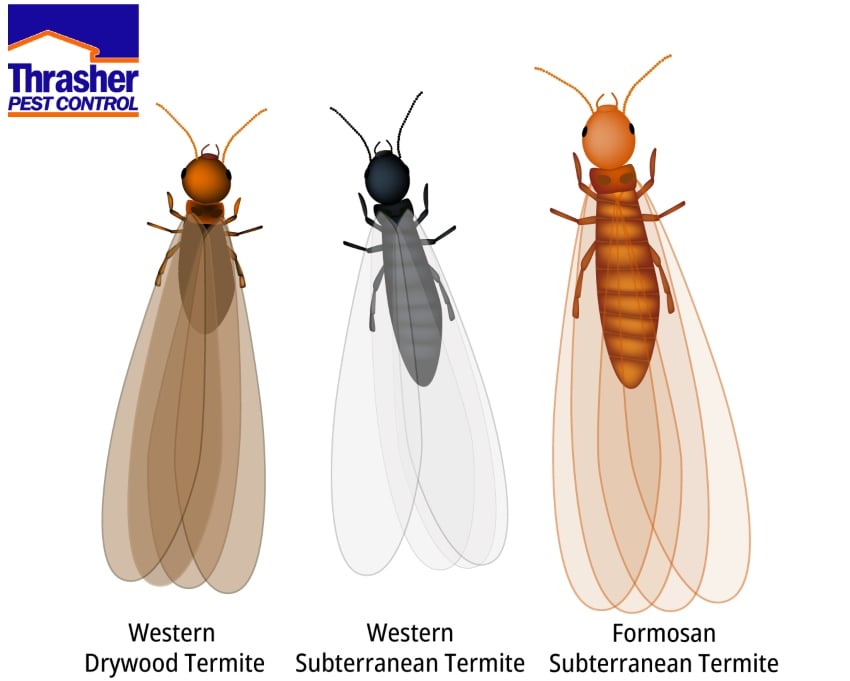
Other Insects that Look Like Flying Termites
Flying termite swarm season in San Diego
San Diego hosts three termite species — drywood, Western subterranean, and Formosan subterranean — each with its own swarm window. This tracker shows when flying termites are most likely to appear, so you know what to expect before and after treatment. Taller bars mean heavier activity.
Flying termites in San Diego — three species, one swarm
San Diego hosts three distinct termite species that all produce flying reproductives (alates), and they respond to completely different treatments. Telling them apart — and separating them from look-alike insects — is the critical first step before any control decision.
It is important to note that flying termites are not the only insects that swarm, so confirm that you are dealing with termites before taking any action. Other insects that look like flying termites include flying ants, webspinners, and some species of flying beetles. The easiest way to confirm that you are dealing with termites is to capture an insect without crushing it and show it to a trained pest control professional.
Where are You Seeing Flying Termites?
The location of the termite swarm is an important consideration in determining if the flying termites are cause for worry. Termites are not strong flyers. They have long fluttery wings and sail with the breeze. Flying termites can come from anywhere in a one-mile radius–fences, tree stumps, sheds, neighbor’s homes, firewood, etc. Inside the house, finding one, two, or even a dozen winged termites does not mean you have an active termite infestation. These insects could have blown in through an open door or loose window screen. If you do find 50 or more winged termites inside your house (usually on a windowsill) this may signal an active infestation and is cause for concern. Call your pest control company. Either drywood termites or subterranean termites may swarm inside a house. The origin of the infestation can be difficult to locate. Winged termites exit the colony through a hole no larger than a pinhead. Again, your pest control company is your best guide. Outside, flying termites often congregate around outdoor lighting at night. Winged termites near an outdoor light are a sign of a nearby infestation, but not necessarily an infestation on your property. However, if you see termites erupting from the soil within three feet of your house, this may signal an active infestation of subterranean termites. Call your pest control company.
Subterranean termites emerging and taking flight.
Understanding the Effectiveness of Termite Treatments
Two of the first questions a pest control company should ask when you report flying termites are, “When was your home last treated for termites?” and “What was the treatment?” Because of the different habits of termite species, termite treatments are very targeted. If you see flying termites after drywood termite fumigation tenting, the flying termites may be from a Western subterranean termite colony. Western subterranean termites are not exterminated by fumigation. Conversely, if your home had a perimeter soil treatment for Western subterranean termites, the flying termites might be from a drywood termite colony. Drywood termites are not affected by soil treatments. Additionally, when only a localized termite treatment was performed there may be flying termites from an unrelated, untreated colony. Each home often supports more than one termite colony of the same species. Drywood termite infestations are notorious for consisting of multiple, unrelated colonies that are in different areas of the same house. That is why drywood termite fumigation is almost always the best treatment option. Likewise, because there may be more than one subterranean termite colony on a property, a complete subterranean termite perimeter or baiting system is the most thorough treatment option.
Special Concerns about Formosan Subterranean Termites
If your home was treated for Formosan subterranean termites, treatment options may have included fumigation, perimeter treatment, and/or baiting. You should also have an on-going termite maintenance agreement with a pest control company because Formosan subterranean termites are highly destructive and exceedingly difficult to completely exterminate. Most homeowners who have experienced a Formosan termite infestation can readily identify these problem insects and should contact their pest control company immediately when there is a swarm on their property. The physical size and sheer number of Formosan subterranean termites in a swarm sets them apart from other termite species.
How Long does Termite Fumigation Last?
Drywood termite fumigation kills all drywood termites in a structure but has no residual effect. The fumigant is completely expelled from the structure before the tent comes down. While drywood termite colonies present before the tent went up are exterminated, new mated termite pairs may start a new colony in the structure after the tent comes down. Fear not. Drywood termite colonies are slow growing: it will be a minimum of four to six years before a new colony is large enough to produce winged termites.
How Long does Subterranean Termite Treatment Last?
Western subterranean termite perimeter treatments leave a residual termiticide in the soil. The material is non-repellent, meaning that subterranean termites do not sense or avoid it. This barrier may be impacted by soil movement, landscaping, moisture and flooding, and construction. It is common to see winged Western subterranean termites erupting from the soil on the first warm day after a rain. If the erupting swarm is over ten feet from your home, it is not a sign that your home is infested. Subterranean termites feed on dead tree roots, wood bender boards, fence posts, mulch, and other wood debris in a yard that may be hidden under the soil. It is always recommended if you are unsure of your last termite treatment and see signs of termites to contact your pest control service for a consultation.
Important Advice in Dealing with Flying Termites
Flying termites can be a scary sight, but they do not always indicate that you have termites. If you are unsure if you are dealing with termites or another insect, it is always best to call in a professional. A licensed, QualityPro accredited pest control company is your best option when faced with flying termites. Let the pros identify the species and determine the best course of action.
Contact Thrasher Pest Control for Termite Control in San Diego
Thrasher Pest Control is the premiere provider of termite control in San Diego. If you’re seeing flying termites, contact us immediately to schedule an estimate from on our our pest control experts. Fill out the form below or call us today at 619-955-5121 to schedule today.