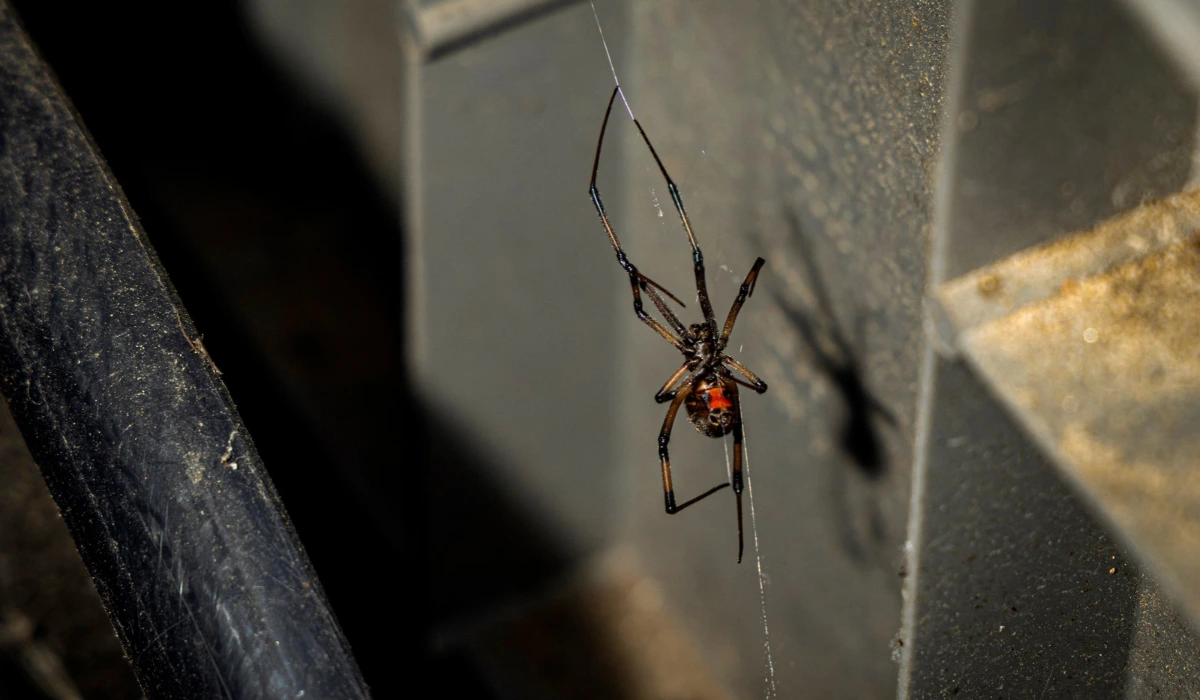
Spiders in San Diego usually keep showing up because a property offers prey, shelter, a workable web site, or an easy route indoors. That is why removing a web from an eave, garage corner, or porch light does not always end the problem. The useful question is what keeps making that spot attractive, because recurring spider activity usually points to a repeatable combination of insects, hiding places, web anchor points, or openings around the structure.
Why Spiders Keep Returning to the Same Areas
A spider that appears once may have wandered through. A web that returns to the same corner every few days tells you more. That location may sit near a steady insect source, offer protection from disturbance, or provide several solid points for anchoring a web.
The University of California Statewide Integrated Pest Management Program provides California-specific information on spider biology, identification, and management. Its guidance reinforces an important practical point: finding the spider is only part of the job. Where it is living and what it is feeding on can explain why the activity continues.
Rather than treating every web as a separate event, an inspector can compare where spiders appear with nearby insect activity, storage, landscaping, exterior openings, and other features that may keep the same area productive.
What Attracts Spiders to San Diego Homes?
Spiders are predators. They are not interested in crumbs or stored food in the same way ants or cockroaches are, but they benefit when those or other conditions support insects they can catch.
Insects Give Spiders a Reason to Stay
Exterior lighting is a good example. Flying insects can gather around a porch or garage light after dark, giving web-building spiders a reliable feeding location. That is why spiders around porch lights may return even after their webs have been removed.
The same relationship can develop near patios, planted areas, sheds, trash storage, and other places where insects regularly gather. Repeated web-building in one spot is a reason to look beyond the web and check whether prey is consistently available nearby.
Protected Corners Make Good Harborage
Spiders also benefit from places that receive little disturbance. Eaves, roof edges, patio covers, sheds, utility areas, garages, shelving, stored boxes, and exterior corners can all provide cover.
Garages are particularly useful to spiders because they combine outdoor access with sheltered interior space. A garage may have gaps around the door, stored items that remain untouched for long periods, and insects moving in from outside. Those factors can make it a better spider habitat than a frequently used living room or kitchen.
Gaps Make Indoor Access Easier
Damaged screens, worn door sweeps, garage-door edges, and openings around exterior penetrations can give spiders a route indoors. Closing those gaps does not remove spiders from the yard, but it reduces the number of paths leading into garages, storage areas, and living spaces.
One spider beside a door may simply be passing through. Repeated sightings along the same wall, window, or doorway deserve more attention because they may reveal a consistent entry point or nearby prey.
Where Spider Activity Commonly Shows Up
The location of the activity often tells an inspector more than the number of spiders a homeowner has seen.
| Location | Why Spiders May Use It | What to Check |
| Porch lights and exterior fixtures | Flying insects gather nearby | Recurring webs, insect activity, nearby gaps |
| Eaves and rooflines | Shelter and stable web anchor points | Protected corners, vegetation, repeated webs |
| Garages | Exterior access, storage, prey, low disturbance | Door gaps, clutter, shelving, insect activity |
| Patios and fences | Open web-building areas near prey | Lighting, furniture, landscaping, anchor points |
| Indoor corners | Shelter or nearby access from outdoors | Screens, door sweeps, windows, wall gaps |
| Attics | Low disturbance and potential prey | Access points, insect activity, other pest signs |
An attic deserves particular attention because it can combine low disturbance with access from roof or vent areas. Recurring spiders in the attic may indicate that insects or openings in the space also need to be evaluated.
Common Spiders San Diego Homeowners May Notice
San Diego homes can have both web-building and hunting spiders. Knowing the difference helps explain why one spider stays in a corner while another turns up on a wall or floor.
The UC Riverside Department of Entomology is another useful California source for spider identification. Accurate identification matters because size and color alone can lead homeowners to group very different spiders together.
Black Widows
Black widows deserve more caution than many of the spiders homeowners encounter around structures. They may establish webs in protected, relatively undisturbed areas where prey is available.
When black widow spiders around San Diego homes keep appearing in the same area, an inspection should look at web placement, shelter, nearby insect activity, and anything else that makes that location useful. Thrasher includes spiders, including black widows, within its standard pest-control coverage.
Avoid handling a spider you cannot confidently identify, especially when it is established near areas used by children, pets, employees, or customers.
Brown Widows
Brown widows are also found around San Diego properties, but their bite risk should not be presented as equal to a black widow’s. Reported brown widow bites are infrequent, and severe effects are rarely reported compared with black widow bites.
Identification should not rely on body color alone. Body markings, egg sacs, web placement, and the surrounding location can all help distinguish widow spiders.
For homeowners who regularly find brown widow spiders in San Diego around outdoor furniture, sheltered corners, or other frequently used spaces, accurate identification helps determine the next step.
Orb Weavers
Orb weavers stand out because their webs are large and easy to see. They often build between landscaping, fences, patios, walkways, and exterior structures where flying insects are available.
A large web outside does not mean spiders have established themselves indoors. It may simply show that the site offers both prey and good anchor points. If another web appears in the same location after removal, the site is still serving that purpose.
Jumping, Hunting, and House Spiders
Jumping spiders and other hunting spiders do not depend on large permanent webs. They move through an area looking for prey, which is why homeowners may notice them on windows, walls, patios, garages, or floors.
Other house spiders may remain in quiet corners where they can catch small prey without being disturbed. Their behavior, location, and frequency help distinguish a spider that is passing through from one repeatedly using the structure.
Does Seeing Spiders Mean You Have Another Pest Problem?
Sometimes, but not always. Because spiders rely on prey, repeated spider activity can overlap with another insect issue. One spider does not prove that a home has a large infestation.
Look for patterns instead. Webs that keep returning beside an exterior light may coincide with flying insects gathering there. Several spiders in a garage may reflect a combination of prey, storage, shelter, and gaps around the garage door.
This is where a detailed inspection becomes useful. Thrasher gives its inspectors and technicians time to look at why activity is recurring instead of treating the visit as a quick spray-and-go stop. That allows the service to address more than the spider a homeowner happened to notice that day.
What If You Find Wood Damage Near Spider Activity?
Spiders do not cause structural wood damage. Finding one near a damaged beam, sill, ceiling area, or other wood component does not identify what damaged the wood.
Pellets, mud tubes, damaged wood, or other signs associated with wood-destroying organisms need a separate evaluation. A termite inspection in San Diego can determine whether the evidence points to termites, dry rot, wood-boring beetles, or another wood-destroying organism.
Treating those findings separately keeps an obvious spider from distracting from a wood issue that may require a different inspection and treatment plan.
How to Reduce Spider Activity Around Your Property
The most useful prevention steps reduce prey, shelter, or access rather than focusing only on the spider that is visible.
Check Where Insects Gather
Watch the areas where flying or crawling insects repeatedly collect. Exterior lights, patios, planted areas, storage spaces, and other sheltered locations may concentrate prey.
When webs return to the same fixture or corner, inspect the area around it. Reducing a concentrated insect source can make that location less productive for spiders.
Remove Webs and Cut Down on Harborage
Removing webs clears current activity and makes it easier to see which locations are being reused. A web that returns quickly gives the inspector a specific site to investigate.
Reducing clutter in garages, sheds, and storage areas also removes some of the quiet shelter spiders use. It also makes corners, shelving, floor edges, and stored items easier to inspect.
Correct Common Entry Points
Repair damaged screens, replace worn door sweeps, and close practical gaps around garage doors and exterior penetrations. These steps do not affect every spider outside, but they can reduce how often wandering spiders reach protected indoor spaces.
Concentrate on openings near the places where sightings occur. If spiders repeatedly appear near one window, doorway, or wall, inspect that section of the exterior first.
Keep Landscaping From Crowding the House
Dense vegetation close to exterior walls can provide cover and support insect activity near the structure. Trimming back crowded areas improves visibility and makes it easier to spot recurring webs or other pest activity.
Around San Diego homes with irrigated landscaping, inspect the planted areas closest to the structure regularly. The goal is not to remove landscaping. It is to keep the perimeter visible and avoid creating sheltered areas that are difficult to inspect.
When Professional Spider Control Makes Sense
Professional spider control is worth considering when the same activity continues despite routine web removal and basic prevention. Repeated black widow activity, webs returning in several areas, frequent indoor sightings, or spiders established around difficult roofline and structural areas all call for a more detailed inspection.
An inspector should evaluate the spider or web, nearby prey, exterior openings, storage areas, landscaping, and other conditions around the activity. That gives the recommendation a clear basis instead of treating each spider as an unrelated sighting.
Thrasher’s pest-control plans include spiders, including black widows, along with many common insects that can provide prey. That allows inspectors to look at the broader pest pattern and focus on prevention as well as the visible activity.
Keeping Spider Activity Manageable on San Diego Properties
Recurring spiders usually have a reason to keep using the same parts of a property. Insects provide food, quiet areas provide shelter, exterior gaps create access, and corners or fixtures may give web-building species dependable anchor points. Correcting those factors is more useful than repeatedly removing the same web without examining why it returns.
If spiders keep showing up around your home or business, Thrasher Pest Control can inspect the property and identify what is contributing to the activity. Thrasher serves Poway, Carlsbad, Chula Vista, El Cajon, San Marcos, La Mesa, Rancho Santa Fe, and surrounding San Diego County communities, including homeowners within the San Diego service area.
To schedule an inspection or discuss recurring spider activity, contact Thrasher Pest Control.