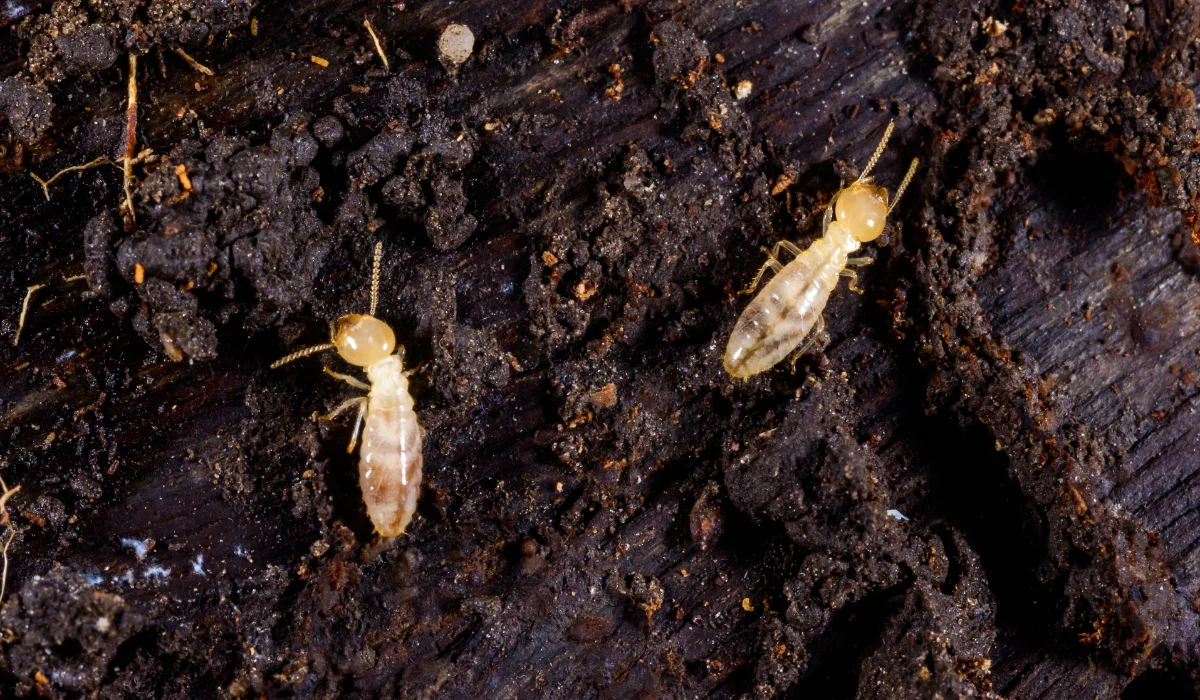
Drywood and subterranean termites can both damage San Diego homes, but they behave very differently. Drywood termites live inside dry wood above ground. Subterranean termites live in soil and reach wood through mud shelter tubes or soil contact. Formosan subterranean termite colonies can nest both above the ground and in the soil, but more about them later.
If you are comparing drywood termites vs subterranean termites San Diego homeowners deal with, the biggest difference is where the colony lives. That difference affects the signs you see, the treatment options available, and how quickly you should schedule an inspection.
Key Takeaways
- Drywood termites live inside dry wood and do not need soil contact.
- Subterranean termites live in soil and often build mud tubes.
- Drywood activity often leaves small pellet piles.
- Subterranean activity may show up near foundations, crawl spaces, or moisture.
- Formosan subterranean termites are uniquely aggressive and nest both above and below ground.
- The right treatment depends on proper termite identification.
Why The Difference Matters In San Diego
San Diego County homes can face both drywood and subterranean termites. UC IPM explains that California has subterranean, drywood, and dampwood termite pests, and each type needs a different management approach.
That matters because termite evidence can look similar at first. A few wings near a window, damaged trim, or hollow-sounding wood may point to termite activity, but it does not tell you which termite is present. We need to inspect the structure, identify the signs, and match the treatment to the termite species.
Guessing can lead to the wrong treatment. Drywood termites may require local treatment or fumigation. Subterranean termites usually require soil treatment, baiting, monitoring, or a combination of methods. Control of Formosan subterranean termites may require fumigation, soil treatment, and baiting.
What Drywood Termites Do
Drywood termites nest above ground in dry wood. They do not need regular contact with soil. In San Diego homes, that can mean framing, attic wood, fascia boards, trim, furniture, fences, decks, or other exposed wood.
Common drywood termite signs include:
- Small piles of hard, sand-like pellets
- Tiny kick-out holes in wood
- Hollow-sounding trim or boards
- Blistered or damaged wood surfaces
- Swarmers or shed wings near windows and lights
- Damage in isolated wood areas away from soil
Drywood termites can stay hidden inside wood for a long time. By the time pellets or swarmers appear, the colony has been established inside the structure for several years, silently damaging the structure.
What Subterranean Termites Do
Subterranean termites live and breed in soil. They move between soil and above ground wood through mud shelter tubes, cracks, foundation gaps, or wood-to-soil contact. They need moisture, so they are often associated with foundation edges, crawl spaces, plumbing areas, and damp soil near the home.
UC IPM’s quick guide notes that subterranean termites build nests in soil and reach wood through soil contact or earthen shelter tubes. Around San Diego homes, that can make them harder to notice until visible tubes, swarmers, or wood damage appear.
Common subterranean termite signs include:
- Mud tubes on foundations, slabs, piers, or crawl space areas
- Soft, blistered, or hollow-sounding wood
- Dirt-like material inside cracks or damaged areas
- Winged swarmers emerging from walls, baseboards, or soil
- Wood damage near moisture-prone areas
- Activity around fences, posts, or wood connected to the structure
Suspected subterranean termites should be inspected quickly because the visible sign is only one part of the activity.
Drywood Vs. Subterranean Termite Damage
Drywood termite damage often stays inside the wood where the colony is living. You may notice pellets below a kick-out hole before you see major surface damage. The damage can appear in attic framing, exposed beams, trim, furniture, or exterior wood.
Subterranean termite damage usually connects back to soil. These termites may enter through foundation cracks, crawl space areas, or wood touching the ground. Mud tubes are one of the clearest clues, but they are not always easy to see if activity is behind stucco, inside walls, or under flooring.
Here is the practical difference for homeowners:
- Pellets often point toward drywood termites.
- Mud tubes often point toward subterranean termites.
- Swarmers can belong to either group.
- Wood damage needs inspection before treatment decisions.
- Species identification determines the treatment plan.
Treatment Options Are Different
The treatment that works for one termite type may not solve the other. That is why we do not recommend choosing treatment based on a photo, a single swarm, or a few damaged boards.
Our termite control services in San Diego include inspections, local treatment, fumigation, barrier treatment, baiting, and repair or reconstruction when termites have damaged wood..
For drywood termites, whole-structure fumigation is always the primary recommendation in California because it is the only way to guarantee that all colonies in the home are exterminated.
Local treatment, while an option, must include this statement to comply with Section 1992 of the Structural Pest Control Act: “Local treatment is not intended to be an entire structure treatment method. If infestations of wood-destroying pests extend or exist beyond the area(s) of local treatment, they may not be exterminated.” .
For Western subterranean termites, treatment may involve perimeter soil treatment, baiting systems, monitoring, or a combination based on the species, infestation size, landscape, and property conditions.
What About Formosan Subterranean Termites?
San Diego County also has a specific subterranean termite concern: Formosan subterranean termites. These termites have been identified in La Mesa, Rancho Santa Fe, and the surrounding areas. Formosan subterranean termites require careful monitoring and treatment planning.
Our Formosan subterranean termite control service focuses on inspection, treatment, monitoring, and repair when activity is found. Fumigation or soil treatment alone does not eliminate a Formosan subterranean colony because the colony can survive above and below ground.
Most homeowners cannot identify Formosan termites on sight. If you suspect subterranean termite activity in San Diego County, a licensed inspection is the best way to confirm what is happening.
When To Schedule A Termite Inspection
Schedule an inspection if you see pellets, mud tubes, shed wings, damaged wood, or swarmers indoors. You should also schedule a termite inspection (also called a WDO or Wood Destroying Organism inspection) before buying or selling a home, after discovering moisture damage, or when a neighbor has confirmed termite activity nearby.
During a termite inspection, we look for signs of drywood termites, subterranean termites, dampwood termites, fungus or dry rot, and other wood-destroying organisms. We also check the areas where termites are most likely to hide, including accessible exterior wood, foundation edges, attic spaces, crawl spaces, and visible structural components.
An inspection helps answer the question that matters most: what type of termite is threatening the home, and what treatment actually fits the problem?
How To Reduce Termite Risk Around Your Home
You cannot remove termite pressure from San Diego, but you can reduce conditions that help termites reach or stay near your home.
Start with these steps:
- Keep wood, cardboard, and debris away from the foundation.
- Avoid direct wood-to-soil contact around fences, decks, and posts.
- Repair leaks near plumbing, rooflines, and exterior walls.
- Improve drainage near the home.
- Keep crawl spaces dry and ventilated when applicable.
- Watch for pellet piles, mud tubes, and swarmers.
- Schedule regular inspections if your home has had termite activity before.
These steps help with prevention, but they do not replace treatment if termites are already active.
Schedule Termite Control In San Diego
If you are seeing signs of drywood or subterranean termites, we can inspect your home, identify the termite type, and recommend the right treatment path. The sooner we confirm the source, the easier it is to make a clear plan.
Contact us to schedule termite control in San Diego.
Frequently Asked Questions
Which Is Worse, Drywood Or Subterranean Termites?
Both damage homes. Subterranean termites are especially concerning because they may enter from soil and stay hidden behind walls, foundations, or crawl spaces. Drywood termites also cause serious damage because they live inside the wood they are eating and are difficult to detect. Formosan subterranean termites are the worst.They multiply quickly and build nests below the soil and above ground in structural lumber.
How Do I Know If I Have Drywood Termites?
Drywood termite activity appears as small pellet piles, tiny kick-out holes, blistered paint or hollow sounding wood, swarmers, or shed wings. Pellets near windows, baseboards, attic areas, or wood trim are a common clue.
How Do I Know If I Have Subterranean Termites?
Subterranean termites often leave mud tubes on foundations, slabs, crawl space areas, or walls. You may also see swarmers, soft wood, blistered surfaces, or damage near moisture-prone areas.
Can One Home Have Both Drywood And Subterranean Termites?
Yes. A San Diego home can host more than one species of termites at the same time!. That is one reason an inspection matters before choosing a treatment.
Do I Need Fumigation For Subterranean Termites?
Usually, subterranean termite treatment focuses on soil treatment, baiting, monitoring, or a combination. Fumigation is more commonly used for widespread drywood termite activity and may be part of specific Formosan subterranean termite plans only when aerial colonies are involved.