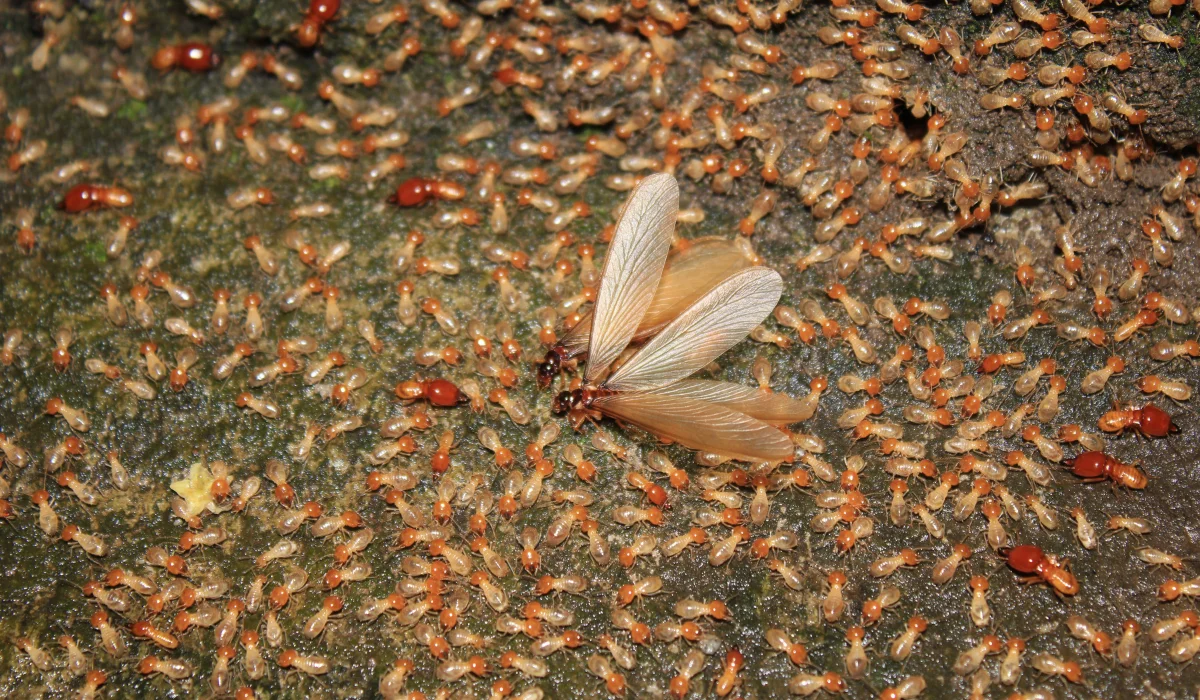
When termites swarm on warm days after rain, the insects may seem to have appeared overnight, but the weather did not create the infestation. A swarm is a reproductive flight from an established colony, and changes in moisture and temperature can affect when winged termites take flight.
In San Diego, Thrasher Pest Control inspectors use the season, swarm location, drywood termite pellets, kick-out holes, and soil-related evidence to narrow down the termite species before recommending treatment.
Why Termites Swarm on Warm Days After Rain in San Diego
Mature termite colonies produce winged reproductive termites called swarmers, or alates. When conditions line up for the species, these termites leave the colony to mate and establish new colonies. The UC Statewide Integrated Pest Management Program provides California-specific information on termite biology, identification, and management.
Rain is only one part of the timing. Moisture, temperature, season, and termite species all influence swarming activity. A warm day following rain can coincide with a reproductive flight, especially for termites whose seasonal activity is tied closely to soil moisture.
If swarmers are coming from a wall, wood member, or another part of the house, the colony was already present before the rain. The weather helps explain why the termites became visible at that particular time.
Season also matters. In San Diego, subterranean termites and drywood termites do not follow the same swarm schedule. A spring flight points inspectors toward different possibilities than a swarm in late summer or fall, which is one reason understanding the differences between drywood termites and subterranean termites in San Diego matters during an inspection.
Which Termites Swarm in San Diego?
San Diego County has several termite groups that can affect homes, including Western subterranean termites, Formosan subterranean termites, drywood termites, and dampwood termites. The insects may look similar to a homeowner, but the species matters because their nesting habits, signs, and treatment methods differ.
This comparison gives homeowners a useful starting point after finding swarmers:
| Termite Group | Seasonal Clue in San Diego | Signs Inspectors Evaluate | Treatment Direction |
|---|---|---|---|
| Subterranean termites | Spring swarm season | Swarmers in the house plus activity associated with soil or the foundation | Perimeter soil treatment, monitored bait stations, or both |
| Drywood termites | Late summer and fall | Pellets or frass, kick-out holes, then swarmers | Fumigation is the primary recommendation. Local treatment is an option for confined activity. |
| Formosan subterranean termites | Large nighttime swarms may gather around lights; established activity is especially relevant in La Mesa and Rancho Santa Fe | Swarm size, species identification, and type of wood damage | Perimeter soil treatment, monitored bait stations, and fumigation |
Subterranean Termites
Subterranean termites maintain a relationship with the soil. In San Diego, their swarm activity is associated with spring, so flying termites that appear after rain during warmer spring weather deserve a closer look.
A swarm outdoors does not automatically mean the colony is inside the house. Winged termites from nearby activity may collect around exterior lights, patios, windows, and doors. Swarmers appearing indoors are more significant, particularly when they return to the same room or appear to be coming from one structural area.
Western subterranean termites are among the termite groups Thrasher inspects for in San Diego County. Because subterranean termites move between underground galleries and structural wood, Thrasher inspectors check the exterior perimeter, foundation, slab transitions, and other possible routes from the soil into the structure.
Areas around the foundation and other possible paths between the soil and structure are part of the inspection. In garages and other areas where the slab, foundation, and framing meet, termite mud tubes can provide another clue that subterranean termites are moving between the soil and the structure.
Drywood Termites
Drywood termites follow a different seasonal pattern. Their swarm activity in San Diego is concentrated in late summer and fall rather than the spring window associated with subterranean termites. Thrasher’s field guidance treats drywood swarming as seasonal flights, not activity that occurs through nearly the entire year.
Swarmers are also not the first sign inspectors rely on when evaluating drywood termites. Pellets, often called frass, come first. Drywood termites remove these pellets from their galleries, so small piles beneath wood can help an inspector locate an area that needs closer examination.
Kick-out holes come second. These small openings are where the termites release pellets to the exterior of the wood. Swarmers are the third clue. A flying termite may land half a mile from where it originated, so the spot where it was found does not necessarily identify the active area.
Looking at the signs together gives the inspector a better sense of how much of the structure is involved. Homeowners who are trying to understand how to tell if they have termites in a San Diego home should consider the pattern of evidence rather than relying on a single sign.
That broader picture becomes important when deciding whether activity is localized enough for a spot treatment or distributed widely enough to support a whole-structure recommendation.
Formosan Subterranean Termites
Formosan subterranean termites deserve particular attention in San Diego County. Thrasher has identified established activity in La Mesa and Rancho Santa Fe. In these areas, hundreds of swarmers gathering around lights at night can indicate nearby Formosan termite activity.
They belong to the subterranean termite group, so their biology and treatment considerations differ from those of drywood termites. Finding winged termites alone is not enough to determine which group produced the swarm.
An inspector looks at the insects, the surrounding evidence, and where the activity is occurring before recommending a treatment plan. That species identification is especially relevant in areas where more than one subterranean termite species may be present.
What Does a Termite Swarm Mean for Your Home?
The location of a termite swarm changes what the sighting may mean. Swarmers around an exterior light after favorable weather may have come from activity elsewhere in the neighborhood. Insects appearing inside a room or repeatedly coming from one portion of the structure call for a more detailed inspection.
Discarded wings can provide another clue. After a reproductive flight, homeowners may find wings near windows, doors, baseboards, or other places where the insects collected. If practical, keeping a few intact insects can help an inspector identify them because flying ants are sometimes mistaken for termite swarmers.
For drywood termites, inspectors compare evidence of swarming termites with pellets and kick-out holes. For subterranean termites, they shift attention toward the soil, foundation, mud tubes, and other routes into the structure.
California homeowners can find information about licensed structural pest work, inspection reports, and state requirements through the California Structural Pest Control Board. An inspection provides far more useful information than simply removing the visible swarmers because the real question is where they came from and which termite produced them.
What Thrasher Inspectors Check After a Termite Swarm
A Thrasher termite inspection looks beyond the winged insects. Licensed, experienced inspectors evaluate the areas of concern and look for wood-destroying organisms that may include drywood termites, subterranean termites, dampwood termites, fungus or dry rot, wood-boring beetles, carpenter ants, and carpenter bees.
Where the swarm occurred gives the inspector a starting point. An indoor flight near one window may call for a different inspection path than swarmers found around an exterior light. Repeated activity in the same area, discarded wings, pellets, and visible openings in wood all help narrow down the source.
For drywood termites, Thrasher inspectors evaluate pellets or frass first, kick-out holes second, and swarmers third. With subterranean termites, the inspection extends around the exterior because soil-related activity is part of how these termites reach a structure.
Thrasher follows the inspection with a written report. It records the damage found, recommendations for treatment and repair, and conditions that may make the structure more vulnerable to termites or other wood-destroying organisms.
That process matters because finding a swarm does not automatically tell a homeowner which treatment is appropriate. The inspection establishes the species and extent of activity before the recommendation is made.
How Termite Treatment Changes by Species
Drywood and subterranean termites require different approaches because they occupy structures differently. Thrasher selects the treatment after identifying the termite group, evaluating the extent of activity, and considering conditions around the property.
Subterranean Termite Treatment
For subterranean termites, including Formosan subterranean termites, Thrasher may recommend a perimeter soil treatment, monitored bait stations, or a combination of the two. The recommendation takes into account the species, infestation size, landscape around the home, and the homeowner’s goals.
A perimeter soil treatment addresses termite movement between the ground and the structure. Monitored bait stations take a different approach by giving foraging termites an opportunity to encounter bait while allowing the system to be checked over time.
Soil treatments target the route subterranean termites use between underground activity and the structure, while bait stations allow foraging termites to encounter bait that can be monitored over time.
Drywood Termite Treatment
Fumigation is usually the primary recommendation for drywood termites. Because these insects are so difficult to find and that a structure typically contains several independent and unconnected colonies, fumigation has the highest success rate for total eradication.
Fumigation is not the only option. If termite activity is located in an attached unit, such as a condo or townhouse, or the infestation is confined to one or two areas, local treatment may be recommended. The inspector evaluates where the evidence is located and whether treating those specific areas is appropriate.
Making the Right Termite Choice for Your San Diego Home
When termites swarm after rain, the timing is useful, but the insects are only one piece of the evidence. Season, species, swarm location, discarded wings, drywood pellets, kick-out holes, and conditions around the structure all help an inspector determine what is active.
An inspection is a sensible next step when swarmers appear indoors, wings keep collecting in the same area, drywood pellets show up beneath wood, kick-out holes are visible, or termites appear to be coming directly from the structure. The goal is to identify the termite and understand how far the activity extends before choosing a treatment.
Thrasher serves homeowners in Poway, Carlsbad, Chula Vista, El Cajon, San Marcos, La Mesa, Rancho Santa Fe, and surrounding San Diego County areas. You can learn more about Thrasher Pest Control or contact the Thrasher team to schedule an inspection when termites swarm on warm days after rain around your home.